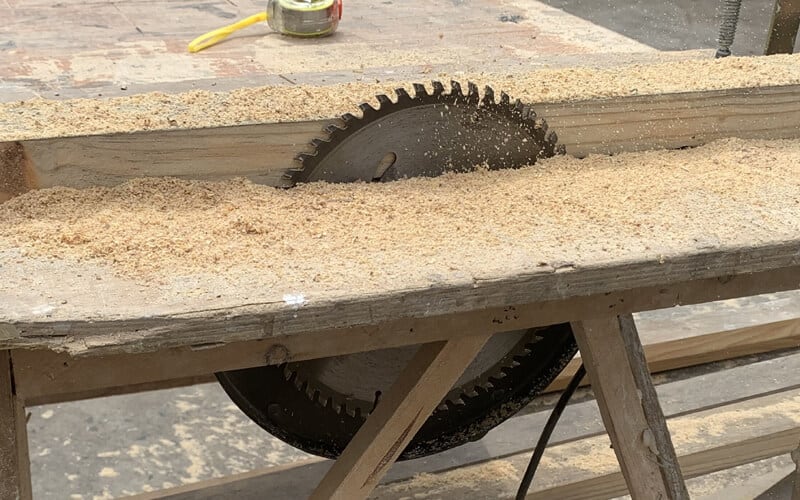
Low-quality splitter bits often cause complaints, returns, and customer dissatisfaction1. For wholesalers and importers, selecting the right wood splitting drill bit is critical to maintaining a stable supply chain and building long-term trust. Customers expect tools that split logs efficiently, perform reliably under repeated use, and do not break or jam during operation. Understanding the differences in design, material, and usage is essential for reducing after-sales issues and improving repeat orders.
What Tools for Splitting Wood?
Wood can be split using several types of tools, each tailored to specific applications. Manual axes, electric drill-based splitter bits, and hydraulic log splitters are commonly used in different market segments. Choosing the right tool depends on the type of wood, the quantity to be processed, and the end user’s expectations. Importers and wholesalers need to match the product with customer needs while ensuring durability and ease of use.
%wood splitting tools axe log splitter and drill bit splitter%
Different wood splitting tools including wood splitter drill bits, splitting axes, and hydraulic log splitters for firewood and logs.
Which Wood Splitting Tools Are Best for Firewood, Logs, and Hardwood?
Each type of wood requires a specific tool2 to maximize efficiency and minimize effort. Small firewood is best handled by wood splitter drill bits3 because they are portable and effective for household use. Medium logs can be split with traditional axes, which are low cost and easy to use. Hardwood logs require hydraulic or electric log splitters capable of providing high force without excessive manual effort. Using the correct tool ensures faster splitting, reduces user fatigue, and minimizes tool damage.
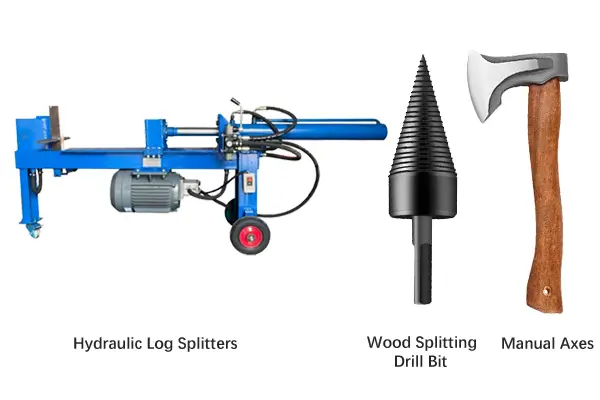
Different Kinds of Tools for Wood Splitting
How Should Importers Compare Wood Splitter Drill Bits, Axes, and Log Splitters?
Comparing different tools involves analyzing price, portability, splitting speed, and target users. Wood splitter drill bits are generally affordable, portable, and suitable for DIY or household markets4. Axes are inexpensive and flexible but may require more skill. Electric or hydraulic log splitters provide higher splitting force but are less portable and more expensive. Importers should consider the intended market and expected usage frequency when selecting products for bulk orders.
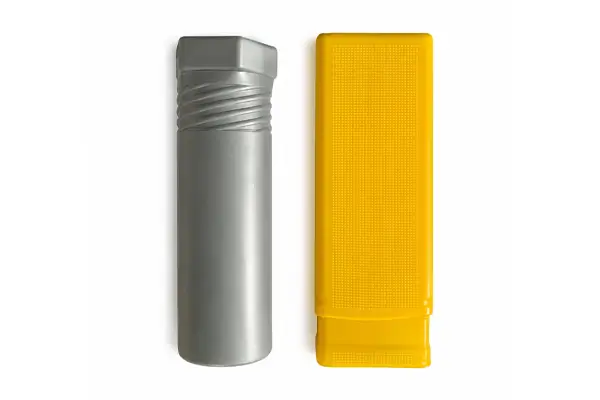
OEM wood splitter drill bit packaging designed for wholesalers and distributors.
What Tool Features Help Wholesalers Reduce After-Sales Complaints?
Reducing complaints relies on durability and design quality. High-quality wood splitter drill bits use heat-treated high carbon steel5 with reinforced cone tips and deep, precise threads. The shank should be strong enough to withstand torque without bending or breaking6. Features such as anti-slip threads, sharp tips, and clear operating instructions contribute to safer and more reliable operation. Including these specifications in the product description and packaging helps distributors maintain a high level of customer satisfaction.
Do Drill Bit Wood Splitters Really Work?
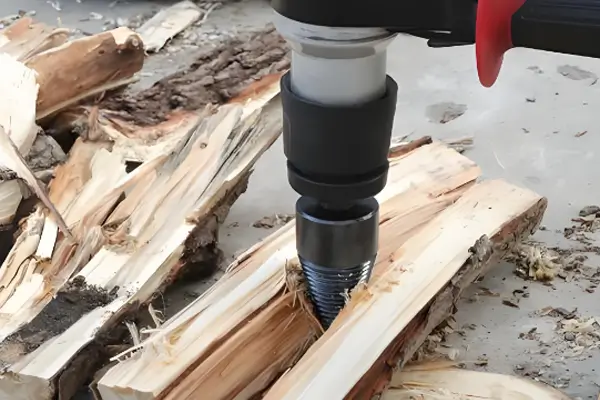
Wood splitter drill bits are effective when used with appropriate drills and wood types. They convert rotational motion into splitting force, drawing the bit into the wood and gradually separating fibers. Performance depends on drill power, bit quality, and correct usage.7 Low-power drills or poor-quality bits often fail to penetrate dense logs, leading to customer dissatisfaction. Professional-grade bits provide consistent splitting speed, reduce operator effort.
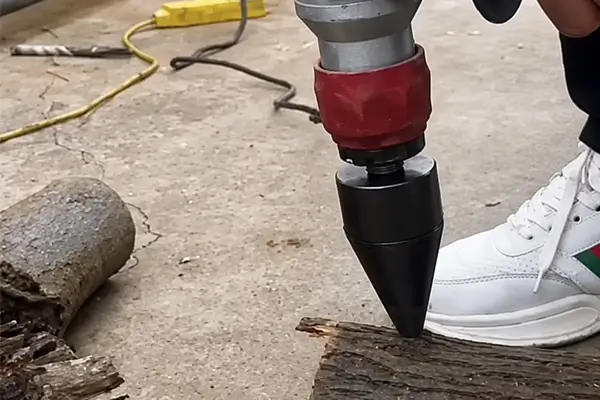
Wood splitter drill bit working on hardwood logs, converting rotational motion into splitting force.
What Materials and Tip Design Make Wood Splitter Drill Bits More Durable?
Durability depends on both the steel composition and the geometry of the tip. High-carbon improve strength, wear resistance, and longevity. The tip design should include a spiral or threaded cone for efficient penetration, with heat treatment to maintain hardness. Reinforced shanks prevent bending under torque, ensuring the bit remains functional during intensive use.
Which Wood Types Are Suitable for Wood Splitting Drill Bits?
Wood splitter drill bits are most effective on dry firewood, softwoods, and medium-density hardwoods with straight grain. Wet wood, twisted grain, or knotted logs pose challenges8 and may require stronger tools or slower operation. Using the proper bit for the specific wood type reduces breakage, increases splitting efficiency, and improves overall customer satisfaction.
Why Should Buyers Test Thread Design, Hardness, and Shank Strength Before Bulk Orders?
Thread design, material hardness, and shank strength determine the splitting efficiency and safety of the tool. Insufficient thread depth can reduce penetration and cause slippage. Weak shanks may bend or break, creating hazards. Hardness inconsistency can result in premature wear. Buyers should perform sample testing to confirm these features, including torque resistance, threading performance, and shank durability. Reliable suppliers provide detailed material specifications, sample testing.
How to Use Wood Splitting Drill Bit?
Proper operation ensures safety and consistent performance. Many failures result from incorrect installation or excessive force. Users should always match drill power to the wood density and follow recommended operational procedures. Regular maintenance and proper storage extend the tool’s lifespan.
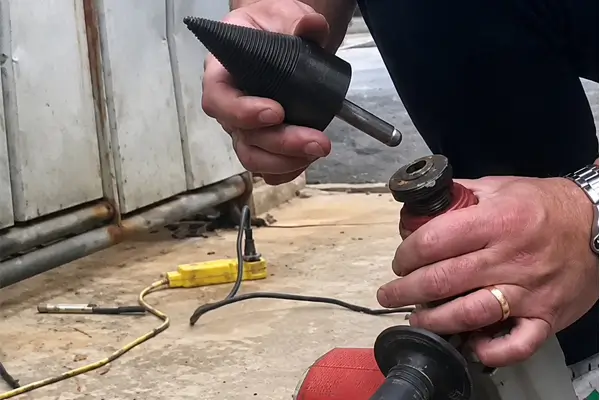
Wood splitter drill bit installation on a heavy-duty electric drill for safe wood splitting operation.
How Can Users Install a Wood Splitting Drill Bit Safely on an Electric Drill?
Before installation, verify drill chuck compatibility and shank type. Insert the splitter bit fully into the chuck and tighten securely. Check rotation direction, ensure stable alignment, and start at low speed to prevent excessive strain. Avoid using drills with insufficient torque, as this reduces splitting performance and increases risk of bit damage.
What Operating Tips Help Improve Splitting Speed and Reduce Bit Breakage?
Operating efficiency is influenced by speed, pressure, and splitting technique. Users should:
- Operate at low to medium drill speed
- Start from natural cracks or edges in the wood
- Apply even pressure without forcing the bit
- Split along grain direction whenever possible
- Stop immediately if the bit jams
Following these tips reduces breakage, improves speed, and protects both the tool and the drill motor.
What Instructions Should Distributors Include in OEM Packaging?
Clear instructions help reduce misuse and complaints. Packaging should specify compatible drill types, wood types, operating speed, installation guidance, and safety precautions. Warnings such as wearing gloves and eye protection, avoiding side pressure, and using appropriate drill power should be highlighted. Effective labeling improves user confidence and reduces return rates.
Is There a Trick to Splitting Wood?
Efficiency depends on understanding wood grain, tool selection, and operational technique9. Users who follow natural cracks and align splitting direction with grain achieve faster results. Dry, straight-grain wood splits easier than wet, twisted, or knot-heavy logs. Adjusting technique according to wood type and bit design improves overall productivity and reduces tool stress.
%wood grain direction for easier firewood splitting%
Correct wood grain direction for faster and cleaner firewood splitting.
How to Split Wood Faster by Choosing the Right Grain Direction?
Splitting along grain lines reduces resistance and stress on the bit. Start at natural cracks, avoid knot-heavy sections, and use smaller logs for initial penetration. Straight-grain wood allows the cone bit to pull itself in efficiently, requiring less drill torque and reducing the likelihood of jamming.
What Common Mistakes Cause Wood Splitter Drill Bits to Jam or Break?
Common errors include using excessive speed or force, ignoring wood grain, selecting improper drill power, and attempting to split knot-heavy or wet logs. Jamming is often caused by shallow thread depth or misalignment. Breakage occurs when material hardness exceeds bit capacity or when side pressure is applied improperly. Properly designed alloy bits mitigate these risks.
How Can Procurement Managers Choose Reliable Wood Splitting Bits for Repeat Sales?
Reliable bits are made from heat-treated alloy steel with reinforced shanks and precision-machined cone threads. Managers should request sample testing, verify material and hardness specifications, confirm OEM packaging quality, and review application videos. Consistency in quality reduces complaints, supports repeat orders, and strengthens brand reputation.
Professional wood splitter drill bits designed for wholesalers, distributors, and repeat bulk orders.
Fazit
Wood splitter drill bits are effective tools for firewood and log splitting when matched with appropriate drill power, wood type, and operating technique. Importers and wholesalers must focus on material quality, thread design, and shank strength to ensure durability and customer satisfaction. Reliable, factory-tested bits with clear OEM packaging reduce complaints, improve repeat sales, and build long-term trust in competitive hardware markets.
FAQ
Do Firewood Splitting Drill Bits Work?
Yes, firewood splitting drill bits are effective for splitting logs when used correctly. They create a central hole that allows a wedge and screw-style bit to expand the wood fibers, reducing manual effort compared to traditional splitting methods.
Is it Better to Split Firewood When it’s Wet or Dry?
Firewood is generally easier to split when it is dry, as moisture can make the wood fibers tougher and stickier. Be careful to split wet wood.
How to Split Firewood without an Axe?
You can split firewood without an axe using tools such as wedge and hammer, hydraulic log splitters, or firewood splitting drill bits. These methods reduce physical strain and allow more controlled when splittng.
How Long Should you Wait to Split Firewood?
For best splitting, wood should be seasoned for 6–12 months depending on the weather and climate. This can let the woods be dry, making the wood easier to split and burn more efficiently.
How to Split Firewood Fast?
To split firewood quickly, use a wedge and screw-style splitting bit with a powered drill or hydraulic splitter. Always secure the log and work steadily. Proper technique and the right tools reduce effort and increase efficiency.
-
Research in quality management and consumer behavior links perceived product quality and product failure to higher complaint behavior, returns, and reduced customer satisfaction; this supports the general relationship asserted here, though it does not specifically measure wood splitting drill bits. ↩
-
Wood properties such as density, grain structure, and moisture content affect splitting behavior and tool performance, supporting the general principle that tool choice should vary with the material being split. ↩
-
Cone-style screw splitters and drill-powered splitting attachments are described as devices intended for splitting smaller logs or kindling; this supports their household-use applicability, though independent evidence is needed to assess comparative effectiveness and safety. ↩
-
Retail and product-category documentation can substantiate that drill-mounted wood-splitting bits are typically marketed as low-cost, portable accessories for small-scale household or DIY firewood preparation, rather than as industrial log-splitting equipment. ↩
-
Materials engineering references describe heat treatment of high-carbon steel as a method for increasing hardness and wear resistance, which contextualizes why this material specification is associated with durable cutting or splitting tools. ↩
-
Mechanical engineering sources on torsion explain that shafts and shanks under torque experience shear stress and possible yielding or fracture, supporting the need for sufficient shank strength in rotating drill attachments. ↩
-
Technical guidance on drilling operations describes drilling performance as dependent on machine power/torque, cutting-tool geometry and condition, and operating parameters, providing general support for the relationship stated here. ↩
-
Forestry and wood science sources identify high moisture content, irregular grain, and knots as factors that increase resistance to cutting or splitting and can cause unpredictable fracture paths; this supports the general difficulty described here, but not a quantified failure rate for drill-mounted splitters. ↩
-
Forestry or extension guidance on firewood processing commonly notes that splitting efficiency and safety depend on matching the tool to wood size, species, and user technique; this provides general support for the claim that tool selection and operation affect efficiency. ↩