If you want the best saw blades1 with consistent performance, competitive price, and advanced technical support2, the choice between China and Vietnam isn’t always simple. The decision impacts costs, quality, supply chain speed3, and options for customization4.
China supplies over 70% of the world’s saw blades, offers the most complete manufacturing chain, and leads on technology and cost efficiency. Vietnam is growing fast, but most facilities still rely on Chinese machinery, materials, and key engineering talent. Overall production costs in Vietnam are 10–15% higher for premium saw blades despite lower wages.
Both countries offer strengths, but your needs for innovation, quality, tariff impact5, and market positioning mean you must weigh the long-term risks and opportunities. The future will see even more factories and suppliers in Vietnam, but the Chinese supply chain remains essential for high-end, custom, and complex blades.
Why Does China Still Lead the Global Saw Blade Industry?
China dominates the market with a mature supply chain, cutting-edge tech, and unmatched cost advantages.
China produces more than 70% of all saw blades worldwide, thanks to complete industrial clusters in Jiangsu, Guangdong, and Zhejiang provinces. Factories here have access to the latest CNC machinery, advanced heat treatment, proprietary diamond powders, and alloy technologies, making high-volume and premium blades at the lowest cost.
[^6] Jiangsu Guangdong Zhejiang](https://www.tenyutool.com/wp-content/uploads/2025/12/Premium-Saw-Blade-4.webp "China Saw Blade Manufacturing Centers")
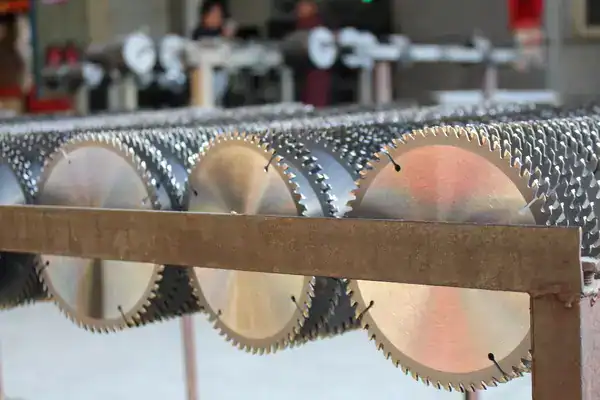
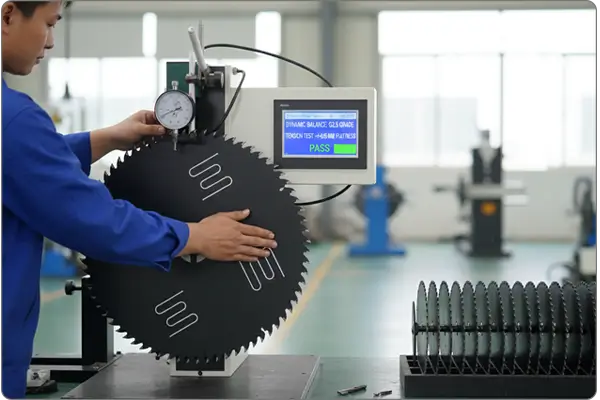
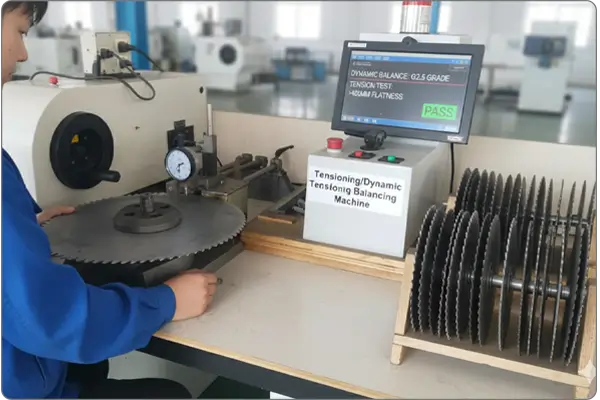
I have visited several plants in Danyang and Guangdong where the full process remains in-house: base manufacture, brazing, grinding, coating, and final packing. This high integration allows for rapid design changes, short lead times, robust QA, and steady output—no other country matches this ecosystem for specialty and custom blade.
| Factor | China Advantages |
|---|---|
| Production Volume | Largest in world |
| Supply Chain | Complete & local |
| Technologie | Advanced, full automation |
| Cost Efficiency | Lowest per unit |
| Customization | Fast, flexible |
What Drives Vietnamese Saw Blade Factories and Their Appeal?
Vietnam gained popularity by supporting tariff solutions and “China+1” sourcing after trade tensions rose.
Since the 2018 US-China trade war, some Chinese saw blade makers have moved equipment and staff to Vietnam. While labor is cheaper, plants must import alloy bases, diamond mix, sintering furnaces, and technical know-how from China, raising total costs by 10–15% for premium blades. End products are often finished, packed, and shipped to the US under Vietnam origin to avoid tariffs.

I’ve talked with managers who oversee new factories in Ho Chi Minh and Binh Duong. Their lines are staffed by Vietnamese operators, but key roles—R&D, QC, and process engineering—are run by experienced Chinese teams. Equipment transportation increases setup costs. Limitations surface in tooling upgrades and custom orders, as Vietnam’s own upstream materials and engineering are still catching up.
How Do Tariffs and Supply Chain Strategies Impact Manufacturing Choices?
Suppliers and buyers watch policy shifts closely to decide factory investments and product strategies.
US tariff exemptions for saw blades may end in May 2025, especially if new trade rules set a 60% duty. As a result, more plants will pivot to Vietnam for assembly and finishing, while China serves as the design, R&D, and key component hub. For now, OEMs favor “China+1”—a strategy where core production stays in China, final packaging happens in Vietnam, and importers hedge risks. Complex, custom, and high-precision blades remain primarily China-made, while Vietnam focuses on mainstream models and contract packing.

In my work coordinating with overseas brands, I’ve seen rush orders get split: intricate tooth shapes, advanced coatings, and specialty diameters finished in Jiangsu; bulk standard blades shipped to Vietnam for labeling and box packing. This helps customers keep stable supply and manage compliance, but means paying slightly more for finished Vietnamese products.
| Scenario | China | Vietnam |
|---|---|---|
| R&D | Yes | Limited |
| Material Supply | Local, full | Mostly imported |
| Staff Skills | High, complete | Mix, in development |
| Tariff Impact | High risk | Lower, for US buyers |
| Custom Orders | Fast, flexible | Basic, mostly standard |
Will Vietnam Eventually Rival China for Premium and Complex Blades?
The gap is closing, but expertise and core materials remain centered in China for now.
Vietnam’s saw blade industry is expanding rapidly, with more factories setting up each year. Yet, unless you work with a plant that maintains a strong Chinese technical background—and can access advanced R&D, material imports, and QA—you may face supply disruptions or limited custom options. It’s smart to choose manufacturers with portfolios and management teams tied to China, which ensures access to both price and quality benefits.
 https://www.tenyutool.com/wp-content/uploads/2025/12/Vietnam-Saw-Blade-factory-factory-hardware.webp
As I advise brands planning new product launches, my go-to recommendation is to source high-spec, custom, or specialty blades from Chinese-rooted suppliers with Vietnam capability for final assembly or packaging. Over time, more Vietnamese firms will master the full process—but for premium blades, keeping the China partnership is key.
Ready to upgrade your woodworking productivity? Reach out today for expert OEM/ODM circular saw blade solutions—get test samples, technical support, and the wholesale pricing you need!


Fazit
While Vietnam’s saw blade factories6 are growing and offer tariff advantages, China remains the core for technology, volume, and reliable custom production. For premium blades, a manufacturing partner with Chinese roots is the best choice.
-
Discover leading manufacturers to ensure you get high-quality saw blades with advanced technology and competitive pricing. ↩
-
Discover how advanced technical support can enhance product quality and performance. ↩
-
Explore how supply chain speed can affect production timelines and customer satisfaction. ↩
-
Learn about the significance of customization in meeting specific customer needs. ↩
-
Understand the implications of tariffs on manufacturing strategies and costs. ↩
-
Discover the top saw blade factories in China and Vietnam to understand their capabilities, technology, and how they impact global supply chains. ↩