Worried about using your cutting disc the wrong way? It’s a common concern!
The cutting disc label usually faces up when you install it. This ensures the information is visible and the disc is mounted correctly. But always check your tool’s manual!
Still unsure about the best way to use your cutting disc? Keep reading, because I’m going to explain everything you need to know.
How to Safely Use a Cutoff Wheel?
Using a cutoff wheel can be dangerous if you don’t know what you’re doing. Are you unsure about the right way to stay safe?
To use a cutoff wheel safely, wear safety glasses, gloves, and a dust mask. Check the wheel for damage, and make sure it’s rated for your tool’s speed. Always cut in a straight line, and don’t apply too much pressure.

Okay, but what does that actually mean? Let’s break it down to keep you safe:
PPE (Personal Protective Equipment)
This isn’t just a suggestion; it’s a must. I always wear safety glasses because metal shards can fly at high speeds. Gloves protect your hands from heat and sharp edges. A dust mask keeps you from breathing in harmful particles.
Inspecting the Wheel
Before you start, look for any cracks or damage on the cutting disc. A damaged wheel can break apart during use, which is extremely dangerous. Make sure the wheel’s RPM (rotations per minute)1 rating is higher than your tool’s RPM2.
Cutting Technique
When cutting, hold the tool firmly and guide it in a straight line. Avoid twisting or bending the wheel, as this can cause it to shatter. Let the wheel do the work; don’t force it. If it feels like it’s binding, stop and adjust your angle. Also, avoid cutting with the edge. It should always be the periphery. I remember one time when I was in a rush, and I tried to force a cut. The wheel broke, and a piece of it hit my safety glasses. That was a close call that taught me to always take my time and use the right technique.
How Thick Can a Cut-off Wheel Cut?
Thinking about cutting something thick? But you aren’t sure if your cut-off wheel can handle it?
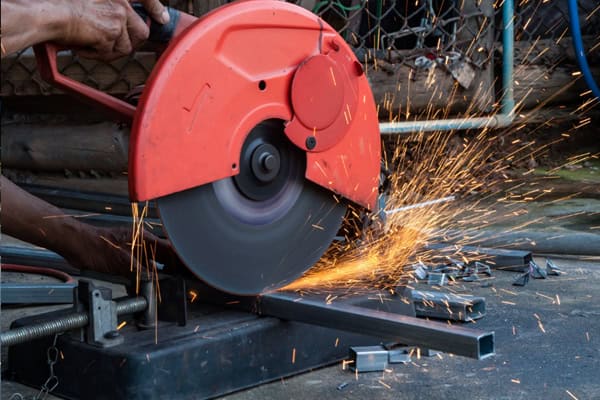
A cut-off wheel can usually cut material as thick as its diameter allows. For example, a 4-inch wheel can cut up to 2 inches deep from each side. However, it’s better to cut thinner materials to avoid overheating and breaking the wheel.
Here’s some more information to help you:
Material Type
The type of material you’re cutting affects the maximum thickness. Soft materials like aluminum are easier to cut than hard materials like steel. When cutting harder materials3, you may need to make multiple passes4 or use a coolant to prevent the wheel from overheating.
Radgröße
Larger diameter wheels can cut thicker materials, but they also require more powerful tools. Make sure your tool is capable of handling the wheel size you’re using.
Cutting in Multiple Passes
For thicker materials, I often make multiple shallow cuts instead of trying to cut all the way through in one pass. This reduces the risk of the wheel binding5 or breaking. It also helps to keep the material cooler, which prolongs the life of the wheel. I once tried to cut through a thick piece of steel in one go, and the wheel got so hot it started to warp. Since then, I always take my time and make multiple passes6.
| Factor | Consideration |
|---|---|
| Material Type | Softer materials allow for thicker cuts; harder materials require more care. |
| Radgröße | Larger wheels can handle thicker materials, but require more powerful tools. |
| Cutting Passes | Multiple shallow cuts reduce stress and heat compared to a single deep cut. |
Can I Use a Cut-Off Wheel on a Drill?
Wondering if you can attach a cut-off wheel to your drill? It seems like it would save some time!
No, you shouldn’t use a cut-off wheel on a drill. Drills don’t have the right speed or support to safely use a cut-off wheel. Cut-off wheels need a grinder or a dedicated cut-off tool.

Let’s get into the details of why this is so important:
Speed Mismatch
Drills typically operate at lower speeds than grinders7. Cut-off wheels are designed to spin at high speeds to cut effectively. Using a drill can cause the wheel to wobble or even shatter8 because it won’t reach the speed it needs. This is incredibly dangerous.
Lack of Support
Grinders have a guard that protects you from flying debris and helps stabilize the wheel. Drills don’t have this guard, which increases the risk of injury. The handle on a grinder also gives you better control over the tool.
Risk of Damage
Attaching a cut-off wheel to a drill can damage both the wheel and the drill. The drill’s chuck isn’t designed to handle the lateral forces that a cut-off wheel generates, so it can wear out quickly. I learned this the hard way when I tried to use a small cut-off wheel on my drill. The drill started shaking violently, and the wheel flew off, leaving a dent in my workbench.
When to Change Cut Off Wheel?
Is your cutting getting slow? Or maybe your wheel looks worn out?
You should change a cut-off wheel when it’s worn down to a small diameter, damaged, or not cutting efficiently. A worn wheel is more likely to break, and it takes longer to make cuts.

There are other things you should also keep in mind:
Visual Inspection
Regularly inspect your cut-off wheel for signs of wear and tear. Look for cracks, chips, or excessive wear on the edge of the wheel. If you see any of these signs, it’s time to replace the wheel. Also, check the wheel’s diameter. As you use it, it will get smaller, which reduces its cutting ability.
Performance
If you notice that your cuts are taking longer than usual, or if the wheel is binding or vibrating excessively, it’s probably time for a new one. A dull wheel requires more force to cut, which increases the risk of accidents.
Safety
Never use a cut-off wheel that you suspect is damaged. It’s not worth the risk. Always err on the side of caution and replace the wheel if you have any doubts. I had a close call once when I kept using a wheel that was clearly worn down. It ended up shattering during a cut, and I was lucky to escape without injury. Now, I always replace my wheels as soon as they show signs of wear.
| Indicator | Beschreibung |
|---|---|
| Visual Damage | Cracks, chips, or excessive wear on the wheel’s edge. |
| Performance Issues | Cuts taking longer, wheel binding, or excessive vibration. |
| Wheel Diameter | Significant reduction in wheel diameter due to wear. |
Fazit
Using cutting discs safely means knowing your tools and when to replace them. Stay safe, and cut smart!
Looking for high-quality cutting disc that deliver performance and durability? At TENYU TOOL, we specialize in manufacturing premium tools trusted by professionals worldwide.
-
Understanding RPM ratings is crucial for tool safety and performance. Explore this link to learn more about safe RPM practices. ↩
-
Explore the factors influencing a tool’s RPM to ensure compatibility and safety with wheels, enhancing your operational knowledge. ↩
-
Explore this resource to learn effective techniques and tips for cutting harder materials safely and efficiently. ↩
-
Understanding the need for multiple passes can enhance your cutting efficiency and material handling skills. ↩
-
Understanding wheel binding can help you avoid damaging your tools and improve your cutting efficiency. ↩
-
Discover the benefits of making multiple passes for better precision and tool longevity in your cutting projects. ↩
-
Learn about the differences in tool speeds and their applications to enhance your knowledge and safety in using power tools. ↩
-
Discover the dangers of using the wrong tools and how to prevent accidents. This resource provides essential safety information. ↩