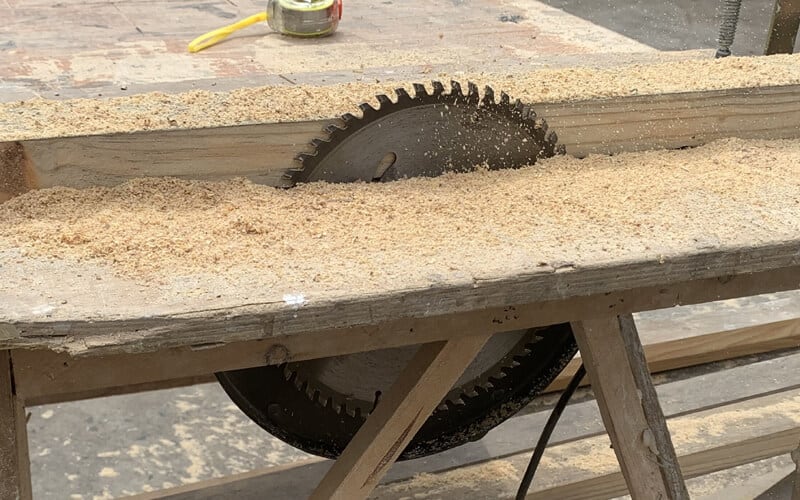
Getting your tool idea from paper to production is no longer just a dream. For new creators—and established brands—knowing every step and working with the right manufacturing expert makes all the difference. The pathway from concept to finished drill bit, saw blade, or cutting tool demands precision, market insight, and expert partnership. I’ve seen many projects stall due to missed steps or poor factories. Mastering each phase unlocks your product’s true market power.
Turning an idea into a product requires market-driven discovery1, professional design2, detailed engineering3, partnership with a certified manufacturer4, rapid prototyping5, sharp production planning6, and vigilant ramp-up to mass manufacturing7. Tenyu Tool streamlines every stage for tool creators focused on quality and impact.
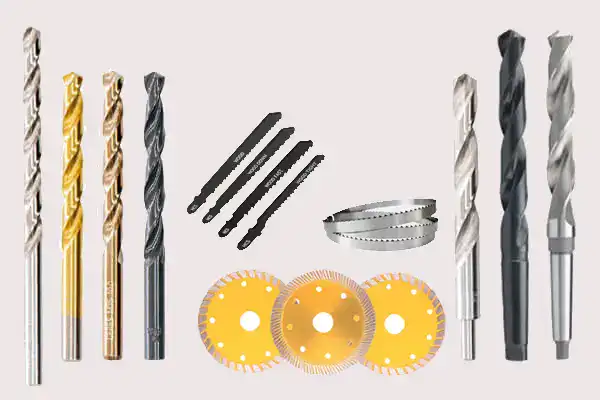
My experience shows: Only those who respect the full product lifecycle—validation, design, engineering, skilled manufacturing, and continuous improvement—get to market quickly and safely. At Tenyu Tool, we guide tool creators through this process with real-world expertise in cutting tools, precision QC, and global certifications.
Step 1: Identifying Customer Needs and Market Research—The Foundation of Innovation?
Every strong tool product starts with knowing your customer’s pain points. Drill bits, saw blades, and cutting tools must fix problems users face whether that’s faster cutting, cleaner holes, longer blade life, or safer handling.
Document precise customer needs8 and match them against current market gaps9 with deep research. Only then can you shape specs that deliver real value and avoid costly mistakes.

Go beyond features—focus on benefits. Instead of “carbide blade,” think “cuts twice as fast, lasts three times longer.” Identify the pros, hobbyists, import managers, and wholesalers who become your key buyers. Gather user feedback10, watch how they work, and learn about unmet needs—chip jamming, edge chipping, or vibrations during heavy-duty use. Benchmark competitors: Analyze leading global brands’ blade geometry11, coating types12, price points, and certification status. Review alternative solutions: users may be adapting masonry blades for metal, or fitting industrial drill bits to handheld drills. By building a true benefit profile and researching deeply, you avoid guesswork and give your idea real commercial strength.
Dive Deeper: Documenting and Validating Tool Needs
| Need Analysis Stage | How to Apply | Impact on Tool Product |
|---|---|---|
| User Interviews/Trials | Watch, ask, sample test | Reveal true pain points |
| Competitive Benchmark | Compare design, pricing, QC | Set clear competitive targets |
| Market Profile | Define channel: retail, B2B, OEM | Target right specs, certifications |
| Alternative Review | Understand substitutes, workarounds | Find unique offers, disrupt status quo |
Step 2: Product Design—Shaping Your Vision for Innovative Tools?
An idea only becomes a product with professional design2: blending form, function, and manufacturing realities. Effective design doesn’t just look good—it delivers real performance and manufacturability.
Tool product design begins with sketching geometry and ergonomics, then optimizing internal structure, sharpening usability, and balancing innovation with cost-effective production.
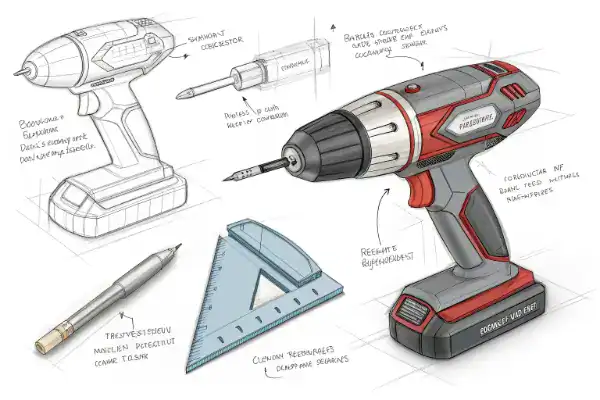
Start with sketches—bit tip profiles, blade tooth forms. Map intended function: ultra-slim kerf for speed, reinforced spine for durability, smart handle for safety. Consider the visual appeal: does your tool fit cleanly into tradesman’s kits or retail shelves? Plan easy handling, quick blade changing, and intuitive packaging. Integrate features that matter—anti-vibration slots, low-friction coatings, and color-coded size systems. Always watch for ease-of-manufacturing: can the design be produced using Tenyu Tool’s CNC lines, PVD coatings, and automated inspection? Our expertise lets you tune material grade inputs to meet both design intent and mass-production feasibility, impacting price, yield, and customer trust.
Dive Deeper: Design for Production and User Appeal
| Design Focus | Application Examples | Manufacture Impact |
|---|---|---|
| Performance Geometry | Tooth shape, tip profile | Enhances cutting speed, precision |
| User Experience (UX) | Grip, color, icon use | Eases handling, drives retail choice |
| Maintenance Ease | Fast blade swap, cleanability | Improves repeat buying, brand loyalty |
| Manufacturability | Mold/cut/coat readiness | Cuts waste, speeds scale-up |
Step 3: Engineering a Manufacturable New Product—The Technical Blueprint?
After design, engineering brings the idea to life with measurable specs, material choices, process plans, and certification compliance. Great engineering ensures your tool works and can be built at scale.
Engineering turns a visual concept into a processable blueprint: from cutting force and heat resistance to specific tolerances, finishing, and compliance. Without expert engineering, failures and delays follow.

Specify every component: alloy grade, temper, grit size, coatings (TiN, TiAlN, diamond), and the exact groove depth and blade pitch. Optimize airflow for chip ejection; balance mass for vibration control. Electrical safety and performance matter for multi-purpose bits or saws used on powered rigs. Our team uses CAD/CAM and CNC process simulation to flesh out every detail—ensuring each blade or bit matches your promise. Collaboration at this stage also applies lean engineering13: rapid feedback, test benching, and redesign if failures show up during sample trials.
Dive Deeper: Technical Blueprint and Certification
| Engineering Stage | Essential Actions | Key Outcomes |
|---|---|---|
| Specs Detailing | CAD/CAM, material testing | Guaranteed repeatability, precision |
| Process Simulation | CNC routing, stress testing | Reduced defects, higher yield |
| Certification Prep | ISO/CE/EN, RoHS audits | Market access, regulatory trust |
| Refinement | Iterate for heat, lifetime | Peak performance, longer service |
Step 4: Finding Your Manufacturing Partners—The Key to Production Success?
The right factory partner brings your blueprint into reality, ensuring quality, scale, and consistency. Poor partners mean defects, delays, and lost sales.
Select an experienced, certified tool factory—like Tenyu Tool—with hardware capacity, global standard compliance, and sharp communication. Early engagement ensures smooth design transfer and risk avoidance.

Find factories with strong cutting tool portfolios, advanced CNC, coating, and inspection lines. Audit their quality control14 labs and demand upfront certification—ISO 9001, EN/CE. Ask for real production samples and visit the plant for process transparency. Great partners advise on materials, make cost-saving suggestions during DFM reviews, and keep you updated with plain-English reports. Our multi-line team can scale from pilot to mass batch and troubleshoot during ramp-up. We’ve enabled brands and importers to launch multiple new SKUs globally, always with full technical and quality data.
Dive Deeper: Factory Vetting and Partnership Building
| Partner Criteria | Evaluation Points | Value Delivered |
|---|---|---|
| Tool Expertise | Portfolio breadth, certifications | Reliable results, broad offering |
| QC/Safety Facilities | In-house labs, test rigs | Defect control, compliance assured |
| Kommunikation | Project reporting, language | Zero confusion, quick issue resolution |
| Scalability | Flexible MOQs, ramp-up plans | Future growth, market responsiveness |
Step 5: Building a Product Prototype, Testing, and Iteration—Refining Your Innovation?
With a factory and engineering plan in place, make real prototypes to test your idea in the field. Prototyping prevents disaster—only hands-on feedback reveals true flaws.
Prototypes prove form, function, and market appeal; testing drives real improvement. Iterate quickly until you hit target performance, usability, and production readiness.
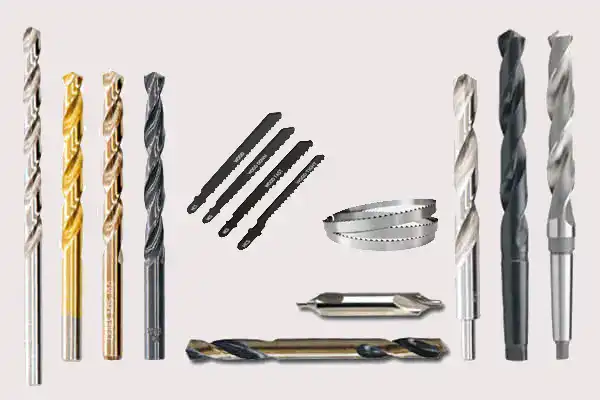
Start with basic test samples: rough-cut drill bits, uncoated blades. Move rapidly toward refined lab-grade prototypes—precision geometry, full coatings, and branded packaging. Run functional tests: speed, sharpness, wear resistance, anti-jam performance, batch consistency. Share samples with real users—contractors, workshops, or retailers—and get brutal feedback. Fix revealed weaknesses, tune geometry, and improve surface treatments. At Tenyu Tool, iterative prototyping uses both field feedback and advanced lab data—spectroscopy, balance, hardness, and fatigue tests—until the product passes demanding QC and wins user trust.
Dive Deeper: Iterative Testing for Market-Ready Tools
| Prototype Stage | Action Items | Result |
|---|---|---|
| Visual/Concept Check | Fit, function, feedback | Catch design flaws, usability issues |
| Performance Trials | Speed, lifespan, QC lab | Prove specs, tune for compliance |
| User Validation | Dealer, end-user review | Drive real-world adoption, error fix |
| Batch Feasibility | Manufacturing test runs | Confirm process readiness, reduce risk |
Step 6: Planning the Production of Your New Product—Orchestrating Efficiency?
Your design, prototype, and factory choice are ready—next, plan every step for production. Efficient planning avoids delays, cost overruns, and shortages.
A clear production plan outlines supply chain, process flow, tooling, QC, logistics, and lean management. It prepares every stakeholder for fast, consistent, reliable delivery.
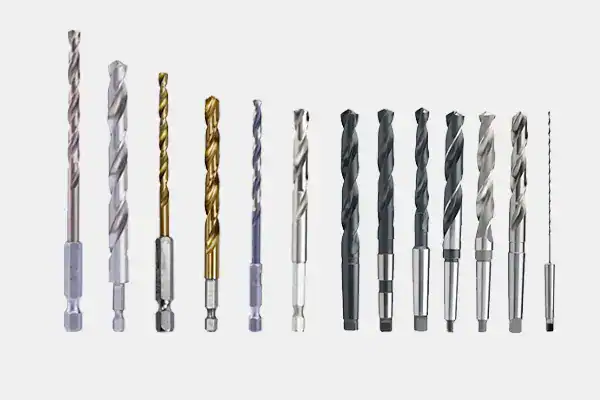
Map the full supply chain15: secure raw materials (premium steel, carbide, coating chemicals). Specify each process—cutting, grinding, machining, coating, assembly, final QC. Define in-line inspections and reporting points; implement global certifications on every batch. Order specialized fixtures and tools for automated lines; arrange warehousing and export logistics. Lean manufacturing minimizes wasted motion and resources, keeping costs low and delivery high. By planning each phase, you guarantee product quality and responsive scaling for demand surges.
Dive Deeper: Production Flow Optimization
| Planning Detail | Action Focus | Outcome |
|---|---|---|
| Supply Mapping | Vendor audits, backup sources | Timely materials, zero shortages |
| Process Definition | SOPs, machinery plans | Predictable results, easy troubleshooting |
| QC System | ISO batch checks, in-line audits | Repeatable high quality |
| Lean Improvements | Data analysis, waste cut | Cost reduction, faster cycle time |
Step 7: Manufacturing Your New Product—Bringing Your Vision to Life?
Production begins in the factory, but smart oversight continues—ensuring every tool meets specs, batch quality, and market demands.
Manufacturing executes your product plan, with strict QC, scalable processes, transparent reporting, and ongoing improvement. This phase builds reputation and customer loyalty.
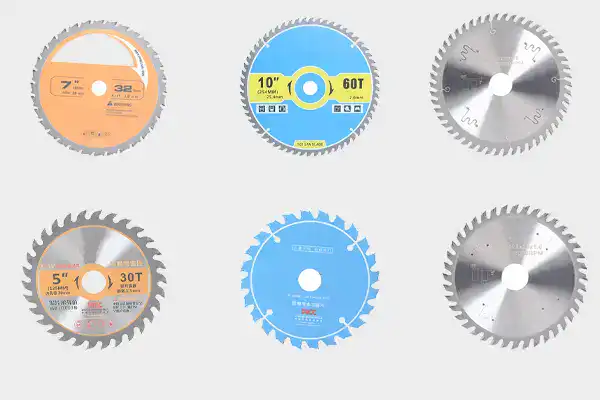
Track every stage: receive QC reports, inspect finished product, and audit batches for certification compliance (ISO, EN/CE, RoHS). Tenyu Tool runs full fatigue, sharpness, and lifetime tests on each lot—with full documentation for every client. Smart manufacturing improvement drives higher yields, lower costs, and better product consistency. Use production data16 to debug process bottlenecks, tweak cycle times, and ensure all deliveries stay on schedule. Your job is to monitor cost, quality, and timeline—working with us to hit every milestone and support long-term market growth.
Dive Deeper: Continuous Quality and Production Excellence
| Manufacturing Stage | Actions Taken | Benefits Realized |
|---|---|---|
| Component Sourcing | QC insured, batch tracking | Lower defect rates, reliable supply |
| Assembly/Output | Automated, manual review | Consistent specs, quick troubleshooting |
| Final QC | Lab-tested, full certification | Global compliance, brand safety |
| Process Improvement | Data feedback, optimization | Higher yield, lower cost over time |
Fazit
Every successful tool product—drill, blade, or cutting accessory—follows a clear path: market validation17, user-driven design, professional engineering, expert manufacturing partnership, real-world prototyping, strategic production planning6, and relentless oversight during launch. By partnering with an experienced, certified manufacturer4 like Tenyu Tool, and following each step with discipline and creativity, your idea stands a real chance of becoming a market-ready, best-selling product in 2025 and beyond.
-
Understanding market-driven discovery can help you align your product with customer needs and market gaps. ↩
-
Exploring the significance of professional design can enhance your product’s performance and manufacturability. ↩ ↩
-
Learning about detailed engineering ensures your product meets specifications and can be built at scale. ↩
-
Finding a certified manufacturer is crucial for quality assurance and successful production. ↩ ↩
-
Discovering rapid prototyping can help you refine your product quickly and efficiently. ↩
-
Effective production planning is key to avoiding delays and ensuring smooth operations. ↩ ↩
-
Understanding mass manufacturing challenges can help you prepare for scaling your production. ↩
-
Identifying customer needs is essential for creating products that truly solve user problems. ↩
-
Analyzing market gaps can guide your product development strategy and enhance market fit. ↩
-
User feedback is vital for refining your product and ensuring it meets real-world needs. ↩
-
Understanding blade geometry can enhance your product’s cutting performance and efficiency. ↩
-
Exploring coating types can improve your product’s durability and performance. ↩
-
Learning about lean engineering can help you optimize your processes and reduce waste. ↩
-
Implementing best practices in quality control can enhance product reliability and customer satisfaction. ↩
-
Optimizing your supply chain is key to ensuring timely delivery and cost efficiency. ↩
-
Using production data effectively can help you identify bottlenecks and improve efficiency. ↩
-
Market validation is crucial for ensuring your product meets market demands and customer expectations. ↩