Drilling is the cornerstone of mechanical processing1, accounting for about one-fifth of total production and nearly 30% of all hole work. Whether you’re an engineer, machine shop manager, procurement officer, or ambitious DIY user, selecting the right drill bit impacts not only productivity, but profit, tool life, and finished part quality. Yet with the surge of options—drill bits in different colors2, materials, processes, and coatings—it can feel overwhelming to make the correct choice. Which drill bit is best for acero inoxidable, aluminum, hard plastics, or critical aerospace parts? How do color, process, and material really change the outcome? And how does your supplier’s quality control affect your costs and reliability?
This guide covers every aspect of drill bit selection: classification by shape, coating color, material, and process; practical decision-making for specific drilling tasks; expert comparisons; and advanced considerations for high-performance drilling jobs. You’ll find professional insights for both industrial and everyday projects, and detailed tables to help you see exactly which drill fits your needs. Whether you want to boost machine throughput, reduce downtime, or avoid breakage and expensive rework, knowing your drill bits is the first step to smarter, more profitable drilling.
Why Does Drill Bit Choice Matter in Modern Manufacturing?
In high-precision machining, drilling is often the first operation and, if selected poorly, can cause cascading defects, costly repairs, and unhappy customers. Choosing the wrong bit can mean broken tools, rough surface finishes, oversized holes, and even hazardous working conditions. Good drill bit selection3 not only increases hole quality and tool life, but directly improves production stability and reduces costs.
The right drill bit increases productivity, reduces the risk of breakage, and ensures consistent high-quality results, whatever the material—from soft aluminum to hardened steel, from wood to carbon fiber composites.
Drill bit design is much more than marketing hype. Top-performing manufacturers understand that everything from substrate choice4 a processing technique5—rolling, grinding, or milling—affects the final characteristics of the drill. Even outward features, like color and finish, reveal quality levels, wear resistance, and machining suitability. Your supplier’s reputation and confirmed quality control processes further influence the consistency you receive in every batch.
What Are the Main Types of Drill Bits Used in Industry and Everyday Work?
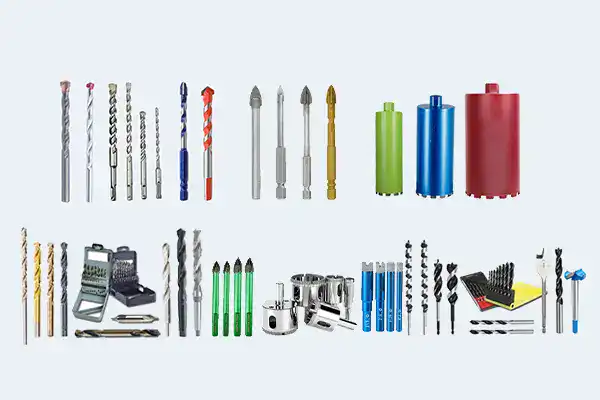
Drill bits aren’t one-size-fits-all. To maximize efficiency, reduce breakage, and get clean, accurate holes, you must match the drill bit type to your specific job. Let’s go deeper into classification by shape, application, and specialist functions.
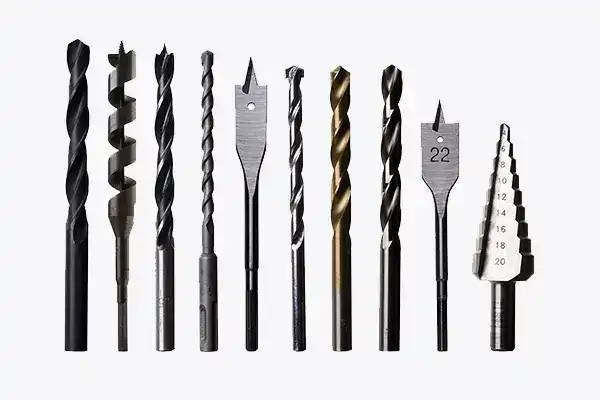
Twist drills, step drills, masonry drills, wood bits, and many more—each bit serves precise applications for different workpiece materials, hole diameters, and production styles. The correct bit makes drilling faster, more accurate, and more reliable.
Drill Bit Shape Classification
| Drill Type | Application Area | Key Features | Typical Diameter Range |
|---|---|---|---|
| Broca helicoidal | Metal, wood, plastics, composites | Helical flutes, variety of tip types, chip clearance | 0.1–50mm |
| Step Drill6 | Sheet metal, plastics | Cone shape, multiple stepped diameters, smooth deburr | 4–40mm |
| Masonry Drill7 | Concrete, brick, stone | Carbide tip, reinforced shaft, fluted for dust | 3–25mm |
| Wood Drill | Hardwood, softwood, plywood | Center point, spurs, wide flute | 6–30mm |
| Bit Forstner8 | Flat-bottom holes in wood | Circular cutting rim, precise depth | 10–50mm |
| Auger Bit9 | Deep, large holes in wood | Screw thread tip, long flute, high torque transfer | 6–32mm |
| Center Drill10 | Creating starter holes, lathe work | Short body, point tip, used before larger drill | 0.5–4mm |
| Taladro puntual11 | Accurate centering, chamfering | Sturdy, short steep tip for precise start | 2–12mm |
| Sierra de agujero12 | Large diameter holes, thin sheets | Ring-shaped cutter, pilot bit in center | 14–120mm |
| Glass/Ceramic Bit13 | Glass, ceramics, tiles | Diamond or tungsten carbide tip, no vibration | 3–20mm |
| PCB Micro Drill | Circuit boards, electronics | Very fine tip, high precision, minimal burr | 0.2–3mm |
Usage Pro Tips
- For metal: Start with a center drill for accuracy, then use twist drill or step drill for hole enlargement.
- For woodworking: Spur-point bits or Forstner bits leave cleaner holes than general metal drills.
- For concrete: Always use a carbide-tipped masonry bit to avoid burning out standard HSS drills.
- For glass or tile: Use diamond-coated spear point; don’t force or use high RPM.
- For plastics: Slow speed, sharp twist drill, and proper lubricant avoid melting and tear-out.
How Does Drill Bit Color Indicate Process, Coating, and Performance?
Drill bit color is more than visual appeal—it signals the processing technique5, surface finish, and intended application. Many are surprised to learn that color alone shouldn’t be used to judge drill quality; what matters is the coating and process behind it.
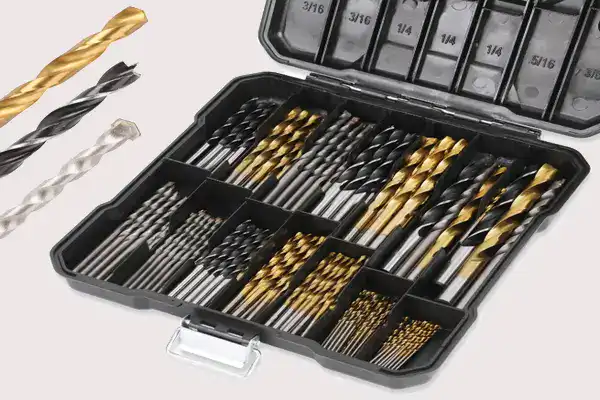
White, black, gold, and tan drill bits signal different surface treatments: ground HSS (white/silver), nitrided (black), titanium nitride (gold), and cobalt high-speed steel (tan/amber). Color hints at both process and performance, especially resistance to wear or heat.

Drill Bit Color Table
| Color/Finish | Processing Technique | Material/Coating | Key Benefits | Common Application |
|---|---|---|---|---|
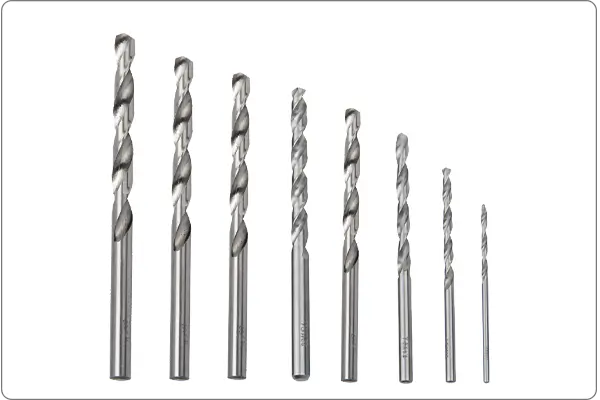
| White/Silver | Fine grinding, strict QC | Fully ground HSS, uncoated | High accuracy, smoothness | Precision steel/aluminum |
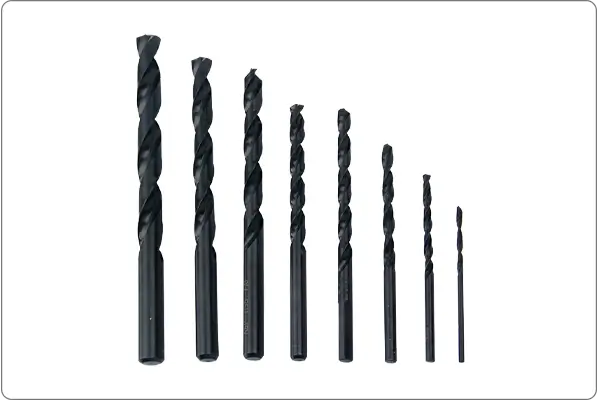
| Negro | Nitriding, oxide treat | HSS, coated or not | Improved wear, anti-rust | Metal, wood, all-purpose |
| Oro | TiN/TiAlN plating | Titanium nitride/aluminum nitride | High hardness, reduced friction | Stainless, abrasive metals |
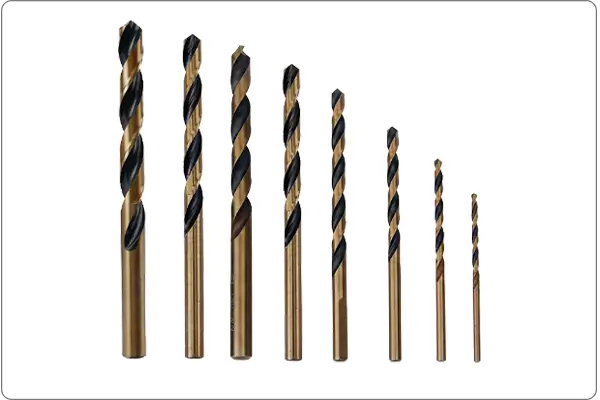
| Tan/Amber | Atomization/grinding | Cobalt HSS (M35) | High heat tolerance, toughness | Stainless steel, alloys |
| Dull gray | Rolled, basic HSS | HSS, minimal finishing | Economy, bulk work | Cheap batch runs |
preguntas frecuentes
- Is gold always better? Not if it’s only decorative—TiN must be properly applied for real benefit.
- Does black mean strength? Only genuine nitriding counts; some are colored just to hide surface flaws.
- White bits look plain—are they good? Fully ground white bits are often highest precision; color doesn’t add quality.
How Does Drill Bit Material Impact Cutting Speed, Life, and Cost?
Substrate material is the foundation of drill performance. From budget grades to high-performance cobalt, understanding material choice brings better tool life, reduced breakage, and superior results.
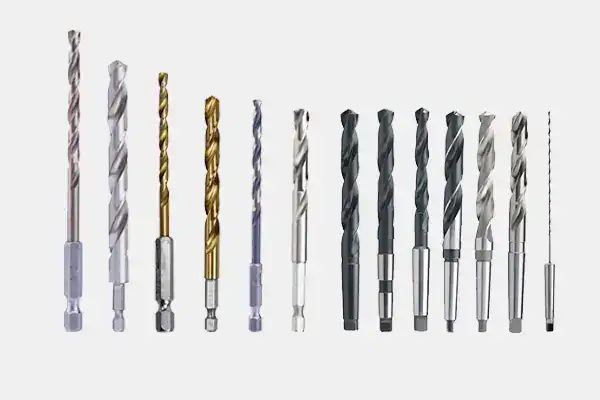
Most industrial drill bits are made from high-speed steels (HSS), ranging from 4241 to 6542, with cobalt types (M35, M42) handling hardest metals. Performance rises with heat resistance, toughness, and sharpness. Cheaper bits suit soft metals and rapid turnover; premium bits justify their higher price in critical jobs.
Drill Bit Material Comparison
| Material | Chemical Composition | Características | Application Areas | Durabilidad | Precio |
|---|---|---|---|---|---|
| 4241/4341 | Basic HSS, less alloyed | Low to medium hardness metals | Iron, copper, aluminum, wood | Low-Med | Low |
| 9341 | Improved HSS | Slightly better wear | Thin stainless, general metals | Med | Affordable |
| 6542 | Premium HSS, high alloy | Can handle hard metals, longer life | Steel, stainless, cast iron | High | Medio |
| M35 | HSS with 5% cobalt | High red hardness, toughness | Stainless steel, alloy steel | Very High | Higher |
| M42 | HSS with 8% cobalt | Extreme heat resistance, abrasion | Hardened steel, tough alloys | Top Tier | Highest |
| Carburo | Carburo de tungsteno | Ultra-hard, brittle, fast cuts | Abrasive, hardened metals, glass | Long | Expensive |
| Titanio | Coated HSS | Reduced friction, chip ejection | All metals, best for CNC | Higher | Adds cost |
Pro Insight
- For regular mild steel or aluminum, budget 4241/4341 is fine for non-critical holes.
- For stainless steel, always choose M35/M42—otherwise, bits wear out or break.
- Coated bits (TiN, TiAlN) resist wear, cutting at higher speeds without burning.
- Carbide bits are fastest, but brittle and require rigid CNC setup.
- For wood, basic HSS or even carbon steel suffices; cobalt is overkill.
What Are the Differences Between Milling, Rolling, and Grinding Processes in Manufacturing Drill Bits?
Manufacturing process directly affects drill bit geometry, surface finish, accuracy, and lifetime. Most high-end drill bits today are either precision ground or milled, with rolled bits dominating mass production for economy jobs.
Grinding after heat treat produces highest geometric accuracy, smoothness, and edge sharpness. Milling offers adaptable groove shapes but slower throughput and lower dimensional stability. Rolling is best for material efficiency but loses precision and risks defect rates due to post-quench deformation.
Technical Comparison — Milling, Rolling, Grinding
| Criteria | Milling | Rolling | Grinding | |
|---|---|---|---|---|
| Groove Finish | Medio | Low | High | |
| Geometric Accuracy | Moderate | Low | Very High | |
| Runout (mm) | 0.05 | 0.08 | 0.03 | |
| Roughness Ra(μm) | Innovador | 4.6 | 6.5 | 2.5 |
| Processing Speed | ~18/hr | ~250/hr | ~98/hr | |
| Production Cost | Moderate | Low | Higher | |
| Waste Rate | Lower | Higher | Lowest | |
| Max Diameter | 70 mm | 40 mm | <15mm |
Economic Analysis
- Milling allows flexibility of shape but costs more in time and tools; best for prototypes or small lots.
- Rolling saves on raw material, excels at mass production, but suffers high rejection rates in spec changeovers.
- Grinding is king for accuracy, sharpness, and surface finish, yielding longer tool life and less scrap—though capital cost is higher.
Practical Effects
- Ground drills keep edge for 1–2x longer use than milled or rolled bits.
- Surface finish directly impacts hole quality, reducing need for post-drilling reaming or smoothing.
- Rolled bits may have cracks, decarburization, or deviation after post-processing.
- For premium production, always require supplier to declare the forming process to guarantee repeatable results.
Technical & Economic Effects: Data-Driven Decision
Here’s how processed bits compare after practical tests:
| Test Condition | Milling | Rolling | Grinding |
|---|---|---|---|
| Material: Quenched steel, HB 190-200 | |||
| Hole Depth: 36mm, No through-hole | |||
| Holes until edge wear VB=0.15mm | 28 | 25 | 34 |
| Cutting Fluid: Emulsified oil solution |
Grinding delivers more holes per tool, superior finish, and overall value despite the upfront equipment cost.
How To Select the Best Drill Bit for Different Applications?
Understanding job requirements—workpiece material, hole depth, production volume, desired finish, machine capabilities—lets you match drill bit type, material, coating, and manufacturing process to your unique needs.
Selection Factors At-A-Glance:
| Consideration | Best Drill Bit Choice | Notes |
|---|---|---|
| Material | For mild steel: 4241/4341 HSS | Standard jobs |
| For stainless: M35/M42 cobalt HSS, TiN coat | Demands high heat resistance | |
| For wood: Carbon/HSS wood bit | Spurs for clean holes | |
| For glass/ceramic: Diamond tip, slow speed | Avoid vibration | |
| Hole Type | Deep holes: Auger or long twist drill | Superior chip removal |
| Large holes: Hole saw, step drill | Sheet metal, drywall | |
| Finish Tolerance | Critical: Ground HSS or carbide bits | CNC high-precision |
| Production Volume | High: Rolled or economy twist drills | Accept higher rejection |
| Low: Milled or ground bits | Low waste, longer life | |
| Tapping/Drilling | Need threads: Tap drill set | Match tap drill chart |
| Coating Need | High-Friction: TiN, TiAlN coated bits | Oil/coolant recommended |
Types of Drill Bits [In-Depth Secondary Directory]
When you understand every type of drill bit and its best use, your drilling work transforms from guesswork into precision machining. Here, I break down the essential categories trusted in industrial production, professional workshops, and home improvement projects. I’ll add personal tips and industrial insights so you can choose the right bit every time.
Brocas helicoidales
Twist drill bits are the most recognizable and widely used drills worldwide. Their design features helical flutes that extend from the tip to the shank, allowing for continuous chip removal as the bit penetrates the material. Traditionally, the tip angle is 118°, optimal for softer metals and general-purpose jobs, while 135° split-point tips provide easier starts and less wandering in harder materials like stainless steel.
Manufacturing materials vary. Standard high-speed steel (HSS) bits are affordable and suit wood, aluminum, soft steel, and plastics in manual drilling and low-intensity CNC work. When drilling tough alloys, cobalt-alloyed bits (M35, M42) offer increased heat and wear resistance, minimizing edge dulling. In high-volume automated shops, solid carbide twist drills serve as the top tier—they hold sharpness longer, resist abrasion from high-speed, unmanned cycles, and cut hard steels or aerospace composites without flaking. Yet, they also require stable fixturing and accurate spindles to avoid breakage due to brittleness.
Professional tip: For everyday jobs in mild steels or non-ferrous metals, HSS bits are cost-effective and widely available. For critical production or stainless, always reach for ground cobalt drills; you’ll reduce wear and get consistent, repeatable holes.
Brocas escalonadas
Step drill bits—sometimes called cone or multi-diameter bits—are the go-to tools for drilling or enlarging holes in sheet metal and thin plastics. The bit’s body is tapered, with distinct steps, each representing a specific diameter. As you drill deeper, the hole grows to the next size. This design deburrs as it cuts, leaving a smooth, even edge without tearing or distortion, vital for thin-walled materials like HVAC ducting or automotive panels.
Most step drills are made from HSS, with TiN (gold) coatings to increase lifespan and reduce friction. Their unique construction is different from standard spiral flutes—with smaller fluted channels that eject chips efficiently to prevent blockage. Step drills excel in making clean, burr-free holes from 4mm to 40mm, often replacing an entire set of twist bits in light sheet work.
Safety advice: Run step drills at low speed to avoid overheating, especially with hand drills. For galvanized steel or aluminum, TiN-coated step drills will outlast uncoated ones by years in professional use. If the job calls for tightly spaced holes, use step drills for initial sizing, then finish with a twist bit for precision.
Brocas para mampostería
Masonry drill bits power through concrete, brick, ceramic tile, and stone. Their tip is usually carbide or sometimes diamond-infused, focused on abrasion resistance and longevity under repeated impact. The flutes are wider and straighter, engineered for efficient dust and large chip evacuation during rotary and hammer drilling.
A unique feature is the reinforced steel body that withstands repeated shocks and vibration, crucial during rotary hammer mode in concrete. Carbide tips endure hard aggregate inclusions and heat generated from friction, while diamond-tipped bits are reserved for extra-hard tiles or engineered stone.
Industrial insight: Always use matching bits for your drilling system—SDS-Plus or SDS-Max shanks in professional rotary hammers ensure locked-in power transfer and prevent dangerous slippage. In tile work, use water as a coolant when drilling with diamond bits. At home, avoid rapid starts and high RPMs—slow, steady pressure saves both bit and surface from cracking.
Center & Spot Drill Bits
Center drills (or combined drill and countersink bits) are short, rigid bits designed to create precise starting points for twist drilling, especially on lathes or CNC centers. Their sturdy construction prevents drill wander, ensuring the subsequent twist drill enters with perfect centering. Spot drills, similar in shape but with a broader tip, provide accurate centering marks and can chamfer the edge to prevent burrs.
These bits are usually made from HSS or cobalt, able to penetrate tough metals with high geometric stability. In high-tolerance manufacturing, such as aerospace, they form the first step of any high-quality bore, eliminating errors from misaligned pilot holes.
Practical tip: Never skip spot drilling when working with stainless or hardened materials; wandering or off-center holes often ruin expensive parts. In manual work, use a center punch first, then a center drill for best results. For CNC, spot drills improve cycle time by reducing the need for secondary chamfer operations.
Brocas para madera
There’s a world of difference between drilling into wood and metal, so the best wood bits feature specialized tips and body shapes. Brad-point bits push outer spurs ahead of the cutting edge; spurs score the edge cleanly before the central tip removes core material, ensuring minimal tear-out on the entry and exit sides of the hole.
Auger bits are the next step for deep holes—they feature threaded screw points that pull the bit into the wood, maximizing feed rate and keeping chip evacuation smooth, ideal for timbers, beams, or heavy carpentry. Spade bits—wings extending from a central point—are economical for wide, shallow holes often drilled for wiring, plumbing, or quick pocket holes.
Personal advice: When working with hardwoods or delicate veneers, always use brad-point or brocas de barrena. Spade bits are best for speed, not finish. For deep bore holes, clear chips every few centimeters to avoid burning the bit and ruining the workpiece.
Forstner & Hole Saw Bits
Forstner bits cut flat-bottomed holes with smooth sides, essential for cabinet making, hinge installation, or furniture joinery. Their ring-shaped cutting rim slices cleanly, aided by a central point for accurate location. The closed design allows overlapping holes and edge drilling, expanding possibilities in complex joinery.
Hole saw bits are designed for large-diameter holes—such as pipe, conduit, or door hardware installations—in wood, drywall, metal, or plastic sheets. The bit’s toothed ring bites through material, guided by a pilot drill at the center, and ejector slots clear waste efficiently.
Industrial tip: Use low speed and high torque for hole saws to prevent burning. In metals, lubricate cuts and use bi-metal saws for longer life. Forstner bits are best suited to drill presses—with hand drills, ensure the bit doesn’t wander to guarantee smooth, accurate flat-bottomed cuts.
Specialty Bits
Some drilling jobs require more than the standard lineup. Glass and tile drill bits, equipped with spear points (tungsten carbide or diamond-coated), cut through brittle surfaces without cracking. Use water as a coolant and low speed for glass, mirror, or ceramic tile—avoid hammer action unless rated for it.
PCB micro-drill bits are ultra-fine (down to 0.2mm), often solid carbide, made for high-speed circuit board machining. These ultra-precise bits resist deflection and chipping, with cylindrical bodies and high flute counts for rapid dust clearance.
Other specialty bits include countersink bits (for flared screw heads), plug cutters (for wood plugs), and auger bits with extra-long bodies for deep channel drilling.
Hands-on tip: For glass and tile, tape the area to minimize slip, never start at high speed, and let the bit do the work. For micro-drills, always use rigid CNC machines; hand drilling risks snapping these delicate bits.
Common Drill Bit Problems and Solutions
Even with the perfect drill bit, mistakes can happen. Through years of troubleshooting in the field and at the workbench, I’ve seen recurring problems and learned how to prevent them.
1. Bit Breakage
Bit breakage is often the result of excessive force, high RPMs, or using the wrong bit for the material. Dull bits need more pressure, increasing side loads that snap the bit.
Solution: Match bit type to the material, reduce speed for tough jobs, keep bits sharp, and let the tool do the work. In metals, use cutting oil; in woods, clear chips frequently and check alignment.
2. Excessive Wear
Excessive wear manifests as dull edges, loss of coating, or burned tips. Often the cause is inadequate lubrication, high-speed drilling, or poor-quality bits.
Solution: Use proper cutting fluids for metals, and select coated or cobalt bits for abrasive materials. Replace bits before severe dulling—sharpen if possible.
3. Oversize and Irregular Holes
Worn or bent drill bits will produce holes larger than advertised, with rough walls or taper. In wood, this often happens with spade bits run at too high speed.
Solution: Use only straight, sharp bits, and slow down feed when entering or exiting the workpiece. Clamp work securely and use pilot holes for accuracy.
4. Chipping and Surface Cracking
When drilling glass, ceramics, or dense tiles, the surface may chip or crack from rapid starts, high feed pressure, or dry cutting.
Solution: Start slow, use water coolant, tape the drilling surface, and let the bit establish the hole gradually. Special bits with sharp spear points reduce force needed and prevent cracks.
5. Poor Chip Ejection and Bit Clogging
In plastics and wood, long stringy chips can clog flutes. In deep metal drilling, poor chip clearance overheats the bit.
Solution: Withdraw the drill bit to clear chips, use spiral-flute bits with large channels, and avoid forcing the tool further when resistance climbs.
6. Wandering or Off-Center Holes
In metals and hard materials, drill bits wander if not started correctly, leading to misaligned holes.
Solution: Always use a center punch or spot drill first. For critical jobs, start with a pilot hole no greater than half the final size, then finish with the correct bit.
How Does Supplier Quality Drive Your Success?
Your drill bit supplier defines batch quality, consistency, and support during breakage, wear, or technical issues.
The right supplier offers:
- Proven brand reputation across markets
- Quality upstream raw material sourcing and batch traceability
- Rigorous quality control, in-process and post-process
- Advanced heat treatment and grinding capabilities
- Multiple-batch testing, continuous monitoring
- Support for custom specs and urgent replacements
Suppliers able to certify ISO, CE, RoHS, and other international standards ensure you meet most global import and industry requirements.
Buying Tips for Professionals, Brands, and Distributors
- Insist on certification—don’t trust color alone.
- For production, require process declarations: grinding > rolling or milling.
- Always check for multi-batch repeatability—one good batch isn’t enough.
- Test drills on actual material before committing to large purchases.
- Ask for cutting data and tool life statistics.
- Prefer suppliers that offer technical support for troubleshooting and optimization.
Quick Questions Answered
What’s the Difference Between Each Drill Bit Process?
- Grinding: Highest precision, longest life, best surface finish. Best for high-value jobs.
- Rolling: Lowest cost, good for mass production and bulk orders, but less dimensional control, often more waste.
- Milling: Flexible shape, small batch runs, higher price, medium finish.
What Do Drill Bit Colors Really Mean?
Color indicates process and coating, not absolute quality. Gold (TiN/TiAlN) means wear resistance when applied properly; black means nitrided or oxide layer if real; white/silver signals precise grinding. Always check specs, not just color.
Which Drill Bit Should I Buy for Stainless Steel?
M35 or M42 cobalt HSS, preferably ground after heat treat, TiN coating for best life and performance. Never use base grade HSS on stainless; it burns and breaks quickly.
How Do I Know a Drill Bit Is Good Quality?
Check for grinding process, sharp smooth edge, certificate of material (HSS, M35, M42), and batch testing reports. High-quality bits have minimal runout, precise dimensioning, and a consistent finish. Well-made bits will always perform better and reduce waste.
You Can Send Us Your Request



Conclusión
Understanding drill bit types, materials, processes, and quality control helps you choose the right drill for every job—whether you’re working in high-volume manufacturing, precision aerospace, or custom repair. Accurate selection boosts productivity, improves hole quality, and saves money on wasted or broken tools. Don’t rely on color alone; learn the details and demand quality from your suppliers for the best long-term results.
-
Understanding mechanical processing helps in selecting the right tools for efficient production. ↩
-
Explore how drill bit colors relate to their material, coating, and performance. ↩
-
Discover the factors to consider when choosing the best drill bit for your needs. ↩
-
Learn about the importance of substrate materials in determining drill bit quality. ↩
-
Explore various processing techniques and their impact on drill bit performance. ↩ ↩
-
Learn about the unique features and applications of step drills. ↩
-
Find out how masonry drill bits are designed for concrete and stone. ↩
-
Explore the precision and uses of Forstner bits in woodworking. ↩
-
Understand the applications of auger bits in creating deep holes in wood. ↩
-
Learn how center drills are used for creating starter holes in metalworking. ↩
-
Discover the role of spot drills in accurate centering and chamfering. ↩
-
Find out how hole saws are used for cutting large diameter holes. ↩
-
Learn about the specialized design of glass/ceramic bits for delicate materials. ↩