For saw blade brands, choosing the right manufacturing model1 is the difference between successful product launches and costly setbacks. Whether you’re building a flagship line or scaling up across channels, the OEM, ODM, and JDM paths each offer distinct advantages—and missteps can undermine your product’s performance, reputation, or profitability. Understanding the technical and commercial implications of each model is essential for lasting success.
OEM, ODM, and JDM are the three main manufacturing model1s for saw blade products. OEM offers full control and customization, ODM provides speed and cost efficiency with proven designs, while JDM enables joint innovation and advanced differentiation. Each model fits different goals, resources, and risk profiles.

I’ve worked with global saw blade brands2 and large procurement teams as they take products from concept to market. Every strategic partnership with Tenyu Tool begins with these model choices—balancing time, cost, intellectual property3, and customization4. Houxiang Town’s manufacturing cluster gives us the unique technical edge to support all three approaches. Let’s break down the models and their specific impact for saw blade products.
How Does the Manufacturing Model Shape Your Saw Blade Brand’s Performance and Growth?
The saw blade market is complex. Buyers want precision, endurance, multi-material utility, and clear certifications5. End users look for clean cuts, long blade life, minimal vibration, and guaranteed safety in wood, steel, aluminum, or composite cutting tasks. Retailers, wholesalers, and professional brands need scalable supply, consistent quality, attractive packaging, and fast updates for changing market demands6.
Your manufacturing model defines your control over product design7, intellectual property3, innovation, cost, and risk. An optimal match ensures reliable supply, high technical performance, and distinct brand identity—while avoiding delays, costly redesigns, or supply chain vulnerabilities8.
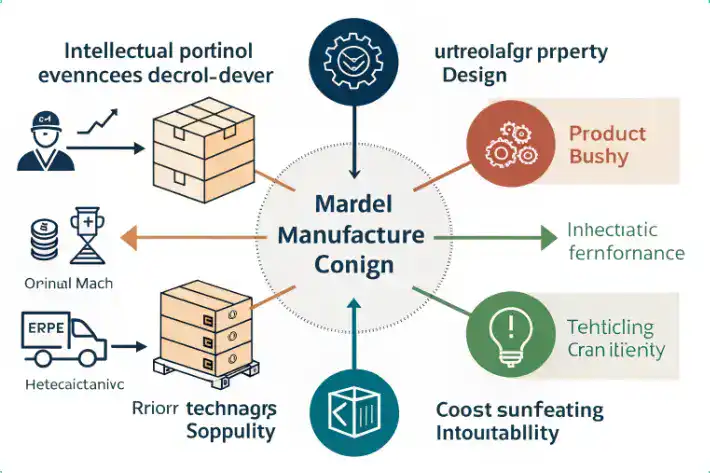
Choose wisely: OEM9 secures customization4 and IP, vital for breakthrough blade technology. ODM speeds your go-to-market with market-tested lines and packaging. JDM10 leverages joint expertise for fast prototyping11, risk-sharing12, and disruptive innovation. Your internal skillset, volume needs, and market strategy13 point to the best fit.
| Model Dimension | OEM | ODM | JDM |
|---|---|---|---|
| IP Ownership | Brand 100% | Fabricante | Shared or Negotiated |
| Customization Depth | Unlimited (geometry, tooth, coating) | Limited (catalog, branding) | Co-developed, advanced options |
| Time-to-Market | Longer | Fast | Medio |
| Development Investment | High (tooling, R&D) | Low to Moderate | Shared/Medium |
| Production Scalability | High | Very Flexible | Flexible |
| Brand Exclusivity | Strongest | Moderate | Strong |
| Innovation Potential | Brand-driven | Factory-driven | Synergy-driven |
| Certificación | Custom | Standardized | Joint/advanced |
What Is OEM (Original Equipment Manufacturing) for Saw Blades—and Who Should Choose It?
OEM places complete design and technical ownership into your hands. As a brand, you specify every detail: blade body material, tooth shape, carbide grade, gullet geometry, vibration damper slotting, coating type, and packaging. The manufacturer—such as Tenyu Tool—is your hands and factory, executing to your blueprint, while you maintain confidentiality and IP.
OEM is the best route for brands with unique designs, patented solutions, special coatings (PVD, TiN, Diamond), and strict quality targets. It’s the only way to lock in full exclusivity and compliance for advanced, professional or industrial saw blade products.

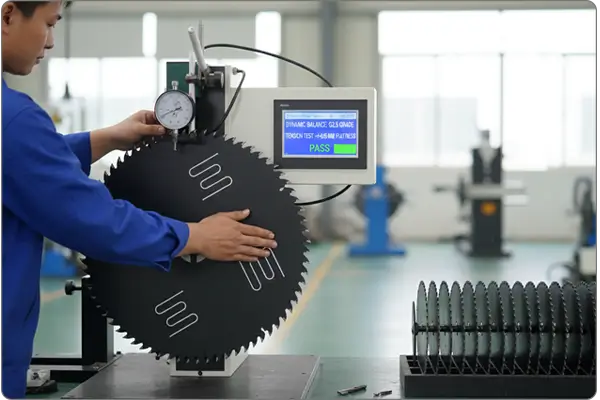
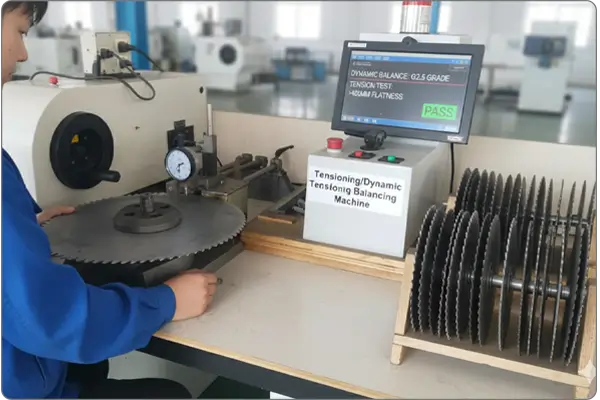
For OEM projects at Tenyu Tool, customers provide CAD drawings, required technical specs (e.g., tungsten carbide tip thickness, anti-resonance slot patterns), and use cases. Our engineers perform alloy analysis, CNC blank cutting, high-precision grinding, and multi-stage QC, from contour accuracy to dynamic balancing. Packaging, etching, and barcode setup follow client instructions. All technical and process data is kept confidential—ensuring your IP and brand value are protected.
Dive Deeper: The OEM Saw Blade Process
| OEM Stage | Brand Responsibility | Tenyu Tool’s Responsibility | Value Created |
|---|---|---|---|
| Product Definition | Full specs, drawings, quality targets | Material sourcing, feasibility, DFM | Unique design, IP safety |
| Prototyping/Test | Approve samples, set tolerances | Produce and test prototypes | True field-ready results |
| QC and Certification | Define acceptance, audit reports | Advanced testing, certification | Compliance, reliability |
| Mass Production | Set volumes/timeline, final approval | Run scale lines, multi-batch QC | Consistent delivery |
| Branding/Packaging | Artwork, box/barcode, inserts | Private label, custom packing | Market exclusivity |
OEM fits:
- Flagship blade launches with unique value (ultra-thin kerf, dual-purpose teeth, low-vibration slots).
- B2B/industrial projects needing EN 13236, CE, ANSI, or custom certifications5.
- Large-scale or franchise retail needing exact branding and technical compliance.
- Companies with strong R&D, premium product strategies, and IP control goals.
What Is ODM (Original Design Manufacturing) for Saw Blades—and How Does It Accelerate Growth?
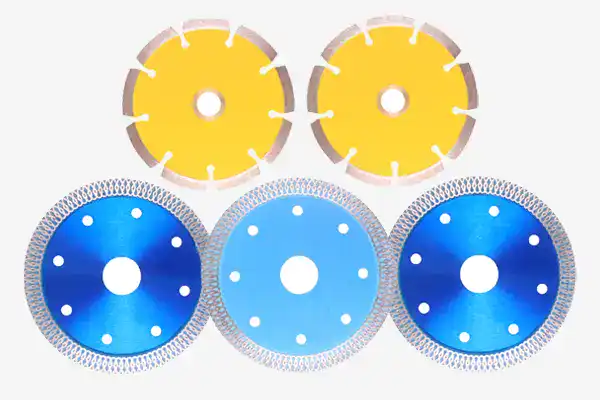
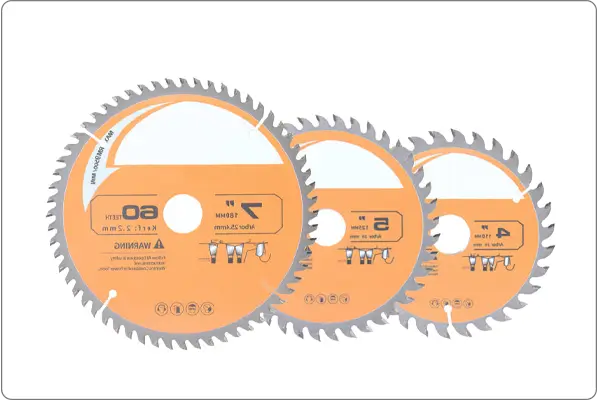
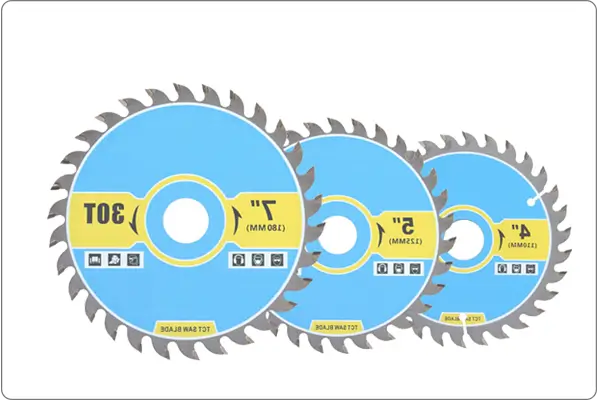
ODM14 leverages the manufacturer’s catalog and technical experience. Tenyu Tool develops and owns the blade design, engineering, certifications, and most process IP. You choose from validated blades—like TCT wood, diamond tile, or steel cut-off—then adapt via branding, packaging, or surface color tweaks. Launch is fast, cost is low, and you avoid deep R&D or tooling cycles.
ODM is the best path for rapid launches into new markets, private label expansions, or retail promos—with validated, high-performance blades that scale from 1,000 to 100,000+ pieces quickly.

ODM at Tenyu Tool comes with an extensive selection of blades. Designs are tested for performance (heat distortion, tip wear, cut accuracy), and certified (ISO, EN, CE). Brands add their logo, customize inserts, request color accents, and adjust packaging for the sales channel. All QC and export logistics are handled in-house, including batch traceability.
Dive Deeper: The ODM Process for Saw Blades
| ODM Stage | Brand Controls | Tenyu Tool Delivers | Beneficios |
|---|---|---|---|
| Model Selection | Picks blade types, specs | Offers full catalog | Fast market access |
| Branding | Sets logo, box, inserts | In-house printing, box design | Brand consistency |
| Customization | Minor features (diameter, label) | Modular production | Quick SKUs, variety |
| Seguro de calidad | Review sample reports | Routine QC, batch records | Reliable supply |
| Certificación | Requests basic compliance | Standard certificates, export docs | Ready for retail |
ODM fits:
- Startups, retail chains, and wholesalers growing fast on new channels.
- Entry-level or promotional blades (DIY/home improvement).
- Brands wanting breadth of selection without upfront technical risk.
- Companies with limited engineering or design resources.
What Is JDM (Joint Design Manufacturing) for Saw Blades—and Why Innovators Prefer It?
JDM is a co-development15 model: both you (the brand) and Tenyu Tool collaborate from napkin sketch to final blade. You bring user, market, or application insight; Tenyu Tool brings technical R&D, process know-how, and rapid prototyping11. IP, process knowledge, and investments can be split or negotiated. JDM is chosen when existing designs can’t solve new needs, or when true differentiation is key.
JDM is the best route for difficult custom requirements—multi-purpose blades, advanced tip geometry, low-resonance designs, “smart” identification, or new application segments. Both sides share risk, iterate faster, and capture user-driven market opportunities.
JDM at Tenyu Tool is a hands-on journey: market data guides early concepts, engineering simulations fine-tune geometry (e.g., alternating top bevel, expansion slots, silent cores). Pilot batches are field-tested, with joint validation and multi-factor QC. Negotiated IP means either party can commercialize or license—depending on the strategic value.
Dive Deeper: The JDM Innovation Model in Saw Blades
| JDM Stage | Joint Tasks | Outcome | Technical Depth |
|---|---|---|---|
| Ideation | User needs, spec sketch | DFM feasibility review | Blade geometry, coating, slots |
| Prototype | Both design, field trial | Rapid cycles, performance scoring | Multi-material lab tests |
| IP Negotiation | Share/license decisions | Split commercialization, market access | Patents, branding agreement |
| Go-to-Market | Joint launch, QC oversight | Flexible scale, premium pricing | Enhanced compliance, certifications |
JDM fits:
- Companies targeting unique market niches or breakthrough blade features.
- Brands lacking full technical R&D but strong distribution, retailer insight, or customer feedback channels.
- Partnerships planning joint IP ownership and global launches.
- Advanced projects requiring custom materials (e.g., nano-composites, adaptive expansion slots, ergonomic packaging).
How Should Your Saw Blade Brand Choose Between OEM, ODM, and JDM Models?
Here’s a strategic checklist for saw blade decision-makers:
-
Assess Your Team and Capabilities
- Are your engineers ready for full custom design? OEM or JDM will suit best.
- Do you need a quick launch with reliable product? Select ODM.
-
Determine Your IP and Brand Strategy
- Proprietary geometry, coatings, or features? Protect with OEM/JDM.
- Going for breadth, price, and quick market access? Choose ODM.
-
Calculate Investment Risk
- Can you spend upfront for long-term flagship lines? OEM/JDM fit.
- Budget sensitive, testing new channels? ODM is safest.
-
Match Timeline and Distribution Needs
- Fast retail or eCommerce? ODM leads in speed.
- Complex B2B or industrial segments requiring advanced certification? OEM or JDM provide depth and compliance.
-
Explore Hybrid Approaches
- Many leading brands blend these, using ODM for volume and JDM/OEM for advanced or differentiated SKUs.
Why Tenyu Tool Delivers Value Across All Saw Blade Manufacturing Models
Tenyu Tool blends over 15 years of advanced manufacturing expertise, with 15 professional lines managed by seasoned engineers and full-cycle QC. For OEM clients, we provide confidentiality, process transparency, and limitless customization. Our ODM catalogue offers proven blades, reliable supply, and fast branding support. JDM clients enjoy true technical and marketing synergy—tapping real innovation, shared investment, and smart risk reduction.
With global certifications (ISO, EN, CE, RoHS), robust capacity, and flexible co-development, we help brands stay ahead—whether you need entry-level volumes or institutional flagship launches.
You Can Send Us Your Request


Conclusión
OEM, ODM, and JDM are not just acronyms—they are strategic partners for your saw blade product’s journey. By matching your resources, market needs, and brand vision to the right model, and working with a trusted manufacturer like Tenyu Tool, you can secure your place in today’s fast-evolving saw blade market.
-
Understand the implications of choosing the right manufacturing model for your products. ↩ ↩
-
Find out which brands are leading the saw blade industry and what makes them successful. ↩
-
Learn about the significance of IP protection in maintaining competitive advantage. ↩ ↩
-
Explore how customization can enhance product differentiation and customer satisfaction. ↩ ↩
-
Understand the certifications that can enhance the credibility and safety of your saw blades. ↩ ↩
-
Learn how to adapt your saw blade designs to meet changing market demands. ↩
-
Explore the relationship between design choices and the performance of saw blades. ↩
-
Learn about best practices to ensure a reliable supply chain in manufacturing. ↩
-
Explore how OEM manufacturing can provide full control and customization for your saw blade designs. ↩
-
Discover how JDM fosters joint innovation and can lead to unique saw blade features. ↩
-
Discover how prototyping can lead to better product outcomes in saw blade manufacturing. ↩ ↩
-
Understand how risk-sharing can benefit both manufacturers and brands in product development. ↩
-
Discover strategies that can help your saw blade products stand out in a competitive market. ↩
-
Learn how ODM can help you quickly bring validated saw blade designs to market with lower costs. ↩
-
Understand the benefits of co-development in creating innovative saw blade products. ↩