

Premium Countersink Tools Manufacturer & Wholesale Supplier in China
- Your Trusted Partner in Premium Hardware Tool Manufacturing
- 15+ Years of Excellence in Hardware Manufacturing
- Wholesale Hardware Sets at Factory-Direct Prices
- OEM & Private Label Services | EN12413 Certified

Countersink Tools Manufacturer From China
- One-stop solution for your purchase
- Your Source for Quality, Competitive Pricing, and On-Time Delivery.
- Fast quotation within 12 hours
- Free samples available for quality check
Your Leading Countersink Tools Manufacturer & Supplier
SGS & ISO Audited Countersink Tools
Tenyu Tool, a professional Fast quotation within 12 hours supplier, has been approved by SGS, and obtain ISO quality system certification, ISO environmental management system certification.
Fast Quotation & Professional Export Service
Receive a detailed quotation within 12 hours. Our experienced international sales team understands the requirements of global buyers, providing efficient documentation, packaging options, and customs support.
Global OEM & Distributor Support
We provide private labeling, custom specifications, and technical support services to help distributors, agents, and wholesalers quickly expand their product portfolio with premium, high-margin carbide tooling solutions
Fast Delivery
Tenyu Tool keep stable delivery time 7-35 days. Tenyu Tool owns 15 auto production line which will guarantee your delivery date. Even in peak season, we can catch the delivery time. There will be no delay.
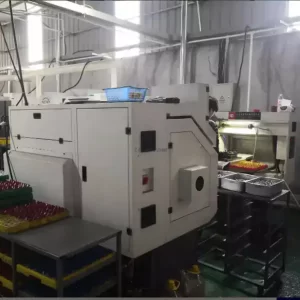
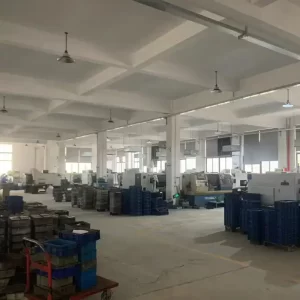
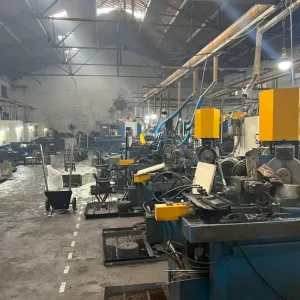
Tenyu Tool Professional Production Workshop for Countersink Tools
Support online face-to-face factory visits
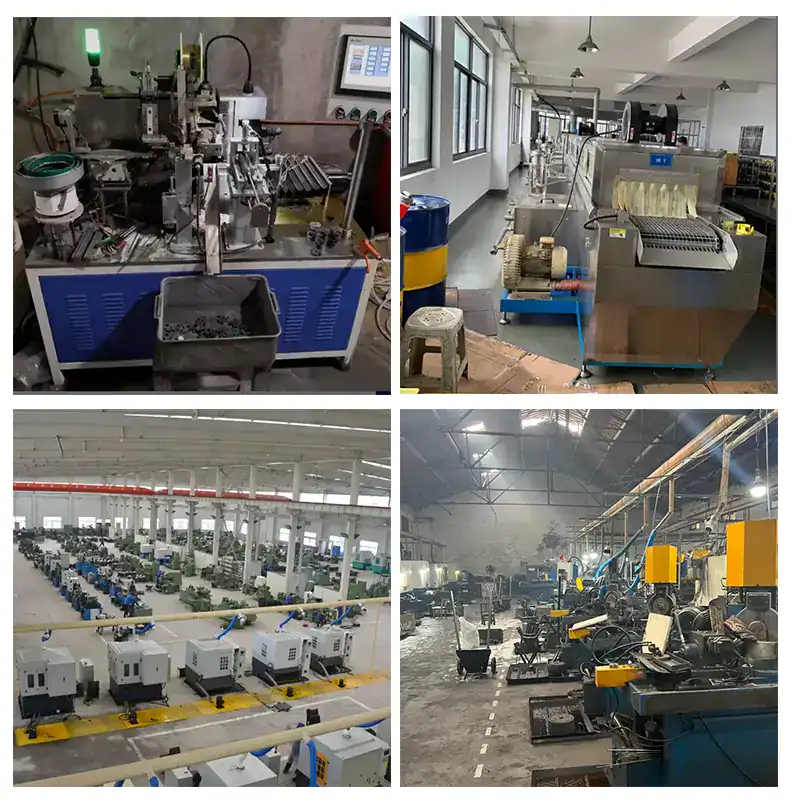
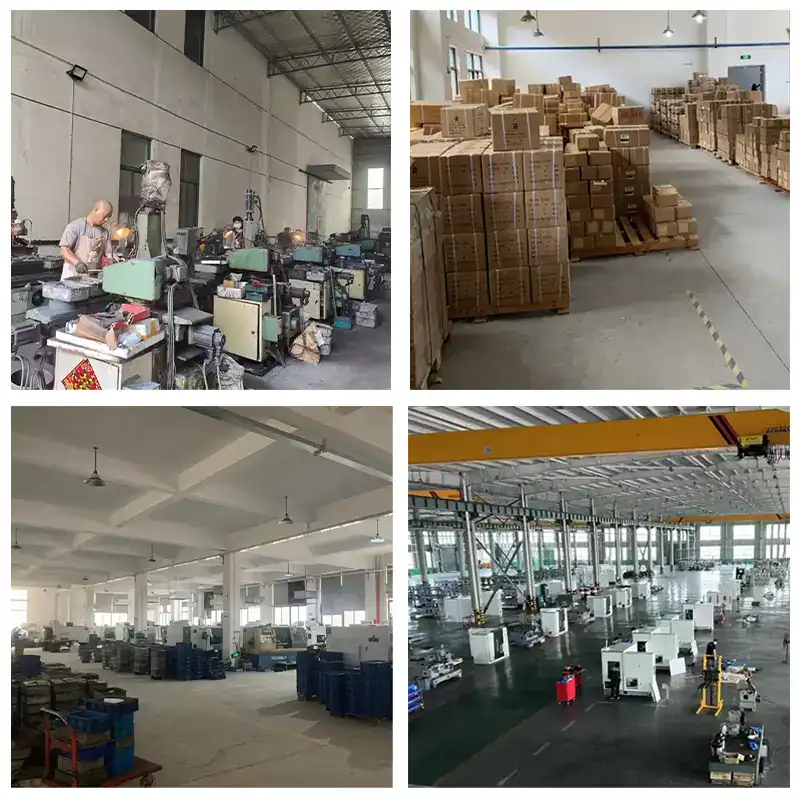
Tenyu Tool Professional Production Workshop for Countersink Tools
Support online face-to-face factory visits



Voice of the World Exhibition
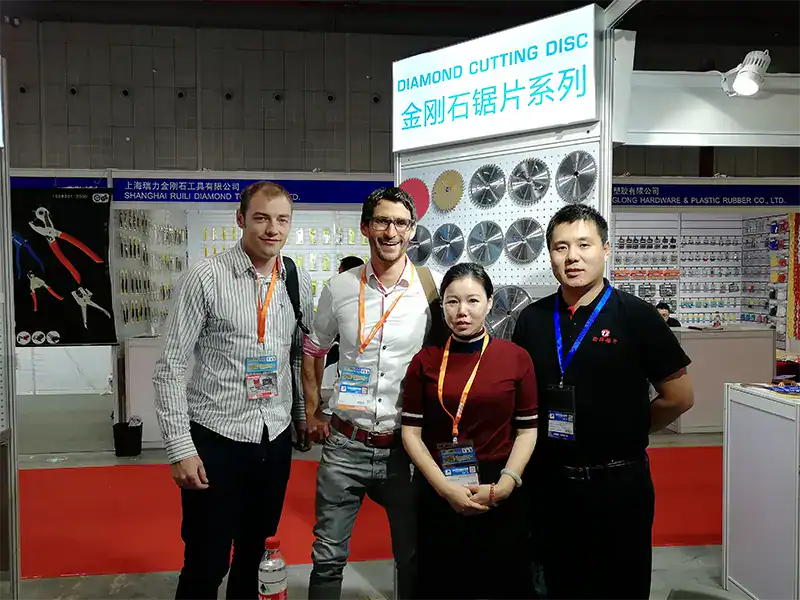
Tenyu Tool actively participates in trade shows around the world and visits our customers, we get closer to them and get more opportunities to present our countersink tools.


Voice of the World Exhibition
Tenyu Tool actively participates in trade shows around the world and visits our customers, we get closer to them and get more opportunities to present our countersink tools.





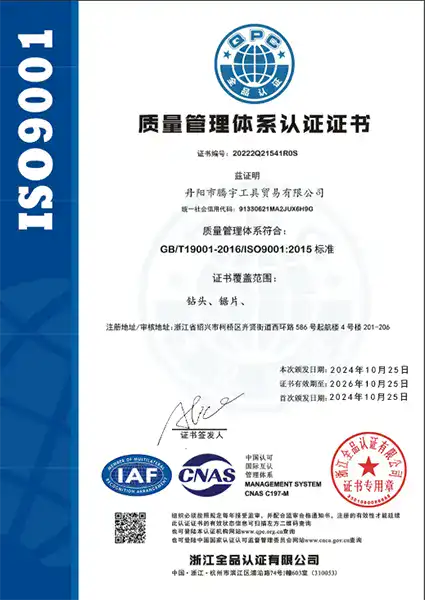
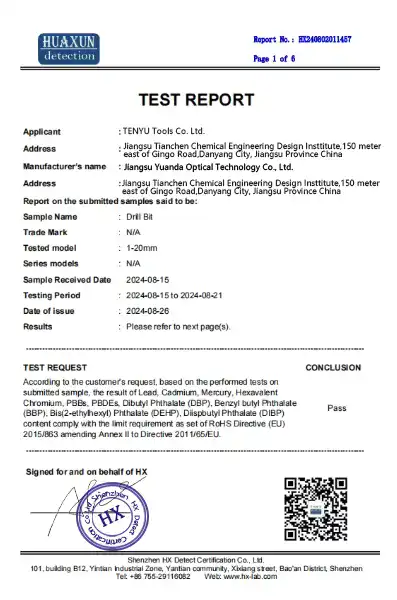
Qualification Certificate
Third-Party Verified Excellence: Engineering Confidence Into Every Countersink Tools.
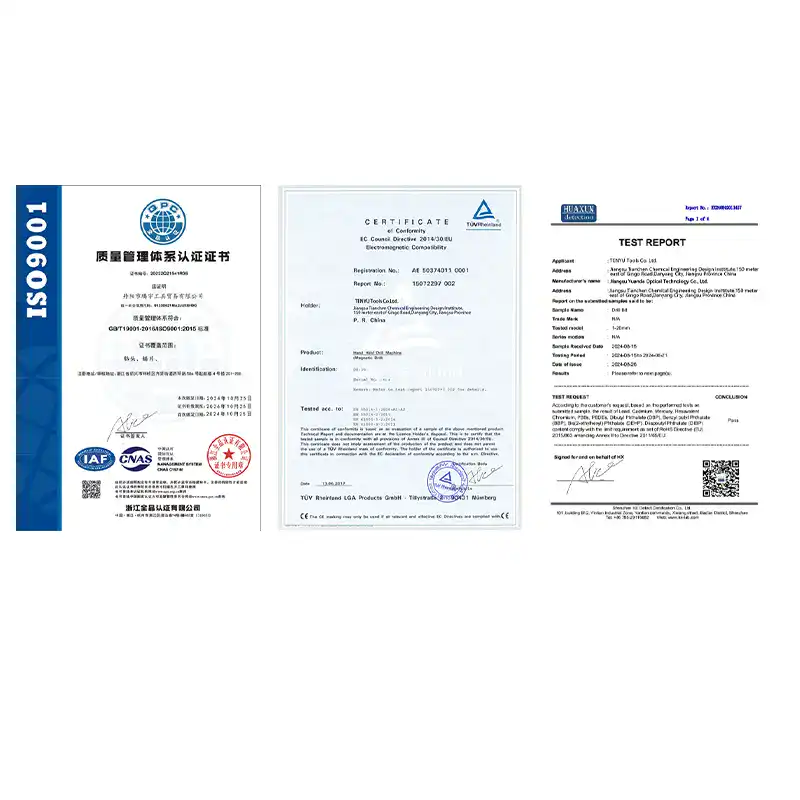
Qualification Certificate
Third-Party Verified Excellence: Engineering Confidence Into Every Countersink Tools


Purpose of a Countersink Tools
A countersink bit creates a conical recess at the top of a drilled hole, allowing screw heads to sit flush or below the surface for a clean, professional look.
How It Works
Drill a Pilot Hole – A hole is drilled to match the screw’s diameter.
Fraiser – The countersink bit chamfers the top of the hole to match the angle of the screw head.
Insert Fastener – The screw is driven in until its head is flush with or slightly recessed into the surface.
What is a Countersink Tools ? How does it work?
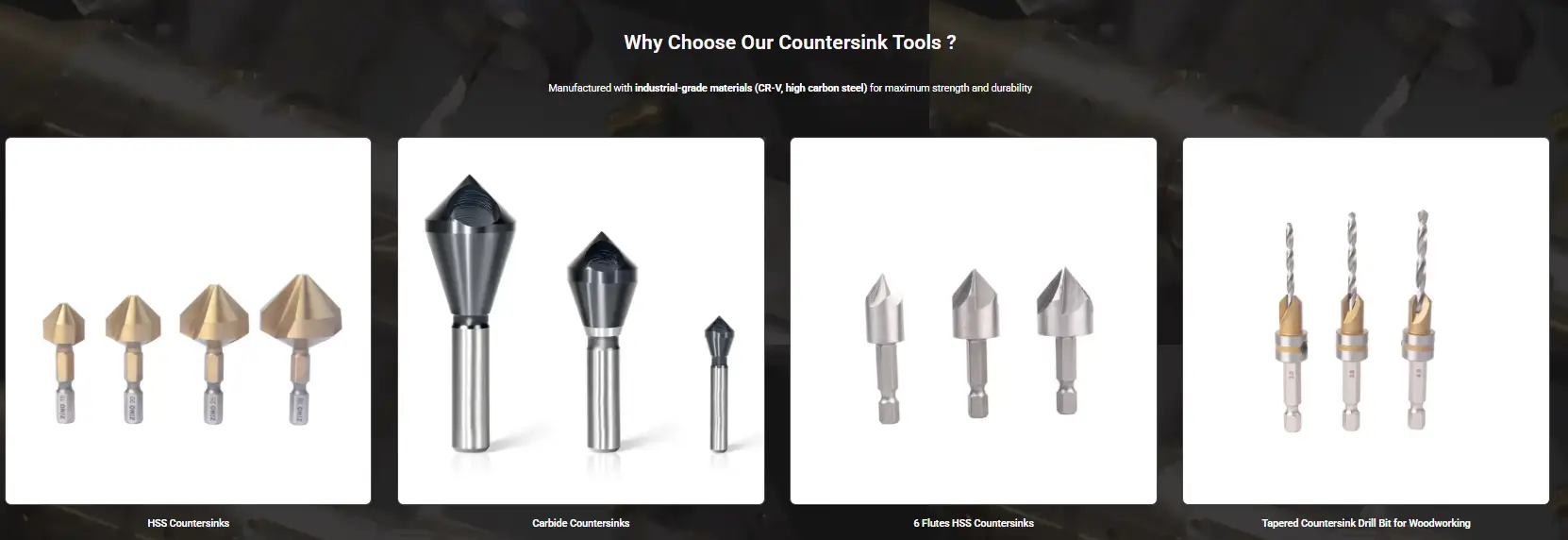
Why Choose Our Countersink Tools ?
Manufactured with industrial-grade materials (CR-V, high carbon steel) for maximum strength and durability
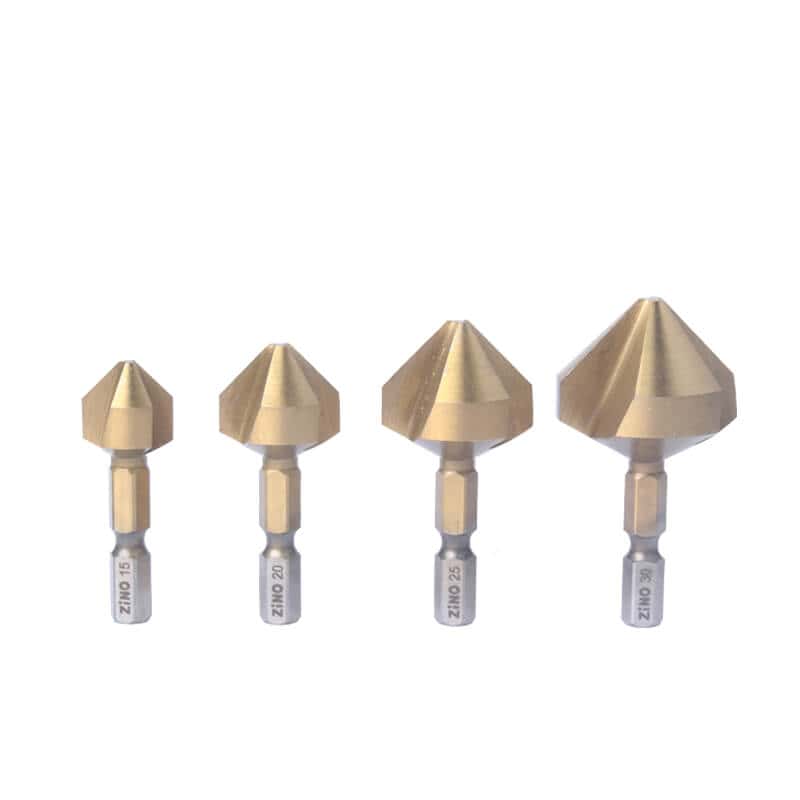
HSS Countersinks
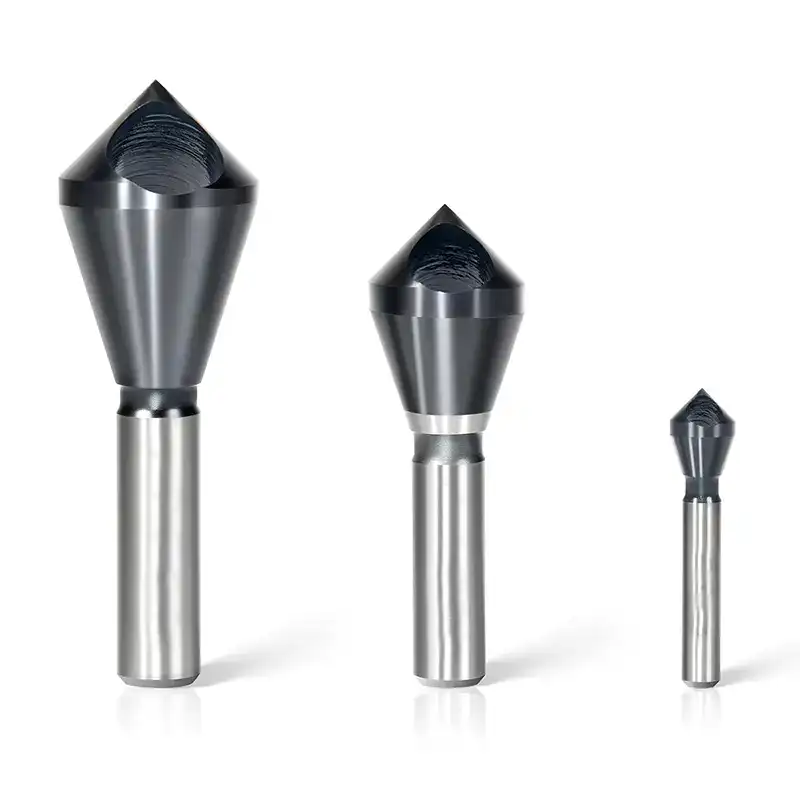
Carbide Countersinks

6 Flutes HSS Countersinks
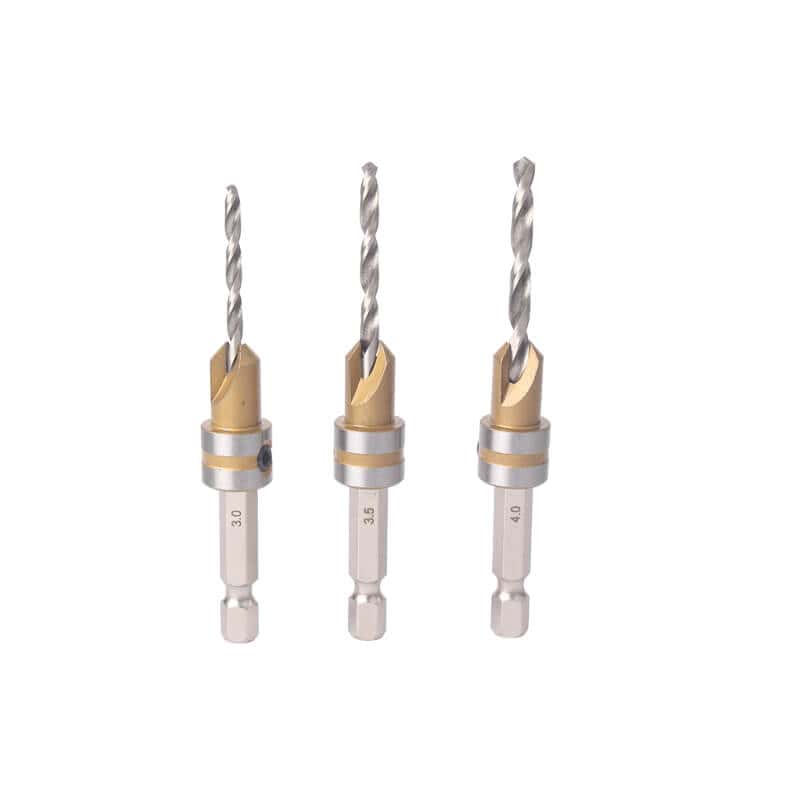
Tapered Countersink Drill Bit for Woodworking
Table of Contents
FAQ section:
Can I adjust the drilling depth for different screw lengths, and does the set include the necessary tools?
Yes! Our countersinking drill bits feature an adjustable stop collar (or adjustable sleeve). By loosening the included hex wrench (Allen key), you can slide the drill bit up or down to match the exact length of your screw.
• Benefit: This ensures you don’t drill too deep into your workpiece, which is critical for furniture making and cabinetry where precision is key.
Does the wood dust get trapped in the flutes, and how do I prevent the bit from burning the wood?
Our bits are designed with extra-wide chip channels to eject sawdust efficiently as you drill.
• To prevent burning: If you are working with extremely hard woods (like Oak or Maple), we recommend a “pecking” motion—pulling the bit out slightly during the process to clear the chips. This prevents heat buildup that can scorch the wood or dull the cutting edge.
If the center drill bit breaks, do I have to buy a whole new tool? Also, will this fit my impact driver?
Not at all. The center pilot bit is fully replaceable. If it breaks or becomes dull, simply unscrew the set screw and swap in a standard tapered or straight drill bit of the same diameter.
• Shank Design: Our bits feature a 1/4″ Hex Shank, making them “Quick-Change” compatible. They fit perfectly into standard power drills and impact drivers without slipping.
Countersink Tool Manufacturer - Cutting Tool Drill Bit for Wood & Metal
Welcome to the most in-depth guide online on everything there is to know about forets à fraiser, which are very useful for woodworking and metalworking, where a hole needs to be drilled and then tapped. As a professional manufacturer of countersinks, we commit to manufacturing a whole series of chop-cut saw machines and bits, in order to meet the demand from importers & wholesalers& purchasing managers. No matter the material you are working with, knowing the uses and advantages of these tools is an important factor in being successful on any do it yourself project. In this article, we will discuss the countersink tool in more detail to help you understand its uses, advantages and types available for your needs.
Countersink Tool Overview
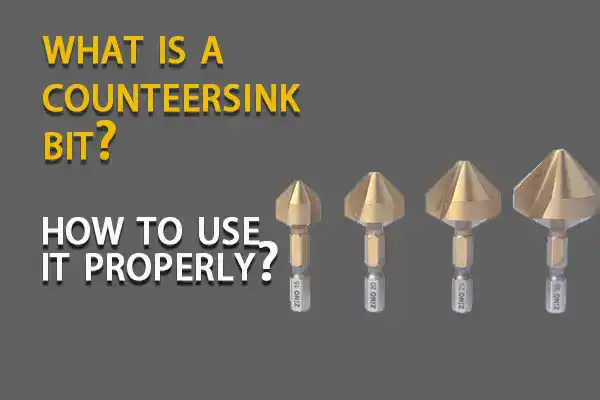
What is a Countersink Tool?
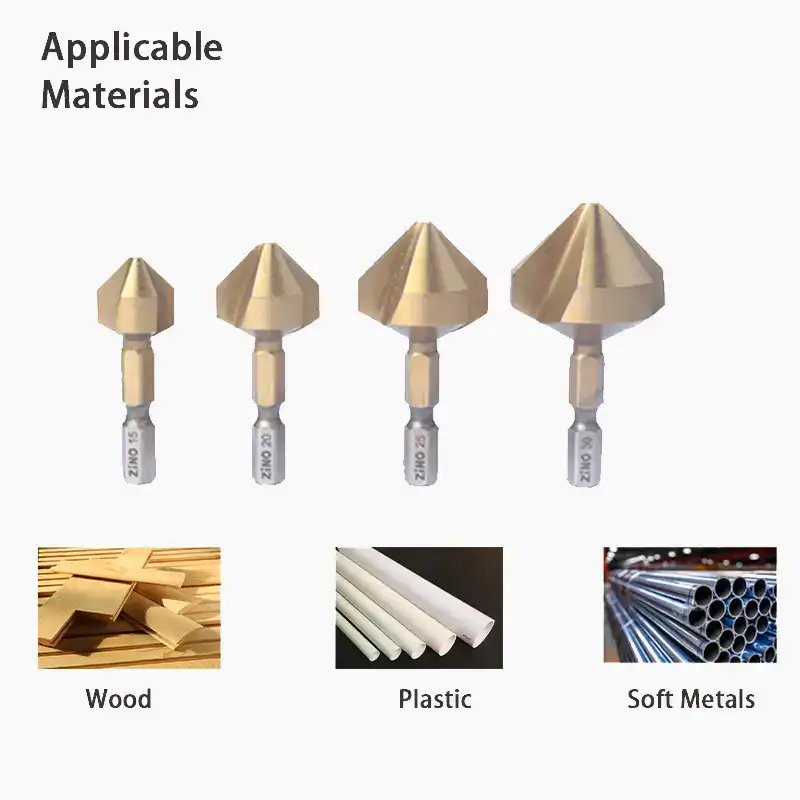
A countersink is a conical hole cut into a manufactured object, or the cutter used to cut such a hole. This enables the head of a screw or fastener to be level with, or only slightly punctuated from, the surface of the material. The power tool attachment has more than one use, the most common being to leave a professional finish. These countersink tools are available in different materials, such as high-speed steel (HSS) and carbide, with carbide v-point types being significantly more durable when used to deburr harder metals.
Applications of Countersink Tools
Countersinks are used in many different applications and industries. In wood, the latter provides a flush or hidden joint, while the head/tip provides torsional and shear strength. Countersinks in metalworking are used to remove burrs from holes, making the hole fit for a screw or bolt head. Countersink tools are also important in precision manufacturing, where a professional finish is required. A variety of countersink tools are chosen depending on the material to be milled, and a carbide countersink can be used for hard metals or maximized life.
Advantages of Utilizing a Countersink Bit
There are many advantages to using a countersink tool, putting the versatility of such a product on full display! So, first of all, it allows you to make your screw heads perfectly flat with a surface, so they don’t stick up, making them some kind of hazard or obstacle. This is especially important in applications that require a smooth surface. Second, when you countersink the screw, it looks better anyway — it gives a finished, professional look to your project. In addition, countersinking tools may add to joint strength by diffusing the load more uniformly over the fastener.
Countersink Bit Types
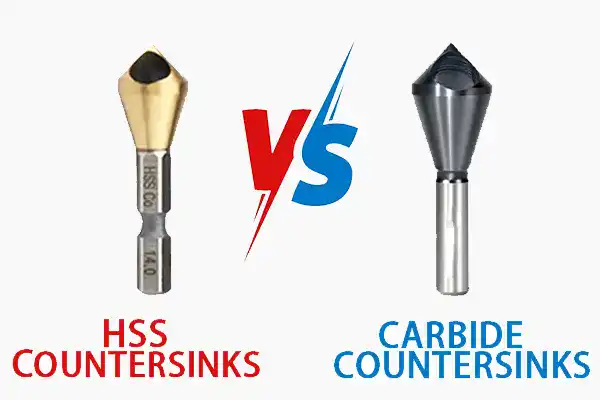
HSS vs. Carbide Countersinks
When choosing a countersink bit, you should consider the material of the bit. HSS countersink bits are an economical alternative to cobalt, and they offer sufficient hardness to work well with wood, plastic, and softer metals. But for more demanding applications with harder materials such as hardened steel or cast iron, choose carbide countersinks. Carbide cutting tools possess hardness and wear resistance, heat resistance characteristics, due to the high temperature sintering technology, to effectively prevent chipping. Carbide countersink tools are more expensive, but they cut better and last longer. These are a good investment for professional users who use their tool regularly to counter sink harder materials.
Application of Countersink Bits
The use of countersink bits will mostly determine which type of bit is necessary. A common HSS countersink bit or tool countersink set would mostly meet woodworking demand. These bits will fit into a pre-drilled countersink to create a finished hole with WAY less splintering. Use in metalworking depends on the hardness of the metal being worked; in general, HSS countersinks can be used on metal softer than 38 HRC, and can be used as high as 45 Rockwell C when adequate speed and pressure are used.
The choice of material and coating of the counterbore may be determined by production quantity. A high speed steel tool may give a cost advantage on small production runs with low requirements for production volumes, but carbide improves tool life. The proper countersink angle must be chosen for screw head angles to ensure that the hole and screws match correctly. Many fasteners have an 82-degree countersink angle.
Understanding Flute Design
The geometry of the flute is vital for the performance of a countersink bit. A countersink bit or drill usually contains one cutting edge, with a four-edged set of 90? angled flutes. The geometry of the flute, in terms of its number and shape as well as the helix angle of the cutter, has an influence on the cutting speed, chip evacuation and surface finish. More flutes on a bit help to create a smoother finish, but may cut more slowly.
Single flute countersinks are aggressive cutters and suitable for general deburring or chamfering textiles and other soft materials, for example, when the job requires a larger counter sink to be made in torque converters. 3 or 5 flute designs help to control the cutting action for high feeds and speeds, while finishing and roughening. The flute pattern also affects how well a bit can clear chips; proper chip clearance is vital in order to prevent clogging and overheating, which can lead to the premature failure of the cutting tool or an inferior cut. It’s also important to clear out the waste material of the cutting tool so the countersink can continue to work effectively.

Choosing the Right Countersink Set
Things to Look for While Buying a Countersink Set
There are a number of important factors to consider when choosing a countersink set to ensure the best performance and use over its life. The most important consideration is the material you will be working with. If you are working with a softer material like wood or plastic, standard HSS drill bits or a 5-piece countersink set is enough. But when you’re working with harder materials, like steel, hardened steel, or cast iron, use carbide countersinks.
The cutting instruments must be hard enough to retain a sharp edge and must avoid undue wear of the legs during cutting. You’ll also want to think about how often you will be using the iron and what kind of finish you’re looking for. The right countersink tools speed up and enhance the quality of cutting.

Selecting the Ideal Countersink Tool
That materials you want to work with, and because different materials call for different tools. Fhe choice of the tools to cut is an essential step, based on several decisive points. It starts as you consider wor example, you can get by with Forets HSS for low- to medium-strength materials, and in turn, you would sensibly use carbide countersinks on high- to very high-strength materials.
Also, think about the size of the hole you’re making and what screw head type will be used; this can influence what radius needs to be set. By taking the time to invest in a you are providing your tool with the durability and precision needed for better results and a longer tool life. Additionally, with a cutting fluid, the friction and heat produced can be lowered, which will increase the bit’s lifetime.
Popular Countersink Bit Sizes
Some countersink sets come in multiple sizes to accommodate different screw applications and head sizes. The more common countersink bit sizes sized for the most popular wood screw sizes can provide a very tight fit that leaves almost no sign of the screw head. Some of the most popular sizes are the 82-degree countersinks, which match a tapered flat head screw. Some also serve as pass-throughs for the screws, while others are used for small wood screws and larger ones for metalworking.

Using Countersink Tools Effectively
How to Countersink a Hole in Wood
In order to do a good job drilling countersink holes, first make a pilot hole to match the shank of the screw. Then choose the right countersink bit that matches the angle of the screw head; a flat head, for example, will require an 82-degree conic point. Chuck the countersink into a drill or drill press, and secure it firmly. Apply firm pressure and a steady pace to slowly cut out the countersink hole. It’s critical that the tool is only used to countersink as much as it takes for the screw head to be flush with the surface. This accurate cutting will provide you with a clean and professional look. Multiple sizes of drill bits and countersinks to create the perfect screw hole.

Cutting with Countersink Tools Suggestions
There’s a lot that can go wrong when cutting with countersink tools, and these quick tips will help ensure you get the best quality out of your tool them as well as the greatest possible life from both the tool and the hole it cuts. Well, the first thing to remember is that whenever you work with metal, a cutting fluid must be used at all times to help keep down heat and friction because this will cause your countersink bit to wear out quicker. Second, apply an even and controlled pressure; refrain from cranking the cutting tools, as doing so is going to result in chipping or early wear.
Keep the hole cleaned out for the drill bit to fasten in, remove chips regularly and ensure cutting is smooth. In case of chatter, decrease the rotation of the drill and secure the workpiece firmly. Carbide insert tools or carbide countersinks are advisable for harder materials. By following these recommendations, users can get a pro-quality countersink hole each time while getting the most out of every bit.
Maintenance of Countersink Tools
If your countersink tools are not taken good care of, they will give you problems and will wear out more quickly. Clean your tool after use with some mild detergent and a brush to get rid of any chips or debris. Apply a few oil when HSS drill to reduce the risk of rusting. Keep your countersink set dry and in order to ensure that each of the cutting edges is maintained for longevity. Occasionally, check on the bits to ensure they aren’t exhibiting any specks of wear, such as dullness or chipping. The cutting edges, or the bits if a part of an insert tooling system, can be sharpened to keep them functioning at maximum efficiency. A well-maintained tool will also create a better finish as it will sink the nails more accurately.
Innovations in Countersink Technology
Advancements in Countersink Bit Design
Progress in countersink bit manufacturing has resulted in the cutting speed, surface finish, and tool life being drastically increased. A notable exception is the introduction of multi-fluted designs (e.g five-flute bits), which yield a “blander” finish compared to when adopting single flutes. Higher-performance flute geometry removes chips easily and decreases the heat. Coatings such as titanium nitride (TiN) serve to improve wear resistance and lower friction. Carbide insert countersink tools are also a big advance, allowing the use of replaceable cutting edges to provide longer tool life. Another trend is the use of quick-change systems, permitting a bit to be changed without any additional tools. All simplify and improve the countersink process.
Future Trends in Cutting Tools
Future perspectives in cutting tools, such as countersink tools, are focused on increased accuracy, productivity and sustainability. One notable development is that the use of advanced materials such as nano-coated carbides is becoming more popular; they provide excellent hardness and wear resistance. In addition, research in smart tools incorporating cutting force/temperature/vibration sensors has been taking place, which makes online adjustments for performance improvement and avoiding tool damage. 3D printing, or additive manufacturing, is also starting to allow people to produce custom tools for specific purposes. Green coatings and processes are also becoming more popular as manufacturers look to become more environmentally friendly. Such developments should help me to cut more accurately, reliably and sustainably drill bits.
