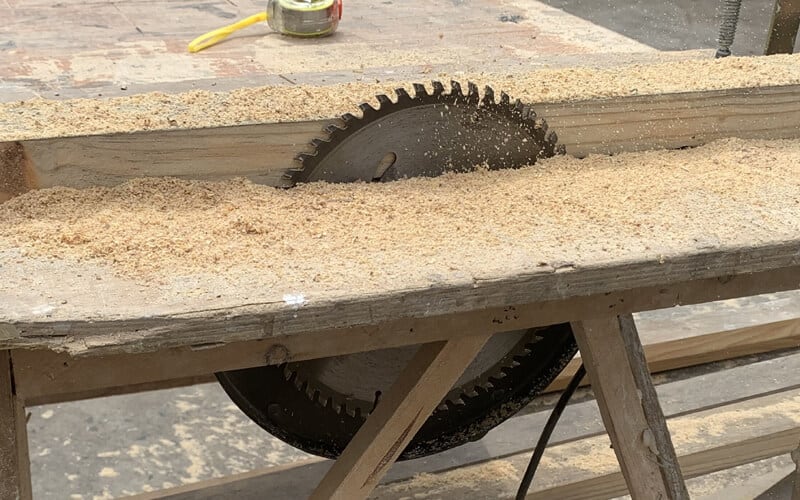
Visible plugs can decide whether woodwork looks professional.
If you supply woodworking drill bits, plug cutters, or cabinet-making accessories to distributors and wholesalers, product accuracy matters more than many buyers realize. A poor-quality plug cutter may produce rough plugs, uneven diameters, weak grain matching, and visible defects after installation. These small problems can quickly become customer complaints, wasted materials, and lower production efficiency1.
A plug cutter is a woodworking cutting tool used to produce small wooden plugs from solid wood. These plugs are commonly used to cover screw holes, repair defects, create decorative details, and improve the finished appearance of furniture or wooden panels. Unlike simple dowels, wood plugs can be cut from the same wood species and aligned with the grain, which helps create a more natural and premium finish.
For importers and procurement managers, understanding plug cutter types, sizes, sharpening methods, and quality requirements helps you choose products that are easier to sell and more reliable for repeat orders.
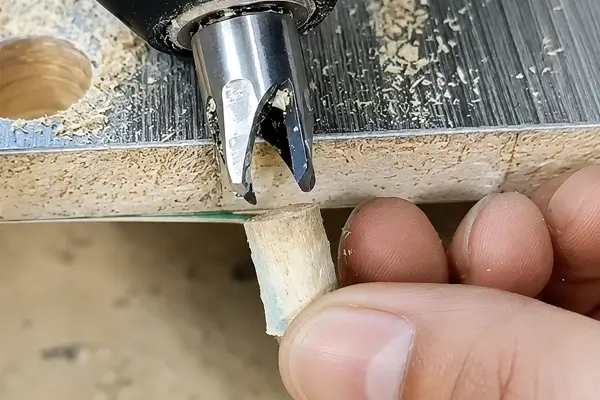
Plug cutter designed for producing clean wooden plugs for furniture, cabinets, and woodworking repairs.
How to Use a Plug Cutter?
A plug cutter works best when it is used with a drill press rather than a handheld drill. The drill press keeps the cutter stable, controls the drilling direction, and helps produce plugs with consistent size and smoother side walls. Although some users may try a handheld drill, this often leads to vibration, poor plug shape, and a higher chance of breaking the cutter.
To use a plug cutter correctly, the operator should select suitable wood stock, secure the material firmly, and drill at a controlled speed. The cutter does not remove the plug completely like a hole saw. Instead, it cuts around the plug shape, and the plug is usually removed later by breaking or cutting it free from the base material2.
For wholesalers, clear usage guidance is important because many after-sales problems come from incorrect operation rather than product defects.
How Can You Produce Clean Wood Plugs?
Clean wood plugs require sharp cutting edges, stable drilling, and suitable wood grain direction. If the cutter is dull or the drill speed is too high3, the plug surface may become burnt, rough, or inconsistent. If the wood is not clamped properly, the cutter may chatter and create uneven plug walls.
To produce better plugs, users should choose straight-grain wood that matches the final workpiece. This is especially important for visible furniture surfaces because matching grain helps the plug blend into the surrounding wood. When the plug is cut from the same board or the same wood species, the final result looks more natural after sanding and finishing.
A proper working process usually includes these steps:
- Select dry and stable wood stock with a similar grain pattern.
- Clamp the wood securely before drilling.
- Use a drill press for better vertical control.
- Drill slowly and avoid forcing the cutter.
- Remove the plug carefully to avoid splitting.
- Sand the plug after installation for a flush surface.
For cabinet factories and furniture workshops, plug consistency is very important. When each plug has a stable diameter and clean wall4, workers can install them faster and reduce rework during finishing.
Which Drill Press Speed Delivers the Best Plug Cutting Performance?
The best drill press speed depends on the plug cutter size, wood hardness, and cutting edge quality. Smaller plug cutters can usually run at higher speeds, while larger cutters require slower speeds to reduce heat and vibration. Hardwoods also need slower and more controlled drilling compared with softwoods.5
For general woodworking use, a moderate drill press speed is safer than extremely high RPM. High speed may look efficient at first, but it can quickly burn the wood, dull the cutting edge, and reduce plug accuracy. A sharp cutter running at a controlled speed usually produces cleaner plugs and extends tool life.
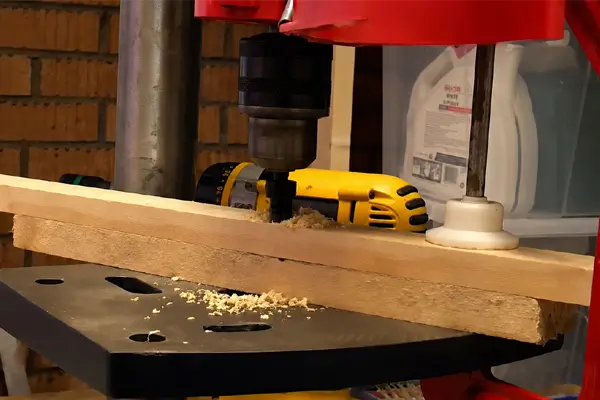
Plug cutter used on a drill press to produce accurate wood plugs with consistent diameter.
A practical guide for users is shown below:
| Plug Cutter Size | Suggested Speed Range | Suitable Application |
|---|---|---|
| 6mm / 1/4 inch | Medium to high speed | Small screw plugs and decorative work |
| 10mm / 3/8 inch | Medium speed | General woodworking applications |
| 13mm / 1/2 inch | Low to medium speed | Larger screw covers and visible plugs |
| 16mm / 5/8 inch | Lower speed | Heavy woodworking and larger recesses |
Operators should always adjust speed according to actual cutting conditions. If smoke, burning marks, or heavy vibration appear, the speed is too high or the cutter may need sharpening.
How to Sharpen a Plug Cutter?
A plug cutter can be sharpened, but it must be done carefully because the cutting geometry directly affects plug accuracy6. Incorrect sharpening may change the cutter diameter, weaken the edge, or produce plugs that no longer fit the drilled hole properly. This is why many professional users prefer light maintenance and controlled sharpening rather than aggressive grinding.
For distributors, sharpening guidance is useful because it helps customers extend tool service life. However, the product itself still needs strong steel, accurate machining, and proper heat treatment to maintain performance under repeated use.
What Is the Correct Way to Sharpen a Plug Cutter Without Affecting Accuracy?
The correct sharpening method should restore the cutting edge without changing the original cutter profile. Plug cutters rely on accurate edge geometry7 to produce plugs with stable diameter and smooth side walls. If too much material is removed during sharpening, the plug size may become inconsistent, which can cause poor fitting during installation.
Users should sharpen only the cutting face and avoid grinding the outside diameter of the cutter. The outside edge controls plug size, so damaging this surface may permanently reduce accuracy. A fine sharpening stone or small diamond file is usually better than aggressive grinding tools because it removes less material and gives the operator better control.
A safe sharpening process usually includes:
- Clean the cutter before sharpening.
- Inspect the edge for chips or heavy wear.
- Sharpen only the inner cutting face.
- Maintain the original cutting angle.
- Avoid overheating during sharpening.
- Test the cutter on scrap wood before production use.
For professional woodworking buyers, accuracy after sharpening is more important than simply making the edge look sharp. A plug cutter must still produce plugs that match the intended hole size.
How Can Proper Maintenance Extend Plug Cutter Service Life?
Proper maintenance helps plug cutters stay sharp, accurate, and safe during repeated woodworking operations. Dust, resin, and wood pitch can build up on the cutting edge, which increases friction and makes the cutter feel dull even when the steel edge is still usable. Regular cleaning helps reduce heat buildup and improves cutting smoothness.8
After use, operators should remove wood residue and apply light oil if the cutter will be stored for a long time. This is especially useful in humid markets where rust may affect tool appearance and performance. Plug cutters should also be stored separately because contact with other tools can damage the cutting edge.
Good maintenance habits include:
- Clean resin and dust after cutting.
- Avoid dropping the cutter on hard surfaces.
- Store each cutter in a protective case.
- Check edge sharpness before production work.
- Use correct speed to reduce overheating.
- Avoid cutting dirty, wet, or contaminated wood.
For wholesalers, offering plug cutter sets with protective packaging can improve customer experience and reduce damage during transportation and storage.
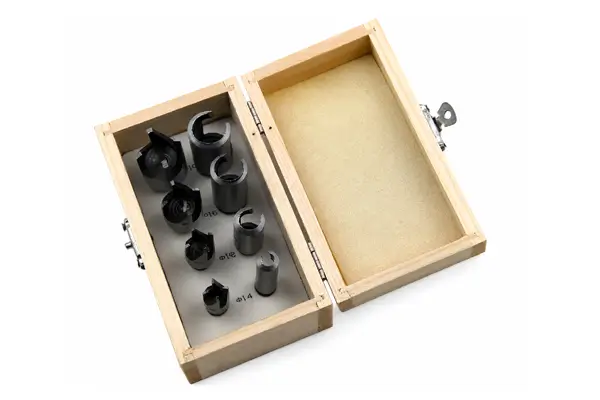
Plug cutter maintenance and storage case for protecting sharp edges and extending service life.
How to Make Wood Plugs without a Plug Cutter?
Wood plugs can be made without a dedicated plug cutter, but the results are usually less consistent. Some users may cut dowels, shape small wood pieces by hand, or use hole saws for larger plugs. These methods can work for simple repairs, but they often require more labor and may not produce the same clean grain-matched appearance9.
For professional furniture factories and cabinet makers, plug quality must be stable because visible surfaces affect the value of the final product. If plugs are uneven, poorly matched, or difficult to install, the finishing process becomes slower and less predictable.
What Alternative Methods Can Be Used to Create Wood Plugs?
Several alternative methods can be used when a plug cutter is not available. The simplest method is to use wooden dowels and cut them into short sections10. This works for hidden repairs or basic screw-hole filling, but the end grain often remains visible, which may not look natural on fine furniture.
Another method is to cut small wooden pieces manually and shape them with sandpaper. This can be acceptable for one-off repairs, but it is too slow for production environments. Some users may also use a hole saw to cut larger circular wood pieces, but the kerf is usually wider, and the finish may require additional sanding.
Common alternatives include:
| Method | Main Benefit | Main Limitation |
|---|---|---|
| Wooden dowels | Easy to buy and use | End grain is often visible |
| Hand-shaped plugs | Flexible for repair work | Slow and inconsistent |
| Hole saw cutting | Suitable for larger pieces | Rougher edge and more waste |
| CNC cutting | Accurate for special shapes | Higher equipment cost |
| Dedicated plug cutter | Clean and repeatable | Requires correct cutter size |
For small repairs, these alternatives may be acceptable. For professional furniture and cabinet production, a dedicated plug cutter remains the more efficient and reliable option.
Why Do Manufacturers Prefer Dedicated Plug Cutters?
Manufacturers prefer dedicated plug cutters because they provide better plug accuracy, cleaner side walls, and stronger grain-matching ability. In visible woodworking, the grain direction of the plug is very important. A plug cut from matching stock can blend into the workpiece after sanding and finishing, while a dowel plug often shows a clear circular end-grain mark11.
Dedicated plug cutters also improve production speed. Workers can produce many plugs from the same board, maintain consistent sizes, and reduce the need for manual shaping. This is especially valuable in cabinet manufacturing, wooden door production, furniture repair, and premium woodworking projects.
For procurement managers, dedicated plug cutters are easier to position as professional woodworking accessories. They solve a clear user problem and are suitable for both individual tools and plug cutter sets.

Professional plug cutter used in furniture manufacturing for clean, grain-matched wood plugs.
How Do you Choose the Right Plug Cutter?
Choosing the right plug cutter depends on plug size, cutter type, wood material, and expected finish quality12. For importers and wholesalers, the product range should cover common woodworking sizes while also offering stable quality for professional users. A plug cutter that looks simple can still cause problems if the cutting edge is poorly ground or the diameter tolerance is unstable.
Before bulk purchasing, buyers should evaluate the steel material, edge sharpness, heat treatment, shank accuracy, and packaging quality. These details affect not only cutting performance but also customer satisfaction after repeated use.
Which Plug Cutter Sizes Are Most Popular?
Popular plug cutter sizes usually match common screw-hole and woodworking hardware dimensions. In many markets, plug cutters are sold individually or as sets covering several frequently used sizes. Sets are especially attractive for distributors because they offer better value and are easier to sell to woodworking users13.
Common sizes include:
| Plug Cutter Size | Application commune |
|---|---|
| 6mm / 1/4 inch | Small screw holes and light repairs |
| 10mm / 3/8 inch | General woodworking applications |
| 13mm / 1/2 inch | Larger screw covers and visible plugs |
| 16mm / 5/8 inch | Decorative plugs and larger repairs |
For wholesale markets, 4-piece and 8-piece plug cutter sets are often practical because they cover the most common woodworking needs. If your customers include cabinet factories or furniture manufacturers, stable size accuracy is more important than offering too many unusual sizes.
What Is the Difference Between Standard, Tapered, and Four-Tooth Plug Cutters?
Different plug cutter designs produce different plug shapes and cutting results. Standard plug cutters create straight-sided plugs that fit into matching straight holes. They are suitable for general woodworking and common screw-hole covering applications.
Tapered plug cutters create slightly tapered plugs, which can fit more tightly when installed.14 This design is useful when the plug needs a secure fit with less visible gap after sanding. Four-tooth plug cutters usually provide cleaner cutting and improved balance because the cutting load is distributed across more edges.
| Plug Cutter Type | Main Feature | Suitable Use |
|---|---|---|
| Standard Plug Cutter | Straight plug wall | General screw-hole covering |
| Tapered Plug Cutter | Tighter plug fit | Fine furniture and visible surfaces |
| Four-Tooth Plug Cutter | Cleaner cutting action | Professional woodworking and hardwood |
| Set Plug Cutter | Multiple sizes included | Retail and distributor markets |
For professional customers, four-tooth and tapered designs often provide better results on hardwood and visible furniture surfaces. For general retail markets, standard plug cutter sets are easier to sell because they are simple, practical, and cost-effective.
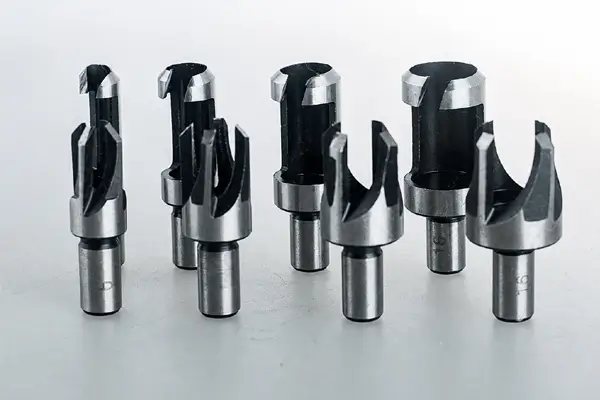
Comparison of standard, tapered, and four-tooth plug cutters for different woodworking applications.
What Should Importers Check Before Bulk Ordering?
Tapered plug cutters create slightly tapered plugs, which can fit more tightly when installed.15 This design is useful when the plug needs a secure fit with less visible gap after sanding. Four-tooth plug cutters usually provide cleaner cutting and improved balance because the cutting load is distributed across more edges.
Important quality points include:
- Steel material and hardness consistency
- Cutting edge sharpness and grinding accuracy
- Plug diameter tolerance
- Shank straightness and clamping stability
- Surface finish and anti-rust treatment
- Packaging strength and size labeling
- OEM branding and barcode support
Sample testing is strongly recommended before placing large orders. Buyers should test the plug cutter on softwood, hardwood, and laminated wood to check edge quality, burning risk, and plug consistency. Reliable factories should be able to provide product photos, sample support, size specifications, and packaging options for wholesale customers.
For tool brands, plug cutters are suitable for OEM packaging because they are small, easy to ship, and useful for a clear woodworking application. When the product quality is stable, repeat orders often come from furniture repair shops, woodworking stores, cabinet makers, and DIY tool retailers.
Conclusion
A plug cutter is a practical woodworking tool used to produce clean wooden plugs for screw holes, furniture repair, cabinet making, and decorative woodworking. Its value comes from accurate cutting, smooth plug walls, and the ability to create grain-matched plugs from the same wood material. For professional users, these details improve the final appearance and reduce finishing work.
For importers, wholesalers, and procurement managers, choosing the right plug cutter means checking more than size alone. Steel quality, edge grinding, heat treatment, shank accuracy, cutter type, and packaging all affect customer satisfaction. A reliable plug cutter range with popular sizes, clear OEM packaging, and stable cutting performance can help reduce complaints and support repeat sales in woodworking tool markets.
FAQ
What is a Plug Cutter for?
A plug cutter is a woodworking tool used to create wooden plugs that conceal screw heads, repair defects, or improve the appearance of furniture and joinery projects. By using plugs made from matching wood, craftsmen can achieve a nearly invisible finish.
Do you Need a Drill Press to Use a Plug Cutter?
A drill press is recommended for plug cutters because it provides better stability, accuracy, and consistent cutting depth. However, some plug cutters can also be used with handheld drills for light-duty work.
How to Use a Plug Cutter without a Drill Press?
To use a plug cutter without a drill press, secure the wood firmly, use a handheld drill at low speed, and maintain a vertical drilling angle throughout the cut. Careful control helps improve plug quality.
What Speed Do you Drill a Plug Cutter?
Plug cutters generally perform best at moderate drilling speeds. Hardwoods typically require slower speeds to maintain smooth cutting performance.
How Deep Should a Wood Plug Be?
A wood plug should be deep enough to fully cover the screw recess while allowing slight trimming after installation. Most woodworkers cut plugs slightly longer than needed for a flush finish.
How Deep Should a Wood Plug Be?
Standard plug cutters create straight-sided plugs, while tapered plug cutters produce slightly tapered plugs that can fit more tightly into drilled holes.
Are All Plug Cutters Tapered?
No, not all plug cutters are tapered. Some are straight-sided plugs, while others are tapered plugs designed for tighter fitting and easier installation.
-
"Lean Thinking and Methods – TPM | US EPA", https://www.epa.gov/sustainability/lean-thinking-and-methods-tpm. Manufacturing quality-control literature links defects and rework with material waste and reduced process efficiency, providing general support for the claim that poor plug quality can increase scrap and slow production. ↩
-
Descriptions of plug-cutter operation characterize the tool as cutting the circumference of a wooden plug while leaving it attached to the stock until it is separated afterward. ↩
-
Wood machining literature identifies tool sharpness and cutting conditions, including cutting speed, as major factors affecting surface quality and thermal damage such as burning during cutting; this supports the mechanism described for plug cutting, although most studies address wood cutting more broadly rather than plug cutters specifically. ↩
-
"[DOC] Word Document", https://umaec.umich.edu/for.archs/masterspec/06/MS064023.docx. Woodworking and manufacturing references describe dimensional accuracy and cleanly cut mating surfaces as factors that affect the fit and assembly quality of wooden components; this supports the relevance of plug diameter stability and wall cleanliness to cabinet and furniture work. ↩
-
Woodworking and wood-machining references describe hardwoods as generally denser and more resistant to cutting than softwoods, supporting the need for more conservative drilling parameters; this is contextual support because optimal speed still varies by species, tool geometry, and machine condition. ↩
-
A technical woodworking or machining reference explains that cutter edge geometry, including rake and clearance angles and edge profile, influences cutting action and dimensional accuracy; this supports the claim that plug-cutter sharpening can affect the accuracy of the resulting plug. ↩
-
Machining and cutting-tool references describe tool geometry as a determinant of cutting action, dimensional accuracy, and surface finish, supporting the link between a cutter’s edge profile and the quality of the produced plug. ↩
-
Research or instructional material on wood machining and tool maintenance supports that reducing cutting-edge contamination and friction can lower heat generation and improve cut quality; this is contextual evidence for plug cutters rather than a direct performance test. ↩
-
A neutral woodworking reference explaining that plug cutters can cut plugs from the same stock so the face grain and color can be matched would support the claim that dowel or improvised plugs may be less visually seamless. ↩
-
Woodworking references describe dowels as cylindrical wooden rods commonly used as joinery or repair components, supporting their use as a practical substitute material for filling holes when custom plugs are not cut. ↩
-
Wood anatomy and woodworking references distinguish end grain from face grain and note that cut dowels expose end grain at their ends; this supports why a dowel plug can remain visually distinct as a circular end-grain feature after finishing, though appearance varies with species, finish, and placement. ↩
-
Wood-machining research identifies tool geometry, workpiece material properties, cutting conditions, and desired surface quality as factors influencing cutting performance and finish, providing contextual support for considering these variables when selecting a plug cutter. ↩
-
Research on product bundling and consumer choice can support the contextual claim that sets may increase perceived value and purchase convenience compared with individually purchased items. ↩
-
A woodworking or manufacturing reference describing tapered plug cutters would support that these tools produce plugs with a slight taper intended to improve interference fit in drilled counterbores. ↩
-
A woodworking or manufacturing reference describing tapered plug cutters would support that these tools produce plugs with a slight taper intended to improve interference fit in drilled counterbores. ↩