The Role of Drill Bits in Modern Industry
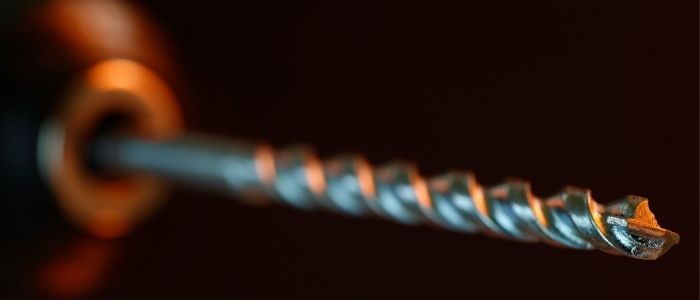
The drill bit is one of the most basic human tools, yet a core component of some of the most sophisticated technology nowadays. A drill bit is a cutting implement that is used to make holes that are cylindrical in shape, usually through a rotary cutting motion.
While appearing to be a simple matter, the engineering of drill bits itself extends across centuries of development and a wide range of applications from construction to mining to aerospace to electronic to domestic applications. Ranging from creating tiny pilot holes in wood to creating long tunnels in the mining industry, drill bits keep getting better through new material science and industrial needs.

History and Development of Drill Bits
The origins of drilling can be traced back thousands of years, when early humans used primitive bow drills for creating holes in wood, bone, and stone. By the time of the Industrial Revolution, the invention of the twist drill had transformed manufacturing by standardizing precision drilling. Patented in 1861 by Stephen A. Morse, the twist drill’s helical design improved chip removal and durability.
During the 20th century, high-speed steel (HSS) and tungsten carbide drill bits provided higher cutting rates and longer-lived tools. Diamond drill bits later became available to cut through very hard materials like glass, ceramic material, and reinforced concrete. Drill bits nowadays are a confluence of engineering, metallurgy, and nanotechnology, where new coatings and new geometrics are optimized for performance and longevity.
Types of Drill Bits
Boring bits come in numerous shapes, all of which have been designed to work on particular materials and functions. Amongst the most frequently found and utilized versions are:
Forets hélicoïdaux
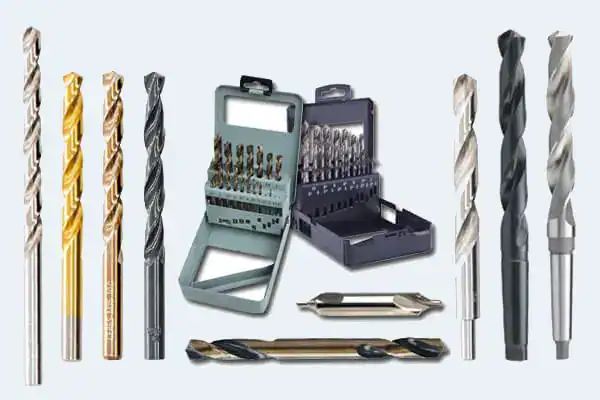
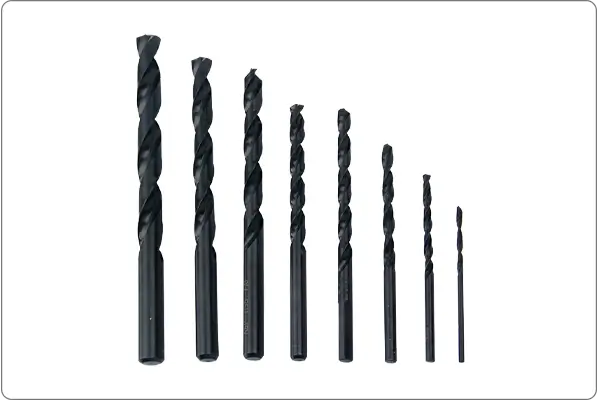
Twist drill bits are most common and are known to have helical flutes to guide shavings away from the cutting edge. Twist drill bits are most commonly used to drill into wood, metal, and plastic. Twist drills come in a wide range of sizes, from micro bits that have been used to drill into electronic work to much larger industrial types.
Forets à maçonnerie
Masonry drill bits are made to be used on concrete, brick, and stonework. They are often tipped in tungsten carbide to provide additional hardness. When paired up in a hammer drill, they will efficiently and quickly cut through heavy masonry.

Forets à bois
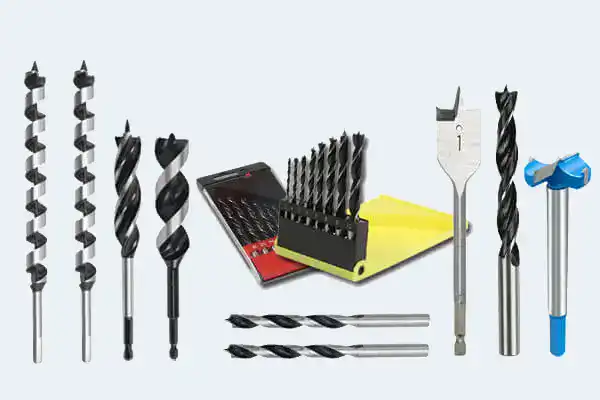
Specialized drill bits are needed in woodworking, like precision entry through a brad point bit, fast rough drilling through a spade bit, holes having a neat flat bottom through a Forstner bit, and deep boring through an auger bit. These all combine speed and accuracy to suit a particular piece of woodworking.
Forets à métaux
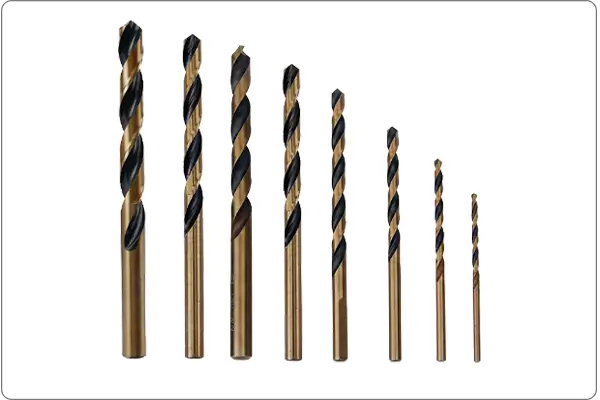
Metal work usually requires HSS or cobalt steel drill bits. Cobalt drill bits, in particular, can withstand high temperatures caused by drilling through stainless steel or hard alloys.

Forets pour verre et céramique
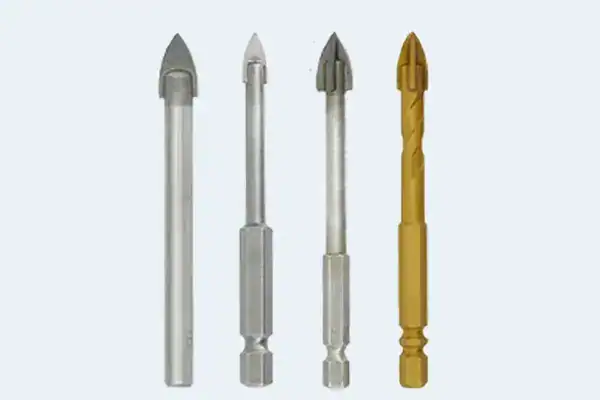
For brittle materials such as glass, tile, or ceramic, drill bits of spear-type tungsten carbide or diamond-coated are used. These do not allow chipping and cracking when drilling.
Diamond Drill Bits
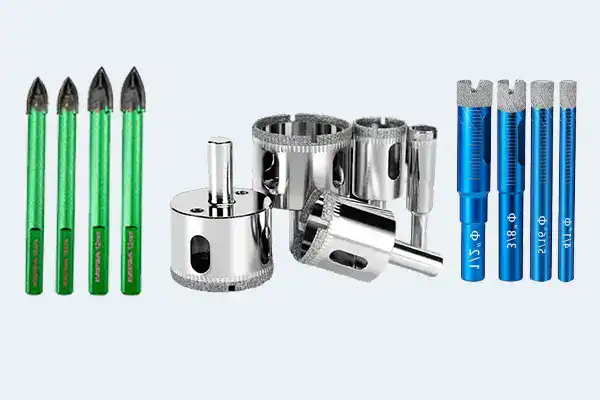
Diamond drill bits are among the most advanced, offering extreme hardness and durability. They are ideal for drilling glass, stone, ceramics, and reinforced concrete. Industries such as construction, mining, and electronics rely heavily on diamond bits for precision and efficiency.
Trépans de base
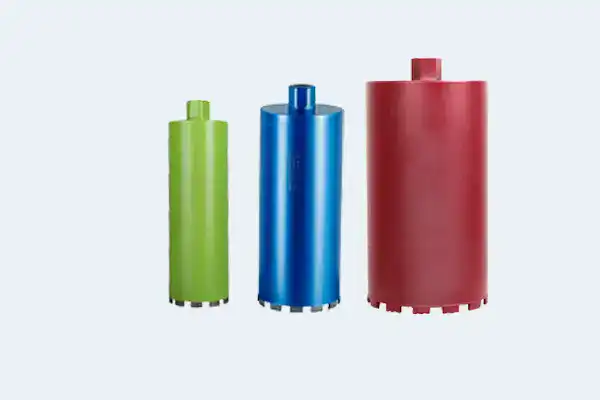
The hollow types of core drill bits excavate a solid cylinder core from the material. They are extensively employed in construction to make holes of a large size in a concrete floor or a concrete wall. Diamond core drill bits are especially employed to make holes in reinforced concrete.
Specialized Drill Bits
Some of the special-purpose design types are step drill bits to expand holes, countersink bits to fit screw heads, and micro drill bits to engage printed circuit boards (PCBs). These showcase drill bit versatility in its application fields.
Design Features of Drill Bits
A drill bit’s performance is a function of many of its engineering characteristics:
Types of Shanks:
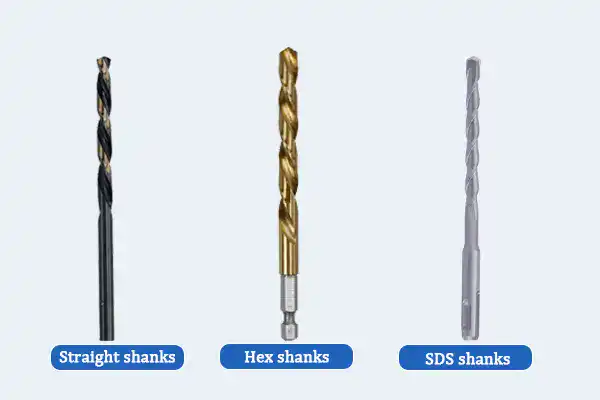
Straight shanks are the most commonly found types of shanks, whereas hex shanks give a better grip in powered tools. SDS shanks are employed in masonry work in hammer drills.
Point Angles:
Various angles dictate how heavily the bit will cut. A 118° point is typical for general-purpose drilling, whereas a 135° divided point will minimize walking on tough material.

Flute Design:
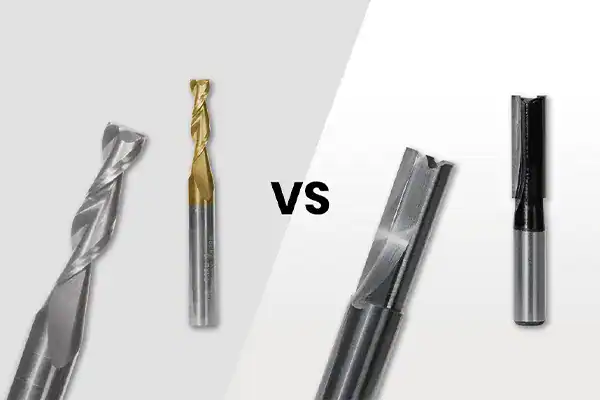
Flutes remove chips from the cutting area. Straight flutes are suited for brittle materials, while twisted flutes improve chip evacuation in metals and wood.
Coatings:
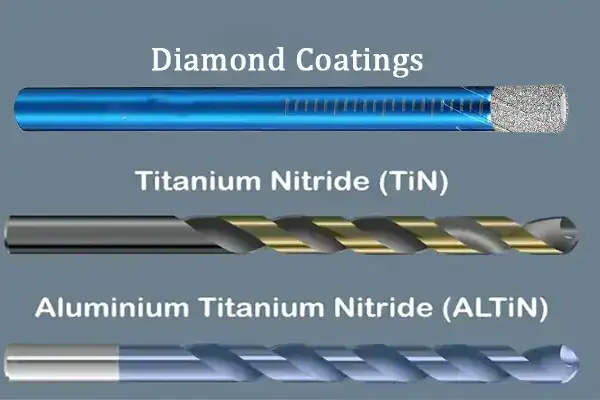
New coatings like titanium nitride (TiN), titanium aluminum nitride (TiAlN), and diamond coatings enhance wear resistance and friction, along with an extension of tool life.
Materials Utilized in Drill Bits
The bits are constructed for drilling purposes in a variety of materials appropriate to special uses:
- High-Speed Steel (HSS): HSS bits offer great functionality in drilling work. It is multi-purpose and can be employed in wood, plastics, and mild steel.
- Cobalt Steel: Gives extra resistance to heat to enable it to drill through stainless steel and hard alloys.
- Tungsten Carbide: Extremely hard and wear-resistant, used in heavy masonry and industrial drilling.
- Diamond-Coated and PCD Bits: The most difficult bits to drill through, used to cut through glass, ceramic material, and reinforced concrete. Polycrystalline diamond (PCD) technology achieves extraordinary durability in heavy-duty applications.
Usage of Drill Bits in Various Sectors
Drill bits have a decisive part to play in most parts of the industry:
Construction:
These include cutting through brickwork, concrete work, and stones, which are done by core and masonry drill bits. Diamond core bits are most commonly used in reinforced concrete construction.
Mining and Oil/Gas:
Diamond core drill bits recover cylindrical cores to be examined geologically, and diamond bits allow deep core drilling through rocky material.
Aerospace:
Precision drill bits are employed to machine metals, composites, and high-temperature materials in aerospace applications such as engine parts and flywheel castings.
Electronics:
Micro drill bits have a decisive role to play in producing printed circuit boards (PCBs), where accuracy is of prime importance.
DIY and Home Uses:
Ranging from wood drilling to general-purpose twist drill bits, these are toolkit household basics.
Scientific and Engineering Considerations
It is no mere mechanical action; it is a sophisticated work of engineering:
- Cutting Mechanics: Interlocking cutting edges of a drill bit cut through material to create chips that will have to be cleared effectively.
- Production of Heat: Friction creates a considerable volume of heat that could reduce tool life. Lubricants and coolants are typically used to regulate temperatures.
- Wear Resistance: Drill bits wear out over time, with cutting edges dulling due to abrasion. Harder materials and coatings help extend operational life.
- Geometry Efficiency: Point angle, flute depth, and sharp cutting edge all affect efficiency, speed, and accuracy.
Sizes and Standards of Drill Bits
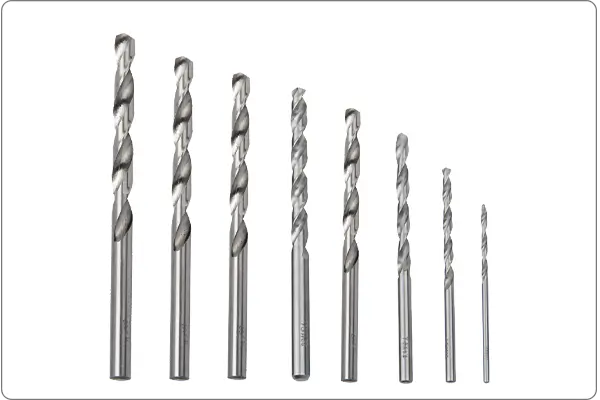
Drill bits are produced in a myriad of standardized sizes to allow interchangeability among the industry and tools. The two most common measurement systems include metric and imperial systems. Metric sizes in terms of millimeters are commonly employed in Asia as well as European countries, whereas imperial sizes in terms of fractions of an inch are still predominant in America.
Besides these, drill bits can further be classified by number or letter size systems that are useful when it comes to precision machining. Standardization allows users to choose the right drill bit by manufacturer while enhancing accuracy as well as interchangeability from application to application.
Maintenance and Sharpening of Drill Bit
Proper maintenance is necessary to achieve optimal efficiency and longevity of drill bits. Sharpening is among the best methods to prolong usability, and this is particularly true when considering twist drill bits that can be resharpened on a bench grinder or special sharpeners.
Cleaning once a tool is done helps prevent clogging that impairs performance, and careful storage—such as in indexed cases—helps prevent cutting edges from getting chipped accidentally. Drill bits that have been well-maintained last longer and create cleaner holes that are more precise.
Safety Considerations in Drilling
Proper drilling techniques are important in an industrial setting as well as a household setting. Workpieces must also be held to prevent slipping, and operators must wear protection, including eye goggles and gloves.
Choosing the appropriate speed of material is also important, as drilling too quickly in harder materials can cause overheating and ruin a drill bit. For masonry and metal work, coolants or water must be used to lower friction and prolong tool life. Following these precautions, besides enhancing efficiency, will lower the chance of accidents.
Innovations in Drill Bit Engineering
The drill bit of tomorrow is in new materials and sophisticated engineering:
- CNC Precision Machining: Allows for reproducible geometry and tighter fits for high-performance bits.
- Nano-Coatings: Very thin coatings that strengthen objects, making them smoother and longer-lasting.
- Diamond Core Drilling: Gaining usage in construction activities, geology, and electronic fields.
- Sustainability: Less waste due to longer tool life, new materials to reduce environmental footprint.
How to Choose the Right Drill Bit
The selection of a proper drill bit will depend on many considerations:
- Material Being Worked: Wood, metal, concrete, or glass all have different kinds of bits required.
- Tool Compatibility: It should be compatible with a drill chuck shank.
- Speed and Torque: Soft materials need higher speeds, while harder materials need lower speeds with higher torque.
- Cooling Needs: To cool hard materials such as metal and concrete, lubricants or water are used to prevent overheating.
- Safety Features: Safe operation, including keeping workpieces firmly in place and wearing protection, allows safe operation.
Choosing a proper drill bit is critical to getting neat, precise work and saving both tool and material. You must determine what material is to be drilled. Twist drill bits are good types to use under most metals and plastics, masonry bits are needed to work through stones and concrete, and spade bits are good to use to drill through wood. Failing to make a proper choice will result in the tool breaking, rough holes, or even injury.
Future Trends in Drill Bits
Innovative development of drill bit technology continues:
- Smart Drill Bits: Recent versions integrate sensors to monitor wear and to achieve optimal drilling performance.
- Eco-Friendly Material: Studies aim to incorporate sustainable materials and coatings to reduce the environmental footprint.
- 3D Printing: Additive manufacturing might create customized drill bits of challenging-to-attain geometries that could never be produced through traditional methods.
The manufacture of drill bits is continually evolving to keep up with new developments in material, new methods of manufacture, and new industry requirements. Particularly distinctive is a wider usage of high-tech coatings and materials such as titanium nitride, diamond coatings, and carbide composites that provide superior hardness, resistance to temperature, and cutting performance.
These new offerings are particularly significant in aerospace, construction, and automotive situations where harder materials like carbon fiber and hardened alloys are increasingly common. Another trend is the implementation of computer-aided design and precise manufacturing.
Three-dimensional CNC technology enables drill bits to be designed to a micro-level of accuracy to improve hole quality and minimize material waste. This is particularly worthwhile in tight-tolerance application businesses like electronic and medical device manufacturing. Sustainability is also influencing drill bit production. Manufacturers are exploring eco-friendly production methods, recyclable materials, and designs that reduce energy consumption during use. Smart drill bits, embedded with sensors to monitor wear and performance, are beginning to emerge as part of the broader shift toward Industry 4.0 and connected manufacturing systems. The future of drill bits is in integrating durability, efficiency, and electronic integration to keep up with increasing demands from contemporary construction and engineering.
You Can Send Us Your Request



Conclusion
Drill bits may be small in diameter, but they are a keystone of industry. They have progressed from primitive bow drills to sophisticated diamond-coated tools as human efforts have been directed towards increasing accuracy and economy. Used in construction work, aerospace production, mining, and even in repairs around a house, drill bits are irreplaceable. Improvements in material science and production techniques will bring even higher performance, lifetime, and ingenuity in the years to come.