Keeping twist drills sharp isn’t just routine maintenance—it is essential for precision, productivity, and the economics1 of any professional workshop. Choosing the right grinding angles2 and understanding the unique properties of each drill bit material are crucial steps to achieving consistent, reliable results.
Twist drill sharpening is based on restoring specific angles to the cutting geometry: the point angle, lip relief, and chisel edge. These angles vary depending on the material, drill type, and application, such as 118° for general use or 135° for drilling hardened steel and stainless alloys. Mastering these angles maximizes cutting efficiency, extends tool life, and reduces drilling costs.
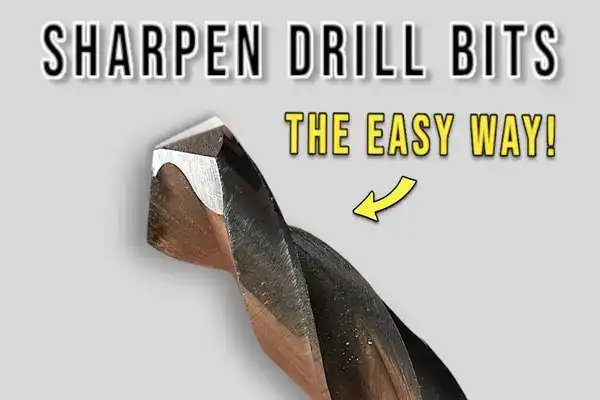
Twist drill bit wear leads to increased cutting forces, higher operating temperatures, and poor hole quality. Knowing the characteristics of cutting tool materials and how to correctly regrind twist drills—especially cobalt HSS drills3—is therefore essential for industrial buyers, maintenance technicians, and production managers.
What Are the Characteristics of Cutting Tool Materials?
Different cutting tool materials offer unique advantages in terms of hardness, toughness, thermal stability4, and wear resistance.
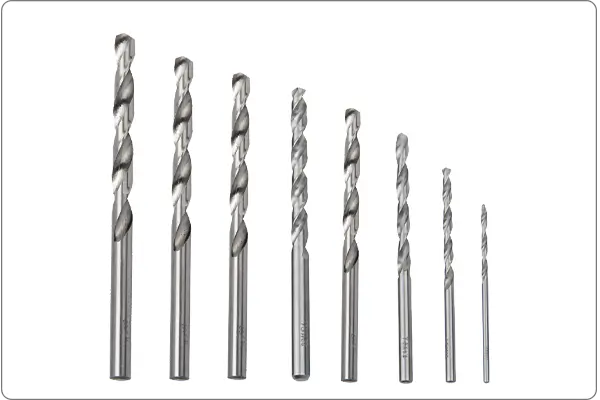
Cutting tool materials like standard HSS and cobalt HSS are engineered for resistance to wear and fracture. HSS offers a balance of toughness and edge retention, while cobalt HSS (typically M35 or M42 with 5–8% Co) withstands higher temperatures and is highly wear-resistant, making it ideal for tough-to-machine alloys such as stainless steel and high-tensile metals.
| Matériel | Dureté | Toughness | Heat Resistance | Typical Use Cases |
|---|---|---|---|---|
| SSS | Good | Excellent | Moderate | General drilling, mild steels |
| Cobalt HSS (M35) | Very Good | Very Good | High | Stainless, hard materials |
| Carbure | Highest | Lower | Extremely High | Abrasive, high-precision metals |
Selecting the right foret material impacts both sharpening intervals and the geometry required to keep tools performing at their best.
What Makes Cobalt Twist Drills Unique and How Should They Be Reground?
Cobalt twist drills contain added cobalt to increase red hardness and wear resistance. This changes both their application and their sharpening requirements.
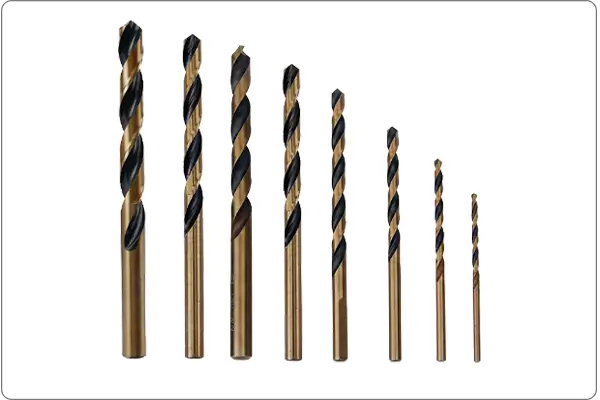
Cobalt twist drills (commonly M35 HSS) are optimized for machining stainless steel and other hard alloys. Characterized by high thermal stability, cobalt drills require less frequent sharpening and support more aggressive feeds and speeds. When regrinding cobalt drills, special attention must be given to maintaining larger point and helix angles, improving both centering ability and chip evacuation—critical for tough work materials.
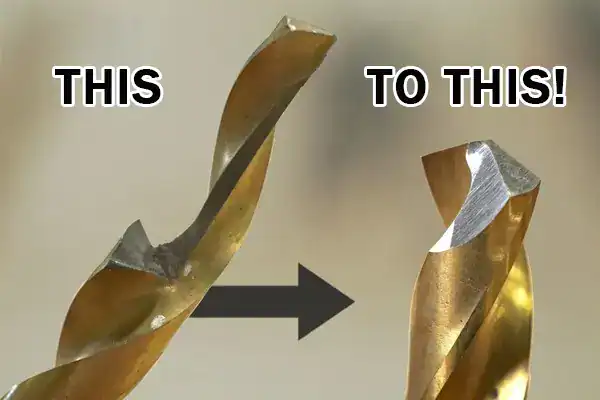
Key regrinding strategies for cobalt drills:
- Use a larger point angle, typically 135°, for tough materials.
- Maintain a slightly larger helix angle for better chip removal and lower cutting forces.
- Consider double-point geometry or split point regrind to reduce walking and drilling forces.
- For large diameter cobalt drills, incorporate chip-dividing grooves to prevent chip packing and help cooling.
Cobalt drills are mainly used in automatic lathes and high-volume metalworking due to their superior edge life and reliability.
Twist Drill Geometry: Why Are Sharpening Angles So Critical?
Twist drill geometry is more than just the tip angle. Back taper, lip relief, and chisel edge all play a part in optimal performance.
Correct sharpening ensures each element of the drill geometry—point angle, lip relief, chisel angle, and flute profile—delivers smooth chip flow, efficient cutting, and low wear. Errors in sharpening result in increased cutting resistance, overheating, rapid dulling, and workpiece damage.
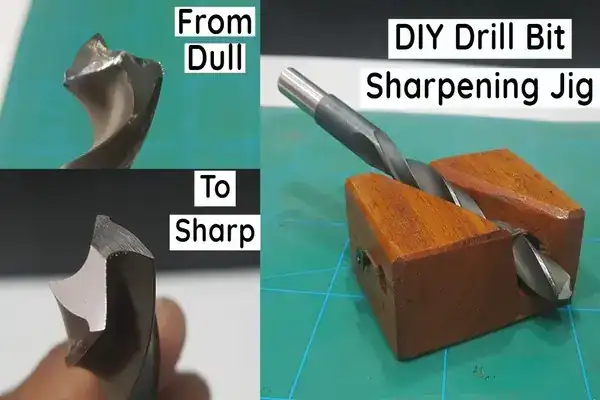
Practical Effects of Poor Geometry
- Long, flat chisel edge: Causes high thrust and poor centering.
- Incorrect rake angle: Reduces cutting efficiency, raises power consumption.
- Inadequate relief: Triggers faster wear, more contact friction.
- Wide cutting edge/chips: Hampers chip evacuation and coolant flow, especially in deep holes or soft materials.
When and Why Should You Sharpen a Twist Drill?
Recognizing dullness early is critical for maximizing tool life and minimizing machining risk.
Sharpening is required when drills need excessive force, produce heat or squealing noise, or make fine powder instead of proper chips. Early regrinding extends the life span of the bit, preserves the workpiece surface, and saves on procurement costs.

Benefits of timely drill bit sharpening:
- Prolongs bit life
- Maintains hole quality and accuracy
- Reduces cutting forces, tool breakage, and wear on machines
Signs of a Dull Drill Bit
- Requires more pressure to cut
- Produces excessive heat or burning odor
- Makes fine, powdery chips (not curled)
- “Walks” or skids on material instead of drilling in place
- Causes chipping or burrs on workpiece entry/exit
Identifying these signs early and scheduling regrind cycles protects your production line from unplanned downtime.
Twist Drill Sharpening Methods and Techniques
Sharpening can be performed with a range of tools, each suited to different volumes and tolerances.
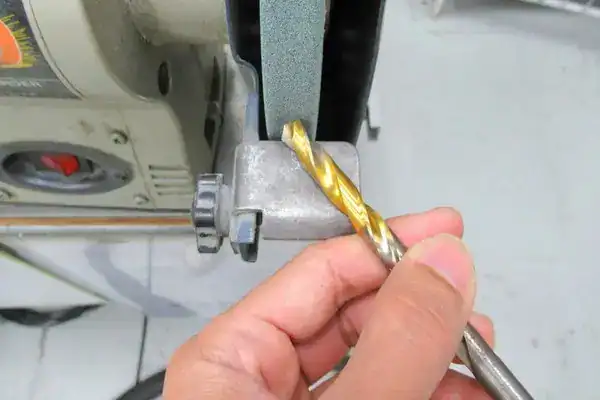
Bench grinders, specialty drill grinding machines, sharpening jigs, and even handheld files or stones can restore the ideal geometry. For high-precision shops, dedicated sharpeners ensure consistent angles and surface quality.

Key sharpening steps:
- Secure the drill and inspect for cracks or heavy damage.
- Set the grinding tool or jig to the correct point angle (118° for general, 135° for hard alloys).
- Balance both lips for equal length and angle.
- Grind main cutting edges first, then touch up the relief and chisel as needed.
- For large drills, add chip-dividing grooves to the rake or back face.
- For critical holes, finish with a split point or double-angle grind5.
Always cool the drill in water to avoid overheating and blueing.
Common Sharpening Angles and Their Applications
| Angle de pointe | Material/Application | Avantages |
|---|---|---|
| 118° | Wood, aluminum, mild steel | Fast cutting, general purpose |
| 135° | Stainless, high-tensile alloys | Better centering, lower pressure |
| Point de partage | Thin sheet, hard material start | Reduced walking, precise spot |
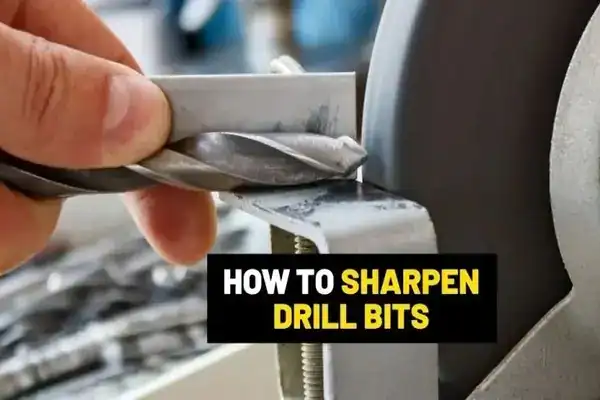
If you drill tough alloys often, adopt a bigger point angle—especially with cobalt or carbide drills.
How to Regrind Large Diameter Twist Drills?
Large diameter twist drills often expose performance challenges and require additional sharpening attention.
Large drills >12mm should have the chisel edge reduced (using web thinning or split point) to decrease central thrust and heat build-up. For deep holes or wide chips, chip-dividing grooves improve chip management and reduce jamming.
Techniques:
- Web thinning: Decrease the chisel edge area for easier starting and lower force.
- Secondary point angle (double sharpening): Add a 2nd facet (70–75°) for reduced wear and smoother hole exit.
- Chip breaker grooves: Staggered left/right chip grooving to prevent continuous coil chips and aid coolant flow.
These reground features are especially important when drilling stainless steel, soft alloys, or when using high spindle speeds.
Maintaining Correct Angles and Geometry
Success in sharpening depends on measurement and inspection:
- Use a drill point gauge to verify point and lip angles.
- Check symmetry using a protractor or optical comparator.
- Regularly calibrate sharpening machines and jigs.
- For cobalt and carbide bits, use low-pressure, slow grinding to avoid overheating.
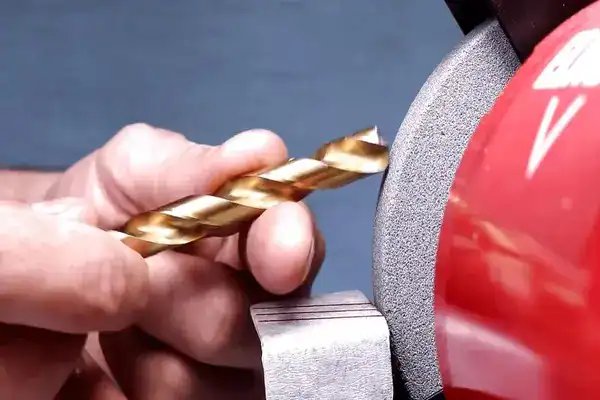
Set clear SOPs in your tool room; document regrind angle standards and track bit regrinds for predictive tool management.
Recap: How to Achieve Professional Twist Drill Sharpening?
- Know your material: Choose the correct HSS or cobalt drill and recommended angles.
- Recognize wear early: Sharpen before the bit fails.
- Use appropriate tools and jigs: Bench grinder for manual, precision sharpener for production fleets.
- Maintain geometry: Point angle, lip relief, and chisel modifications all matter.
- Inspect every bit after sharpening: Only sharp tools deliver peak performance.
You Can Send Us Your Request



Conclusion
A sharp twist drill with professionally reground angles increases productivity, reduces costs, and ensures safe, accurate hole making—especially when dealing with tough materials or high-volume operations. Mastering sharpening not only maximizes tool life but also safeguards the quality of your work and the reputation of your supply chain.
-
Understanding the impact of drill sharpening on precision and productivity can enhance workshop efficiency and reduce costs. ↩
-
Exploring optimal grinding angles ensures effective sharpening, improving drill performance and longevity. ↩
-
Exploring cobalt HSS drills can reveal their advantages in high-temperature and wear-resistant applications. ↩
-
Learning about thermal stability can improve drill selection for high-temperature applications. ↩
-
Understanding these grinding techniques can reduce drilling forces and improve precision. ↩