Tapping a thread seems simple until you break a tap, create a rough thread, or get inconsistent fits. With so many tap types and standards to choose from, selecting the right one for your workpiece can be overwhelming.
There are 18 main types of thread taps, each with unique design features and applications. The right tap ensures precise thread formation, reduces breakage risk, and improves productivity, especially when matched to material and thread requirements.

When you understand thread taps—their structures, materials, coatings, and typical uses—choosing the right one becomes a science, not a guessing game. I’ve learned the hard way that a mismatched tap leads to frustrating breakages and wasted material. Let’s break down every tap type so you can make confident, cost-effective choices.
What Is a Thread Tap and What Are Its Main Components?
Thread taps are essential for creating internal threads[^1], allowing fasteners to be securely inserted into pre-drilled holes.
A thread tap is a precision-cutting tool with features—body, shank, flutes, threads, and point—targeted for producing female threads in a wide range of materials, from mild steel to titanium.

Main Components of a Thread Tap
| Part | Função |
|---|---|
| Body | Central, threaded section which cuts the thread |
| Shank | Gripped by the tap wrench or machine tool |
| Flautas | Grooves that clear chips and aid cooling during cutting |
| Threads | The actual cutting or forming profiles on the tap |
| Point | Tapered end to help guide entry into the hole |
Knowing each part helps you select taps with the best chip evacuation, cutting aggressiveness, and fit for machine or hand use.
What Are the 18 Types of Thread Taps and Their Applications?
Selecting the correct tap directly impacts threading quality, tool life, and process speed.
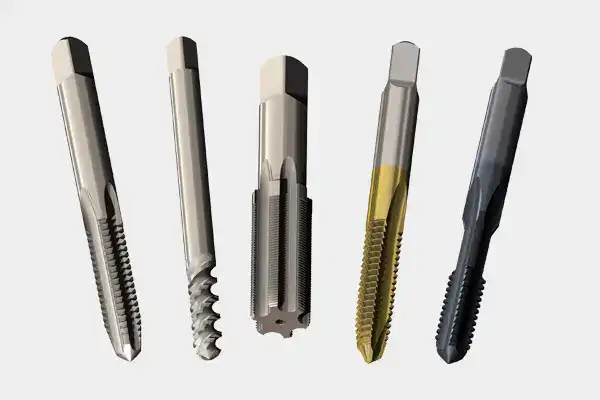
From basic hand taps to spiral flutes, from gas taps to advanced carbide models—each tap type serves a special function. Some work best in blind holes, others excel with tough alloys or production runs.

The 18 Types Explained
| # | Tap Type | Key Features & Typical Use |
|---|---|---|
| 1 | Hand Tap | Straight flutes, general use by hand or low-speed machines |
| 2 | Taper Tap | Long chamfer, easy starting, ideal for new threads |
| 3 | Plug Tap | Medium chamfer, most common, general-purpose, finishes most threads |
| 4 | Bottoming Tap | Short chamfer, cuts full thread to hole bottom, for finishing |
| 5 | Master Tap | Multi-flute, highly accurate, for rigid materials and precise threads |
| 6 | Gas Tap | Short chamfer for pipe/gas fit threads; specialized thread forms |
| 7 | Machine Screw Tap | Engineered for CNC/machine tapping, may be coated/special material |
| 8 | Extension Tap | Long shank for hard-to-reach/deep holes |
| 9 | Bend Shank Tap | Bent body for restricted access, moderate strength |
| 10 | Stay Bolt Tap | Extra long, for industrial applications (like boiler plates) |
| 11 | Spiral Point Tap | "Gun tap"—pushes chips forward, perfect for through holes |
| 12 | Spiral Fluted Tap | Spiral flutes pull chips out, best for blind holes/materials with long chips |
| 13 | Thread-Forming Tap | Forms (not cuts) threads, no chips—best for ductile materials |
| 14 | Pulley Tap | Extended length for tapping pulley hubs and recesses |
| 15 | Pipe Tap | Tappered for NPT/BSP threads on pipes and fittings |
| 16 | Combined Drill & Tap | Drills and taps in one pass, saves time on through/thin materials |
| 17 | Solid Carbide Tap | Ultra-hard, for tough or abrasive materials, CNC only |
| 18 | Interrupted Thread Tap | Gaps in teeth for chip flow and lower torque in tough or deep holes |
It’s essential to match tap style to material: spiral point and spiral flute work differently (push vs. pull chips), forming taps need ductile metals, and carbide taps require rigid setups.
Pro Table — Hand Tap Set Example
| Tap Part | Taper Tap | Plug Tap | Bottoming Tap |
|---|---|---|---|
| Chamfer Length | 7–10 | 4–6 | 1–2 |
| Starting Use | Best | Good | Not for Starts |
| Thread Finish | Partial | Most | Full-depth |
| Inscrição | Begin | General | Blind Hole |
How Do You Drill and Tap a Hole Correctly?
If you want to avoid broken taps and rough threads, process control matters.
Drill with the right size, chamfer the edge, select a fitting tap, lubricate well, and align the tool. For machine tapping, use a tap guide and proper parameters; for manual, go slow and back out regularly.
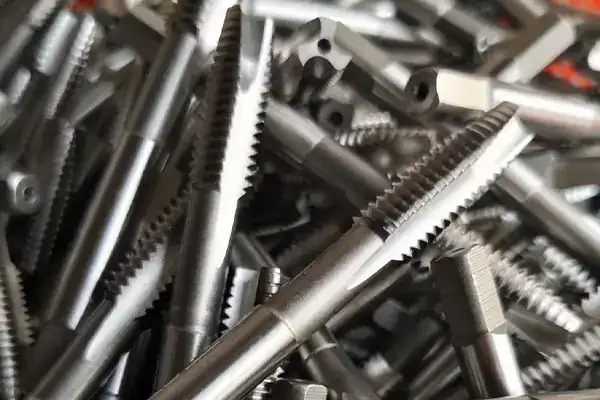
Step-by-Step Tapping
- Select proper tap and corresponding drill size (check a tap drill chart[^2]).
- Drill hole—go deep enough for the full thread and chamfer the entrance.
- Secure workpiece and apply cutting fluid[^3].
- Start tapping using a guide; for hand taps, turn forward, then back a quarter turn to break chips.
- For machine tapping (drill press/CNC), use the recommended speed and tool extension.
- Back out tap, clean threads, and check fit.
Pro Tip: For blind holes, use a spiral flute tap; for through-holes, use a spiral point or gun tap.
What Are the Most Common Thread Tap Problems and How Do You Solve Them?
Tapping is a delicate process. When something goes wrong, the result is wasted time and damaged parts. Let’s address the six most common issues:
Typical problems include tap breakage, chipping, excessive wear, wrong pitch diameter, poor surface roughness, and thread misfit. Prevention depends on material prep, tap choice, lubrication, chip control, correct alignment, and careful speed control.

Troubleshooting Chart
| Problem | Causes | Solutions |
|---|---|---|
| Tap breaks | Hole too small, chip jam, too fast, misaligned | Correct hole size, better tap, slow speed, alignment |
| Teeth chip/break | Oversized rake angle, high hardness, worn tap | Adjust angles, reduce hardness, timely replacement |
| Wears out fast | High speed, wrong parameter, bad fluid, burns | Slower speed, right fluid, sharpen, treat parts |
| Thread pitch too large | Wrong tap grade, poor coaxiality, fast speed | Use tolerance tap, lower speed, check alignment |
| Thread pitch too small | Wrong accuracy level, old tap, poor lubricant | Suit tap to tolerance, replace, improve lubrication |
| Too rough surface | Low hardness, poor finish, fast speed, dull tap | Increase hardness, slow down, better fluid, replace |
Always plan in advance: check your work material, hole style (through or blind), and confirm tap/tool condition before starting.
How Do You Select the Best Tap for Your Project?
Tap selection is part science, part experience. Get it wrong and you risk product defects or constant tool changes.
Consider the workpiece material, thread type, depth, production volume, machine or hand method, and tap tolerance (fit). For tricky or tough jobs, use high-performance taps or those with special coatings.
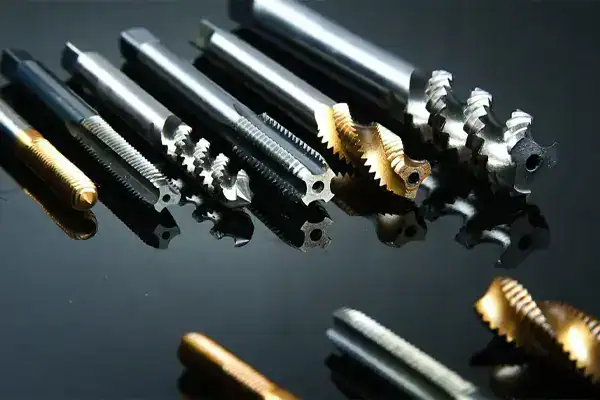
Key Selection Criteria
| Factor | Choice Example |
|---|---|
| Material | Steel (HSS, HSS-E); Aluminum (spiral flute, thread-forming) |
| Hole Type | Through (gun/spiral point); Blind (spiral flute); Pipe (tapered tap) |
| Thread Fit | General (2B/6H); Precision (3B, PM, Carbide) |
| Volume | High (master, machine, coated); Low (carbon, hand tap) |
| Tapping Style | Machine (rigid, carbide); Hand (straight flute set) |
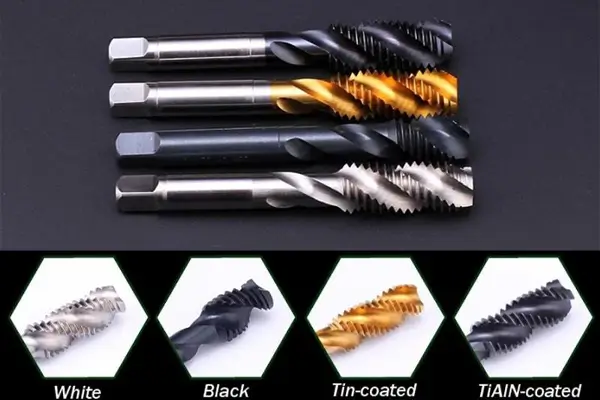
Selecting a tap with a TiN, TiAlN, or TiCN coating often pays off for stainless steel or high-volume jobs. Always check tap and thread markings before use.
What Materials Are Thread Taps Made From and Why Does It Matter?
Tap life depends on material quality. Cheap taps wear or break faster, costing you more in the long run.
HSS and cobalt—best for most steels; carbide—essential for hard, abrasive, or tough alloys. Powder metallurgy and coatings (TiN, TiAlN) boost performance for difficult materials and high-speed CNC work.
| Material | Best For | Notes |
|---|---|---|
| HSS | Mild steel, brass, general use | Versatile, affordable |
| HSS-E (Cobalt)[^4] | Hard steels, stainless, cast iron | Tougher, higher cutting temperature |
| Carboneto | Hardened or abrasive alloys, CNC | Brittle, expensive, long life |
| PM-HSS | High-performance in tough/demanding cases | Wear resistant, high-speed jobs |
| Aço carbono | Wood, plastics, non-ferrous | Low cost, not for metals |
| Coated (TiN etc) | Stainless, high-production, alloy steels | Reduce wear/friction, prolong life |
What Do the Markings on a Thread Tap Mean?
Tap markings provide all the critical data needed for proper selection and application.
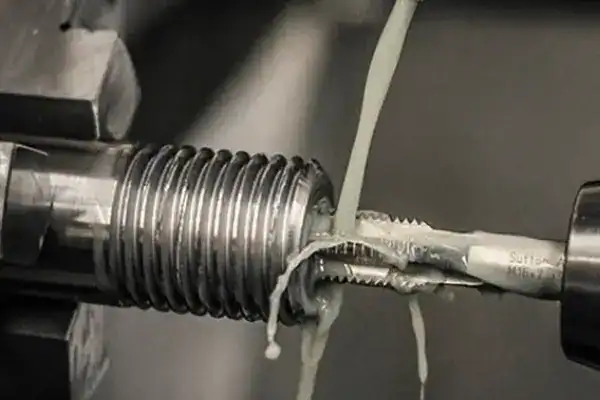
Typical tap markings include size/pitch, material, chamfer style, tolerance, and special features. Don’t use a tap without knowing exactly what’s marked on it.
| Marcação | Significado |
|---|---|
| M6 × 1.0, ¼"-20 UNC | Size, metric or imperial, thread pitch/type |
| HSS, HSS-E, Carbide | Material |
| T/P/B or 1st/2nd/3rd | Chamfer style: Taper, Plug, Bottoming |
| 6H, 2B, 3B | Tolerance/fit (metric/imperial) |
| LH, FORM, PIPE, NPT | Left hand, forming tap, pipe/standard |
How to Avoid Tap Breakage and Tapping Problems?
Broken taps are frustrating and expensive. Luckily, prevention is always possible.
To avoid breakage, match tap and hole size, use quality lubricants, keep correct alignment, operate at safe cutting speeds, clear chips often, and replace taps when worn.
- Check tap type for material and hole style, drill hole to correct size.
- Align workpiece and tap to stop side force or cross-threading[^5].
- Use fluid for cooling (especially on hard metals).
- Go slow—especially when nearly at full depth, and reverse to break chips.
- Regularly inspect tap wear, replace when cutting performance drops.
Request Your Free Sample

## Conclusion
The right thread tap makes tapping safer, easier, and much more successful—whether you’re preparing holes for pulleys, pipes, or aerospace parts. When you match your material, thread needs, and production style to the correct of 18 thread tap types, you set yourself up for defect-free, efficient threading.
—
[^1]: Discover how internal threads are formed, which is essential for secure fastener insertion in pre-drilled holes.
[^2]: Using a tap drill chart ensures you select the correct drill size for precise thread tapping.
[^3]: Explore the role of cutting fluid in reducing friction and heat, prolonging tap life and improving thread quality.
[^4]: Learn why HSS-E (Cobalt) taps are ideal for hard steels and stainless materials, offering toughness and durability.
[^5]: Preventing cross-threading ensures smooth and accurate threading, avoiding damage to the workpiece.