

Drill Spade Bit Manufacturer
- Global Manufacturer of Precision Hardware Tool
- Professional Manufacturer of Precision Hardware Com
- Get Competitive Pricing on Bulk Orders of Hardware Sets
- OEM & Private Label Services | EN12413 Certified
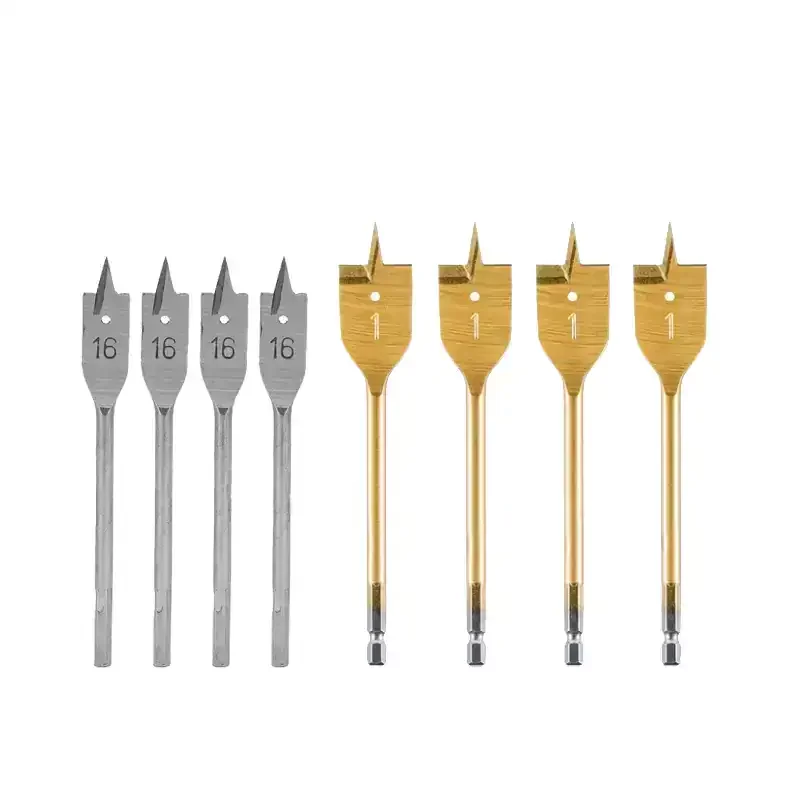
Leading Industrial Drill Spade Bit Manufacturer in China
- One-stop solution for your purchase
- Proven Industry Leadership
- Tailored Manufacturing Solutions
- Free samples start your business
Your Leading Drill Spade Bit for Wood Drilling Manufacturer & Supplier
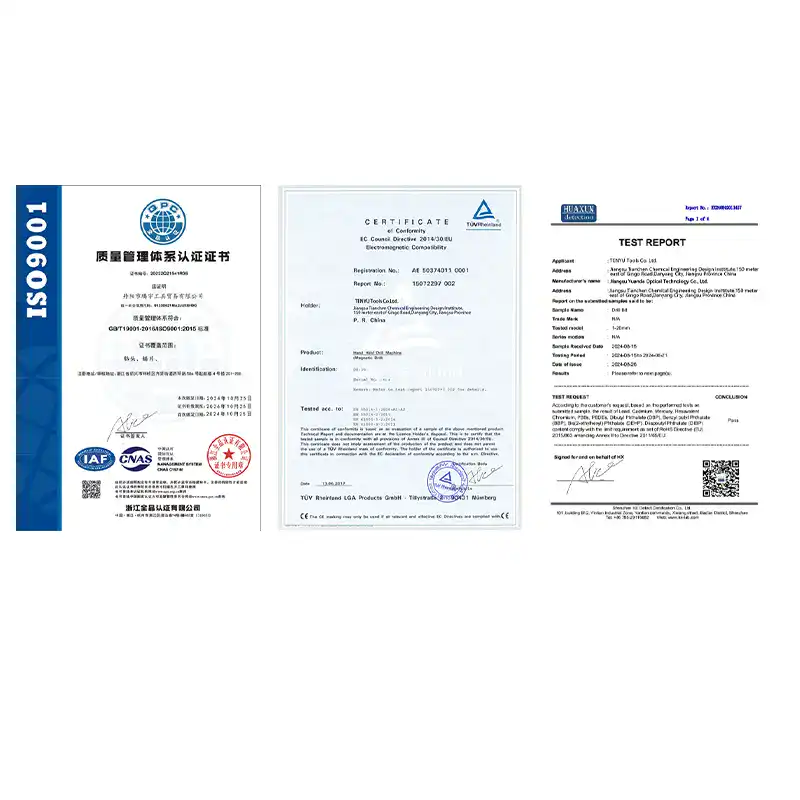
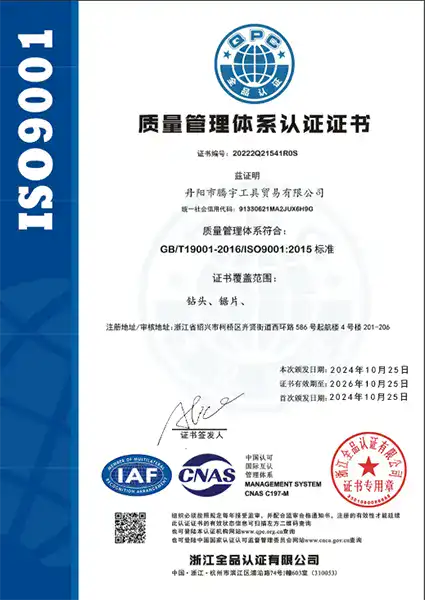
International Certification & Global Trust
Tenyu Tool stands at the forefront of precision engineering, delivering drill spade bit for wood that comply with the highest international benchmarks. Certified by SGS and backed by ISO quality and environmental systems, our products are trusted by professionals worldwide.
Relentless Quality Assurance
Every drill bit undergoes multi-stage testing in our state-of-the-art laboratory, supported by a quality control force of 100+ specialists. This uncompromising process guarantees unmatched accuracy, strength, and consistency in every piece we deliver.
Verified Certification with Every Shipment
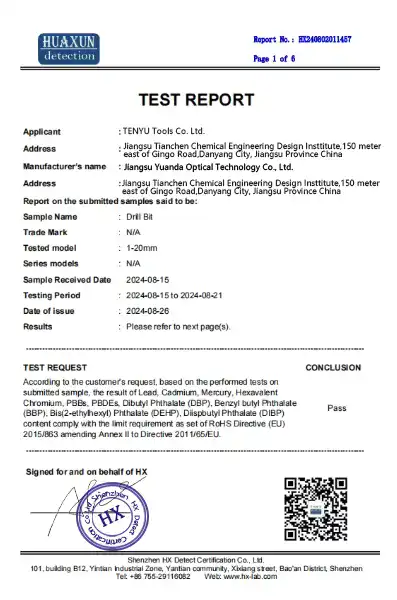
We provide comprehensive compliance documentation, including manufacturing test certificates that validate both chemical and mechanical integrity. Customers receive not just tools, but proof of quality and performance they can rely on.
High-Capacity Manufacturing &On-Time Delivery
Powered by 15 fully automated production lines, Tenyu Tool combines scale with efficiency. We guarantee fast turnaround—delivering within 7 to 35 days—so your supply chain stays smooth even in peak-demand seasons.
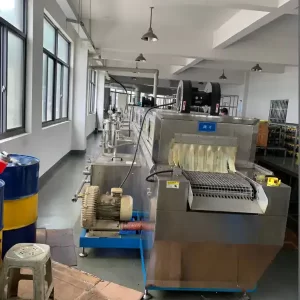
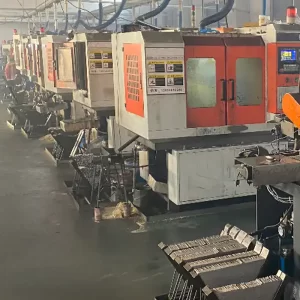
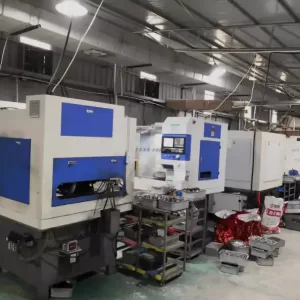
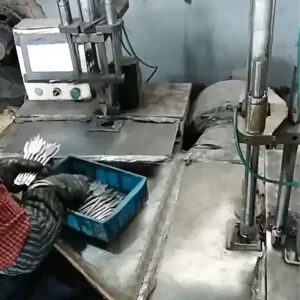
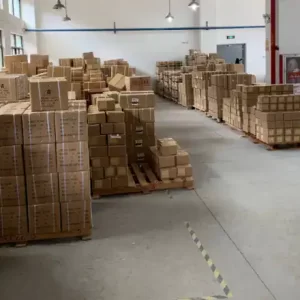
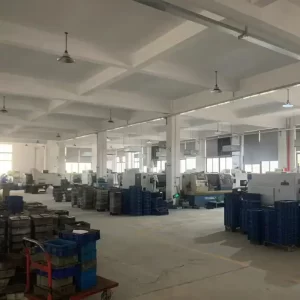
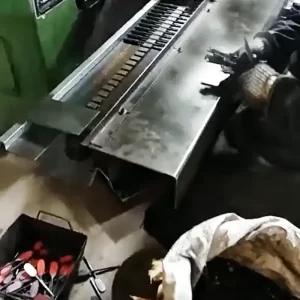
Tenyu Tool Professional Production Workshop for Drill Spade Bit
Support online face-to-face factory visits
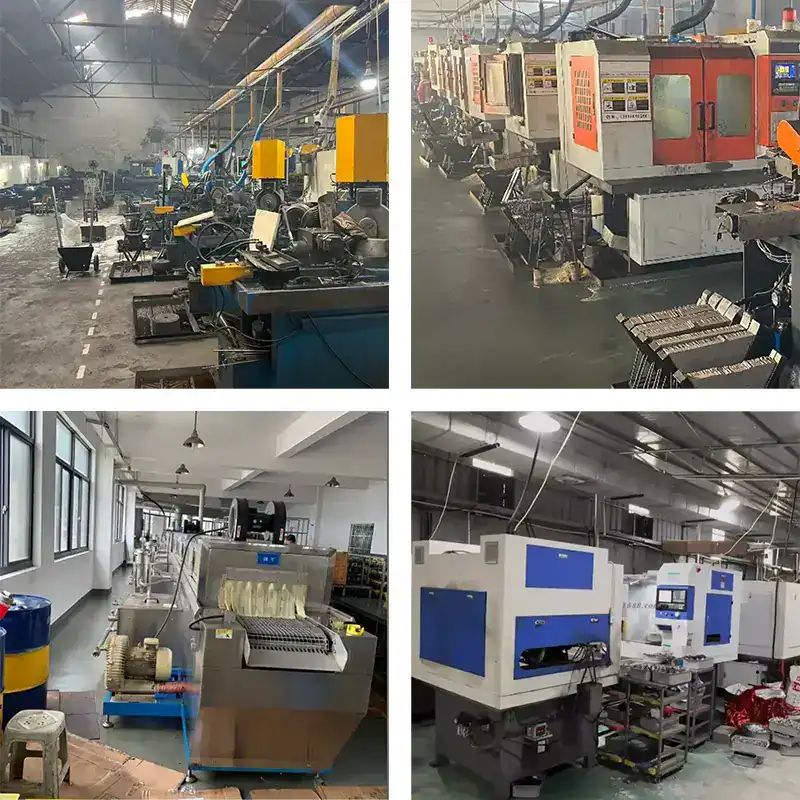
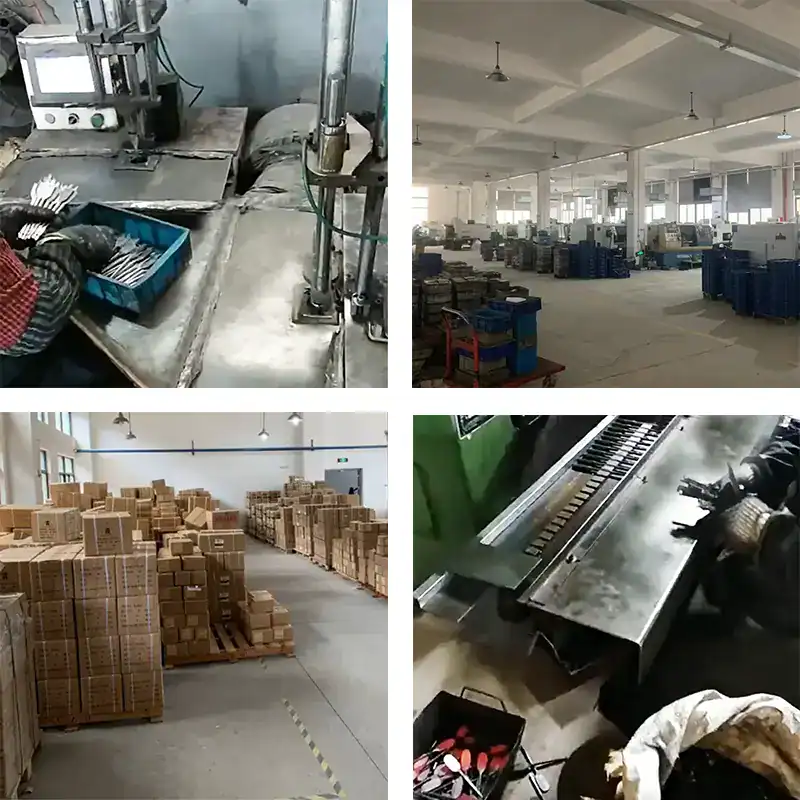
Tenyu Tool Professional Production Workshop for Drill Spade Bit
Support online face-to-face factory visits
Voice of the World Exhibition
Tenyu Tool actively participates in trade shows around the world and visits our customers, we get closer to them and get more opportunities to present our drill spade bit.


Voice of the World Exhibition
Tenyu Tool actively participates in trade shows around the world and visits our customers, we get closer to them and get more opportunities to present our drill spade bit.






Qualification Certificate
Third-Party Verified Excellence: Engineering Confidence Into Every Drill Spade Bit
Qualification Certificate
Third-Party Verified Excellence: Engineering Confidence Into Every Drill Spade Bit

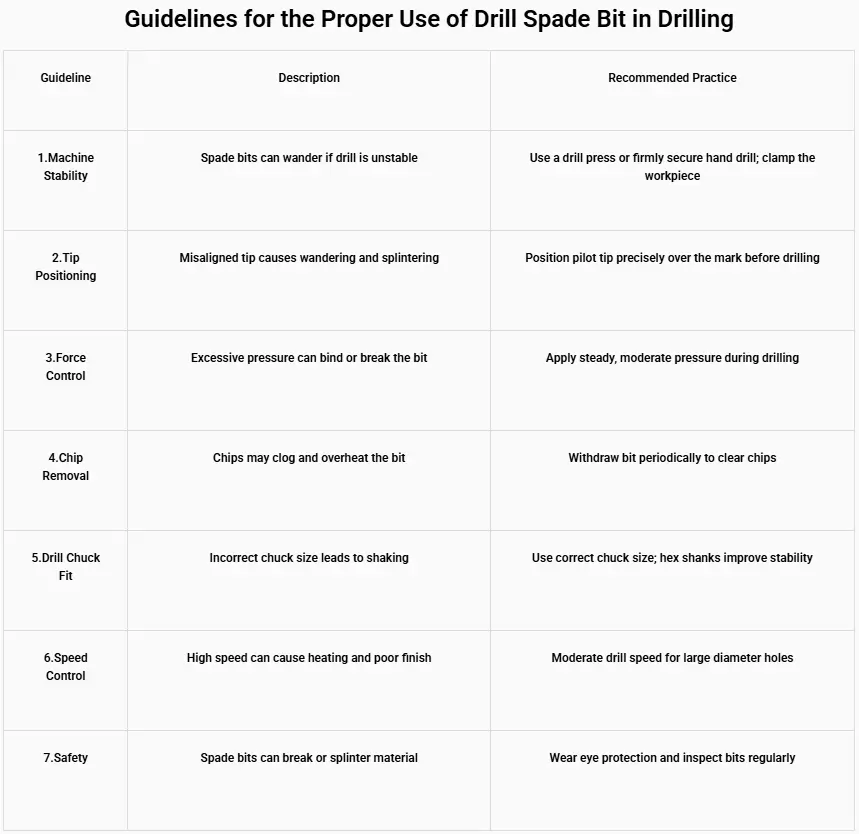
Guidelines for the Proper Use of Drill Spade Bit in Drilling
Guideline | Descrição | Recommended Practice |
1.Machine Stability | Spade bits can wander if drill is unstable | Use a drill press or firmly secure hand drill; clamp the workpiece |
2.Tip Positioning | Misaligned tip causes wandering and splintering | Position pilot tip precisely over the mark before drilling |
3.Force Control | Excessive pressure can bind or break the bit | Apply steady, moderate pressure during drilling |
4.Chip Removal | Chips may clog and overheat the bit | Withdraw bit periodically to clear chips |
5.Drill Chuck Fit | Incorrect chuck size leads to shaking | Use correct chuck size; hex shanks improve stability |
6.Speed Control | High speed can cause heating and poor finish | Moderate drill speed for large diameter holes |
7.Safety | Spade bits can break or splinter material | Wear eye protection and inspect bits regularly |
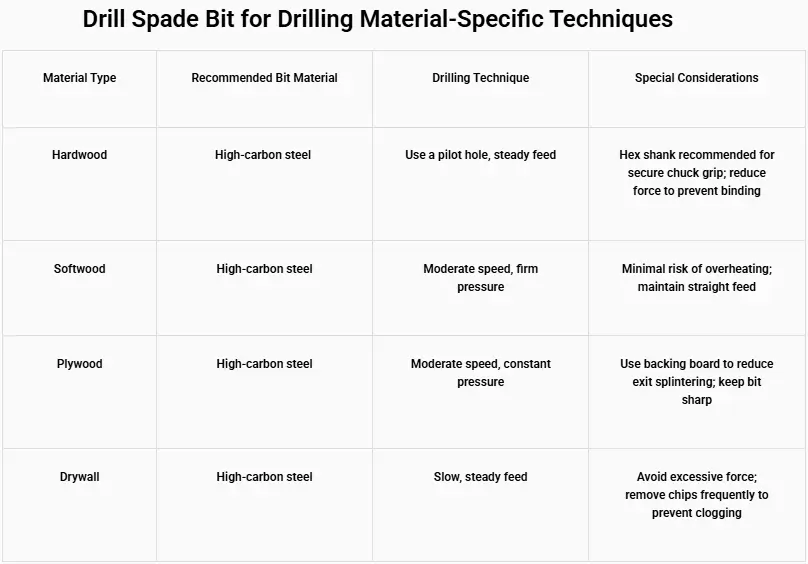
Drill Spade Bit for Drilling Material-Specific Techniques
Material Type | Recommended Bit Material | Drilling Technique | Special Considerations |
Madeira dura | High-carbon steel | Use a pilot hole, steady feed | Hex shank recommended for secure chuck grip; reduce force to prevent binding |
Madeira macia | High-carbon steel | Moderate speed, firm pressure | Minimal risk of overheating; maintain straight feed |
Madeira compensada | High-carbon steel | Moderate speed, constant pressure | Use backing board to reduce exit splintering; keep bit sharp |
Drywall | High-carbon steel | Slow, steady feed | Avoid excessive force; remove chips frequently to prevent clogging |
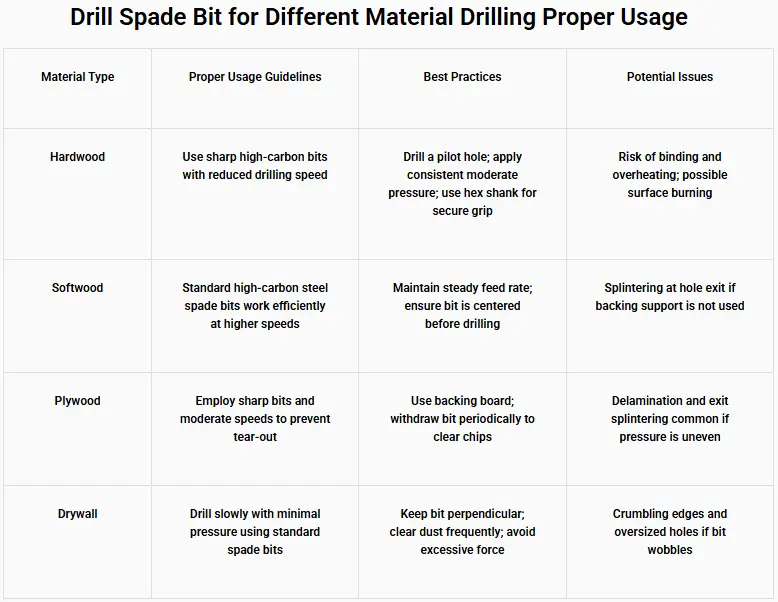
Drill Spade Bit for Different Material Drilling Proper Usage
Material Type | Proper Usage Guidelines | Best Practices | Potential Issues |
Madeira dura | Use sharp high-carbon bits with reduced drilling speed | Drill a pilot hole; apply consistent moderate pressure; use hex shank for secure grip | Risk of binding and overheating; possible surface burning |
Madeira macia | Standard high-carbon steel spade bits work efficiently at higher speeds | Maintain steady feed rate; ensure bit is centered before drilling | Splintering at hole exit if backing support is not used |
Madeira compensada | Employ sharp bits and moderate speeds to prevent tear-out | Use backing board; withdraw bit periodically to clear chips | Delamination and exit splintering common if pressure is uneven |
Drywall | Drill slowly with minimal pressure using standard spade bits | Keep bit perpendicular; clear dust frequently; avoid excessive force | Crumbling edges and oversized holes if bit wobbles |
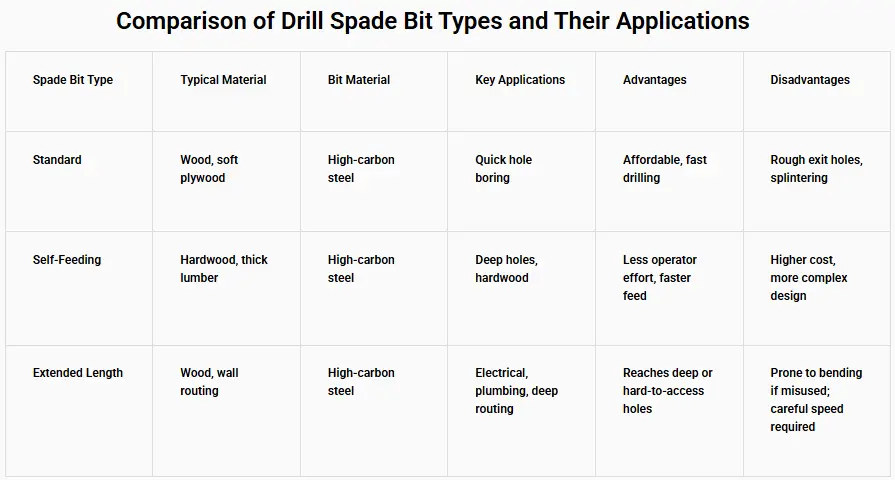
Comparison of Drill Spade Bit Types and Their Applications
Spade Bit Type | Typical Material | Bit Material | Key Applications | Vantagens | Desvantagens |
Padrão | Wood, soft plywood | High-carbon steel | Quick hole boring | Affordable, fast drilling | Rough exit holes, splintering |
Self-Feeding | Hardwood, thick lumber | High-carbon steel | Deep holes, hardwood | Less operator effort, faster feed | Higher cost, more complex design |
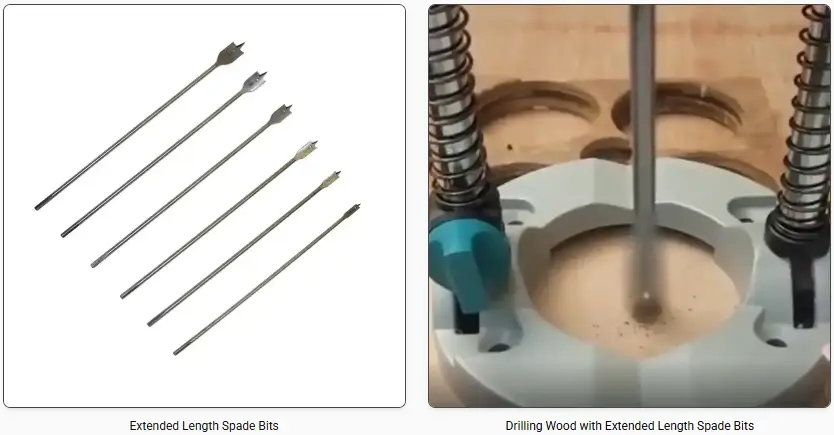
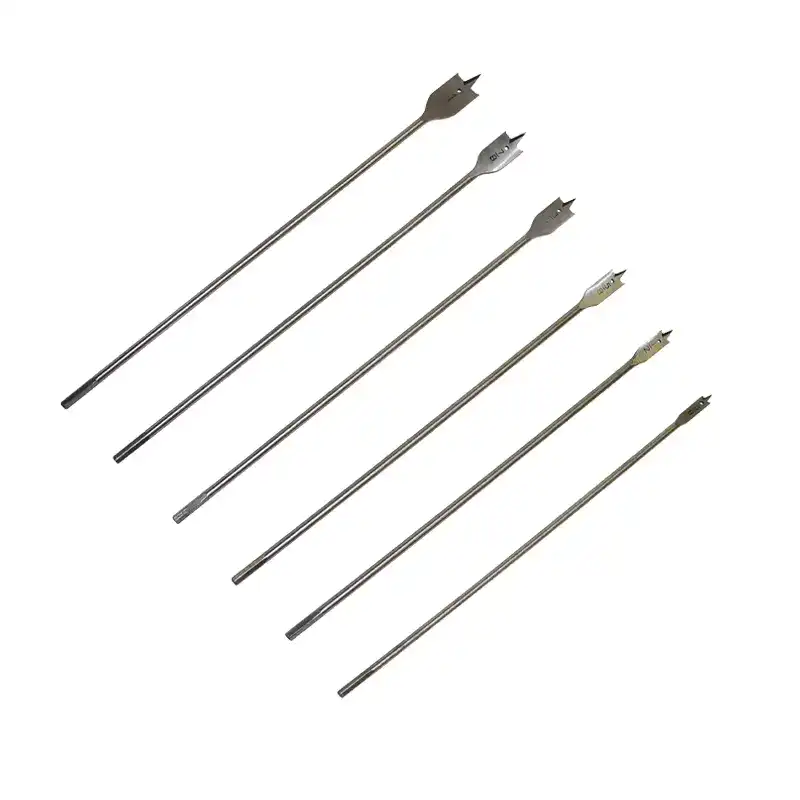
Extended Length | Wood, wall routing | High-carbon steel | Electrical, plumbing, deep routing | Reaches deep or hard-to-access holes | Prone to bending if misused; careful speed required |
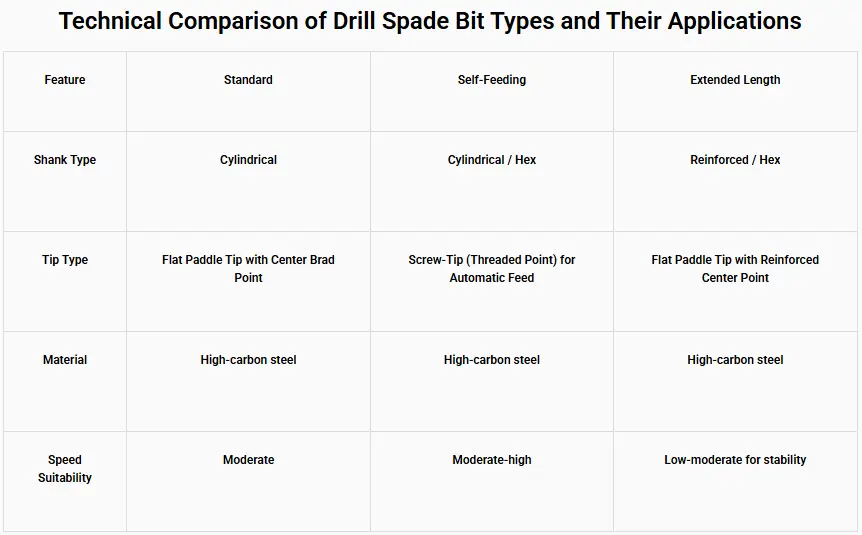
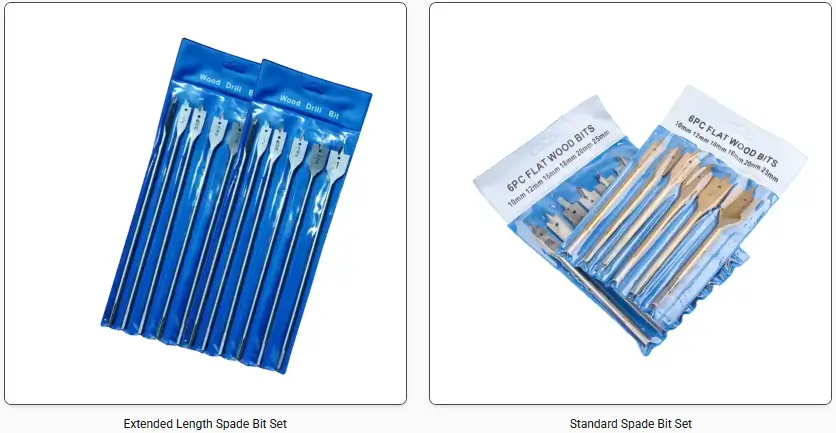
Technical Comparison of Drill Spade Bit Types and Their Applications
Característica | Padrão | Self-Feeding | Extended Length |
Tipo de haste | Cylindrical | Cylindrical / Hex | Reinforced / Hex |
Tipo de Ponta | Flat Paddle Tip with Center Brad Point | Screw-Tip (Threaded Point) for Automatic Feed | Flat Paddle Tip with Reinforced Center Point |
Material | High-carbon steel | High-carbon steel | High-carbon steel |
Speed Suitability | Moderate | Moderate-high | Low-moderate for stability |
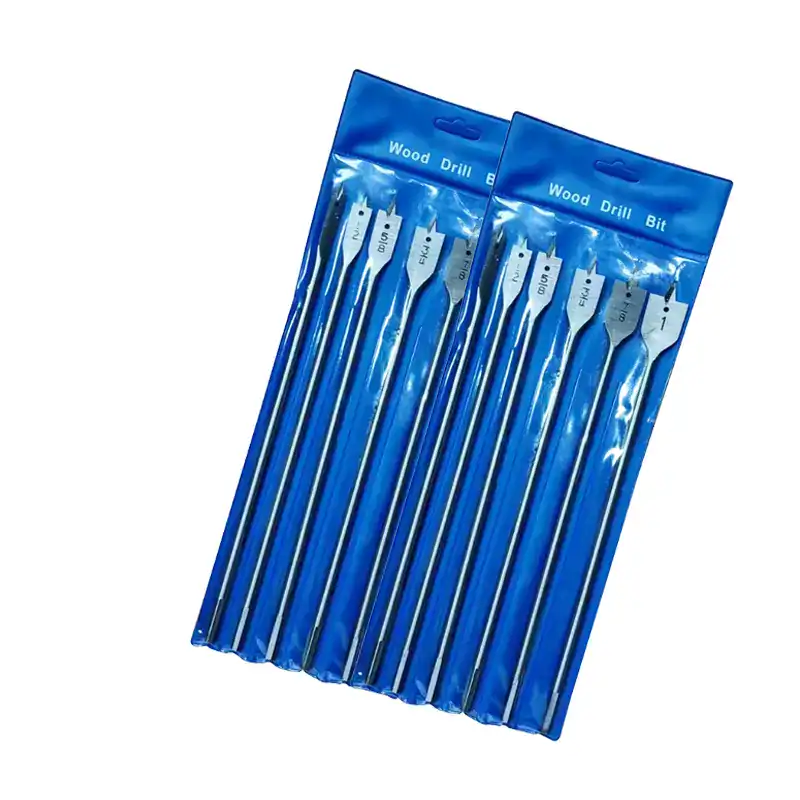
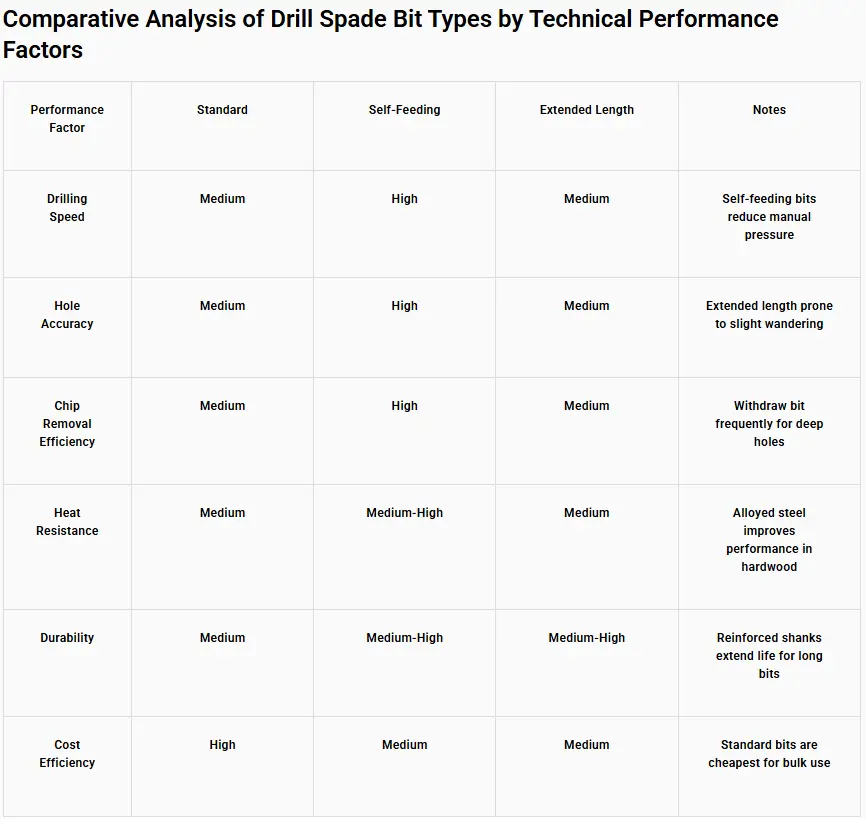
Comparative Analysis of Drill Spade Bit Types by Technical Performance Factors
Performance Factor | Padrão | Self-Feeding | Extended Length | Notes |
Drilling Speed | Médio | High | Médio | Self-feeding bits reduce manual pressure |
Hole Accuracy | Médio | High | Médio | Extended length prone to slight wandering |
Chip Removal Efficiency | Médio | High | Médio | Withdraw bit frequently for deep holes |
Heat Resistance | Médio | Medium-High | Médio | Alloyed steel improves performance in hardwood |
Durabilidade | Médio | Medium-High | Medium-High | Reinforced shanks extend life for long bits |
Cost Efficiency | High | Médio | Médio | Standard bits are cheapest for bulk use |
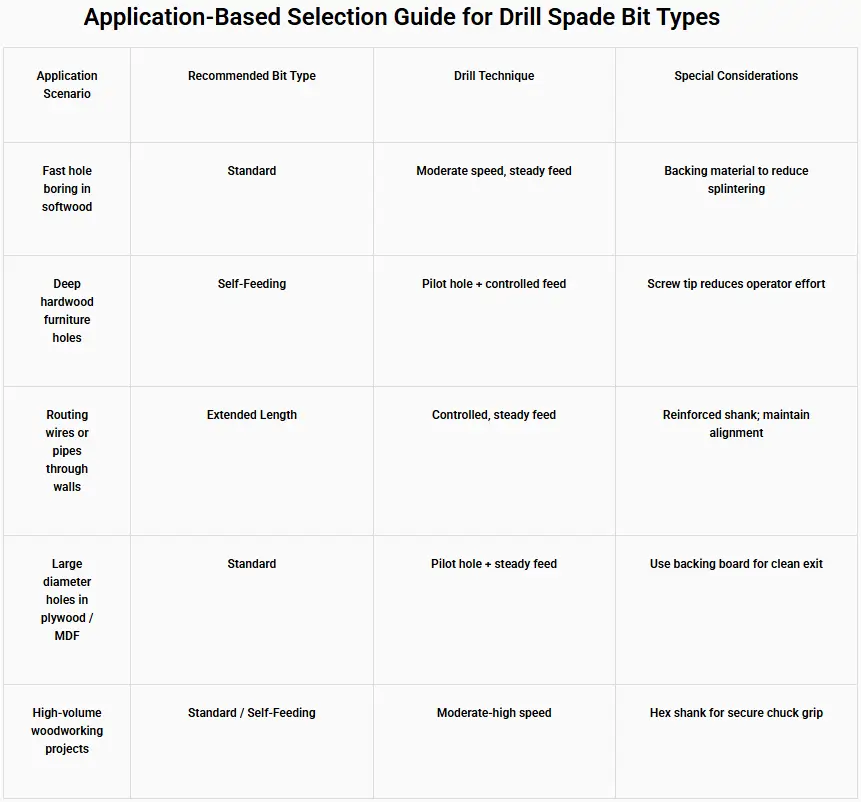
Application-Based Selection Guide for Drill Spade Bit Types
Application Scenario | Recommended Bit Type | Drill Technique | Special Considerations |
Fast hole boring in softwood | Padrão | Moderate speed, steady feed | Backing material to reduce splintering |
Deep hardwood furniture holes | Self-Feeding | Pilot hole + controlled feed | Screw tip reduces operator effort |
Routing wires or pipes through walls | Extended Length | Controlled, steady feed | Reinforced shank; maintain alignment |
Large diameter holes in plywood / MDF | Padrão | Pilot hole + steady feed | Use backing board for clean exit |
High-volume woodworking projects | Standard / Self-Feeding | Moderate-high speed | Hex shank for secure chuck grip |
Índice
FAQ section:
What is the difference between a spade drill bit and a regular drill bit?
A spade or paddle bit (also known as a wood-boring bit) is a different kind of drill bit that can be used for wood, plywood, and some plastics Spade bits are a popular choice for drilling large-diameter holes (1/2″ or more). They can drill holes much faster than other wood drill bits. Spade drill bits are ideal for home improvement and DIY jobs. Can perform multiple applications (industrial and non-industrial)
Can you use a spade drill bit on metal?
No, you generally should not use a standard spade bit for metal, Drill Spade Bits are not suitable for use on metal, concrete, or other hard materials. They are designed specifically for softer materials like wood, plastic, and drywall. For drilling into metal or concrete, it’s best to use a drill bit made from high-speed steel (HSS), carbide, or masonry bits.
How do I prevent a Drill Spade Bit from getting stuck in the material?
To prevent the flat drill bit from getting stuck, slow down the drilling speed, reduce the pressure, frequently clear away the chips, drill from both sides, and ensure the drill bit is sharp and at the correct angle. After clearing the debris, try drilling again, or drill from the other side.
Are spade bits only for wood?
The use of spade bits is not only restricted to wood, some spade bits can drill through thin metals as well,spade bits are more suitable for softwood than hardwoods or precise drilling tasks.
What is the benefit of spade drill bit?
The fully threaded cone tip is self-feeding and therefore less effort is needed to drill a hole compared to other drill bits. Also, compared to an Auger drill bit, the Spade Bit needs less space and can therefore also be used in areas.Excellent for quickly drilling many holes.
Is there a difference between wood and metal drill bits
Yes, there’s a big difference: wood bits have center spurs and cutting lips for clean entry and to prevent splintering, running at higher speeds, while metal bits have a sharp, angled tip (118°/135°) and helical flutes for heat dissipation, requiring lower speeds and lubrication to cut hard materials precisely
Drill Spade Bit Manufacturer for Wood - Drill with a Spade Bit Tool
The spade bit, a quintessential tool in woodworking and beyond, stands as a testament to efficient hole creation in wood and other materials. This article explores the multi-faceted spade drill bit world with pertinent information for importers, wholesalers and purchasing managers on where to source high quality drills with a spade bit tool. From learning the uses of a drill to picking out the best drill bit set for your needs, our goal is to give you all of the information that you need to make informed decisions on your purchases related to drills and spade bits.
Applications of Spade Drill Bits
Common Uses in Woodworking
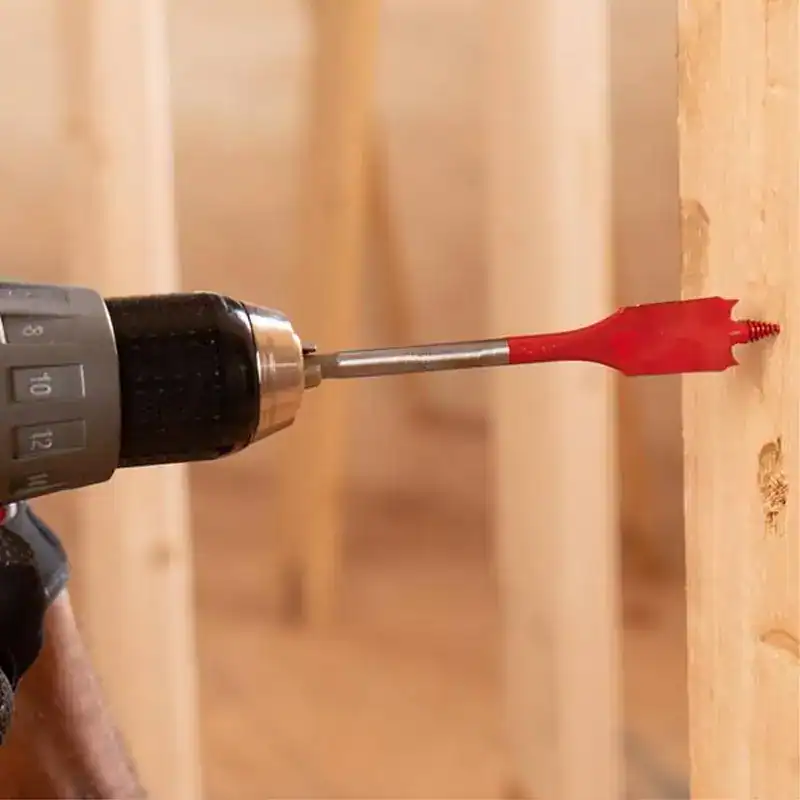
The spade drilling bit is widely used in woodworking to drill a large diameter hole at faster rates. With a flat negative rake point, the negative rake cuts rub shoulders and causes heating to prevent scoring the bottom of the hole (lowering heat in cutting). A center brad point allows for easy positioning and prevents the bit from wandering into an adjacent cut. There are cutters on this tool. The cutter geometry also makes this drill an excellent choice for applications in which there can be intermittent drilling.
When you are working with wood, for example, a drill that comes with a spade bit leads is a low-cost and quick option as compared to other types of drill bits. The type of wood one is working on has a direct influence on drilling choice with a spade bit tool, which is why aço de alto carbono construction can be handy to ensure clean and precise cuttings.
Fast Drilling Techniques
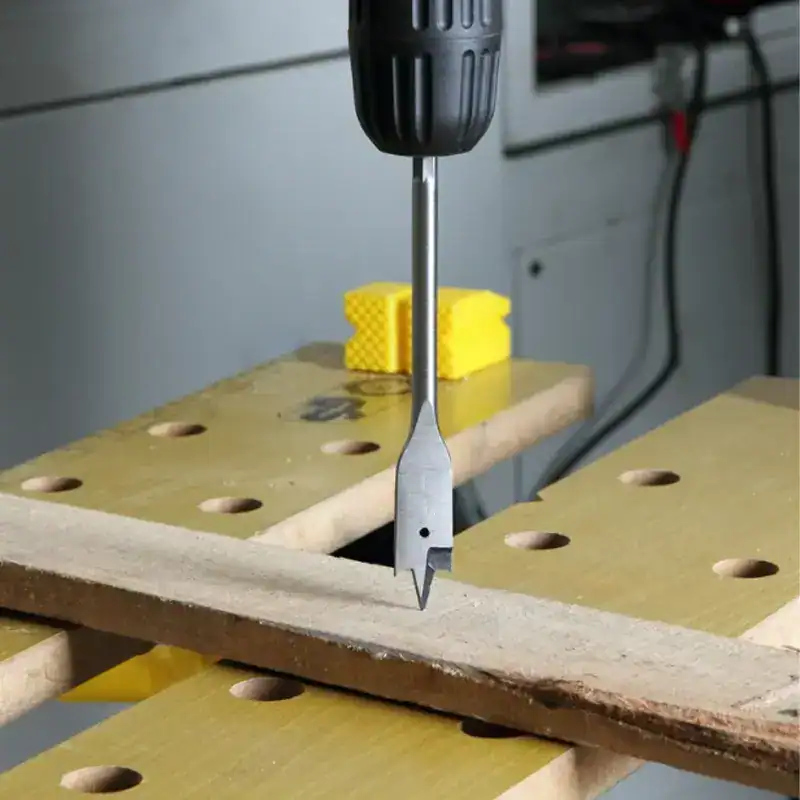
Drilling quickly with a spade bit requires an adequate-speed drill and technique. First of all, position the tip of the spade drill bit over the mark. You want to press firmly as you start the drill. But there are certain factors that will help you drill holes more effectively, and those are:
- Avoid using excessive force, which may result in the spade bit binding or wandering.
- If a deep hole, frequently withdraw the bit to remove chips and prevent overheating.
- The chuck size of the drill should be accurate, which will make sure the bit won’t shake when drilling.
Picking the Best Drill Bit for Your Project
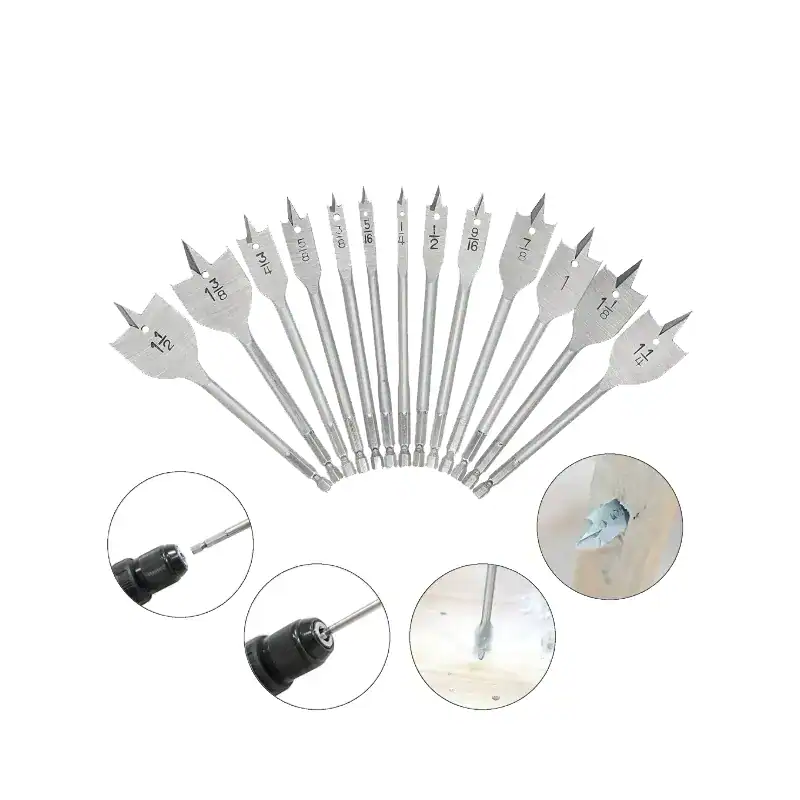
There are a few different variables to consider when choosing the right spade drill bit for the job, such as the type of material being drilled, the hole size and depth needed. These spades are offered in different sizes in metric and inches. If drilling through thick lumber or for holes deeper than 1 inch, you can use a spade bit extension to give your drill bit the extra reach it needs. Not all features are readily available, but we have different kinds of shanks, like a hex shank that fits more securely in the drill chuck when it is spinning, particularly during quick drilling or while using hardwood.
Types of Spade Drill Bits
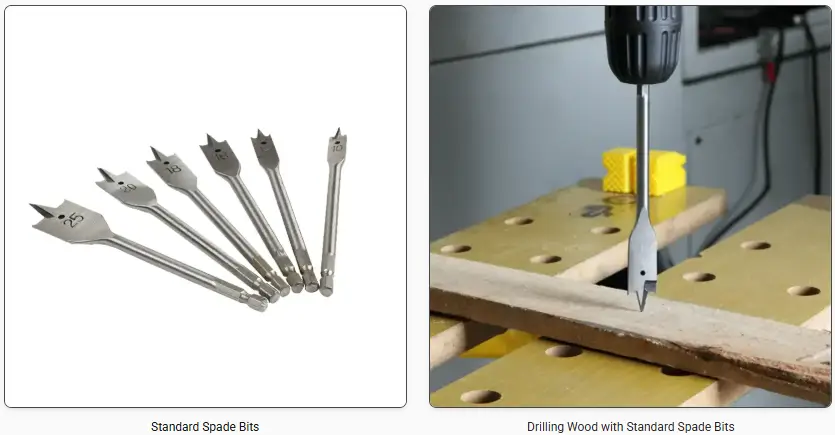
Standard Spade Bits
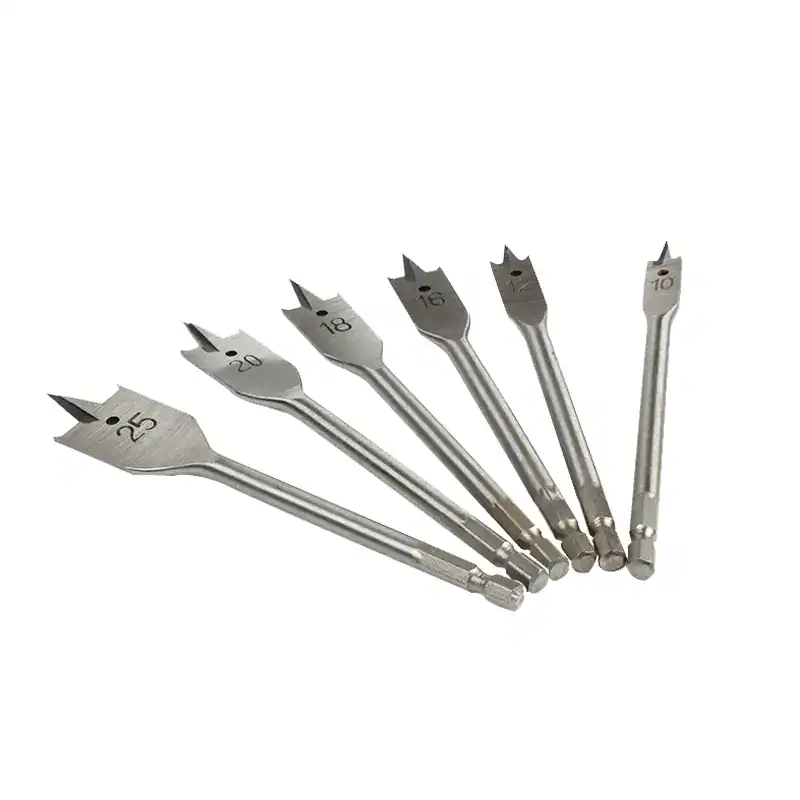
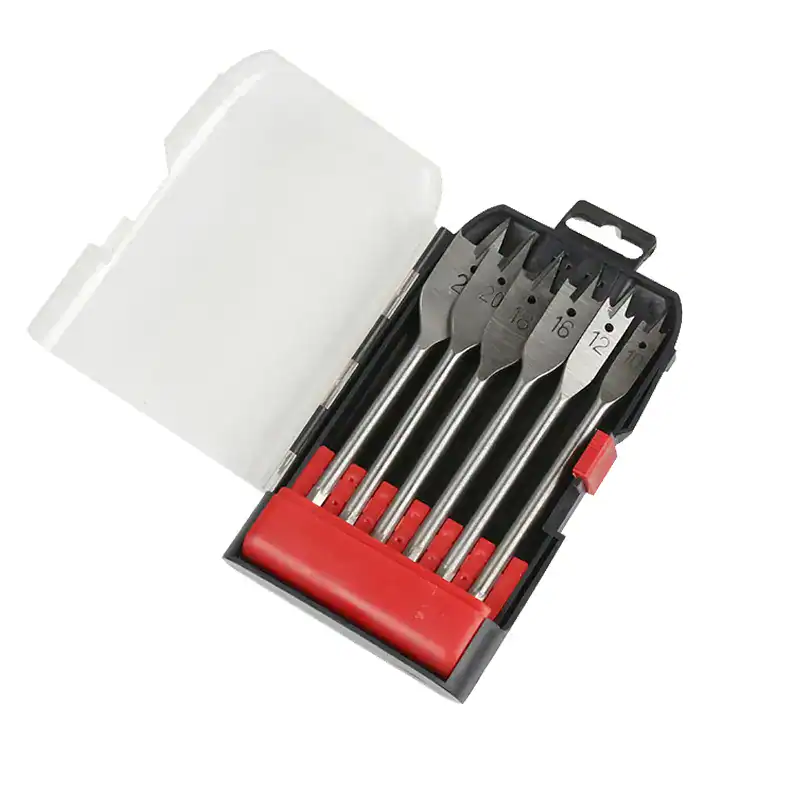
Standard spade bits are the most commonly available type of tool and are identifiable by a fairly flat blade that is pointed on the end. They are normally constructed from high-carbon steel and provide good durability at a reasonable price point. They are used primarily in making holes in wood and other materials. When you use a drill fitted with a typical spade bit, the drill’s pointed tip acts to center itself and start cutting. They can drill fast, but you’ll get splintering on the exit side of the hole unless you back up with a backing material for clean edges. These bits are very affordable, allowing them to be used on a variety of woodworking applications.
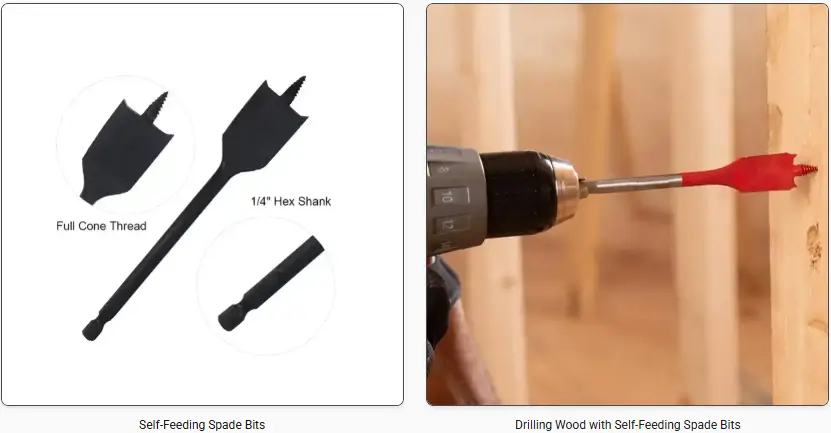
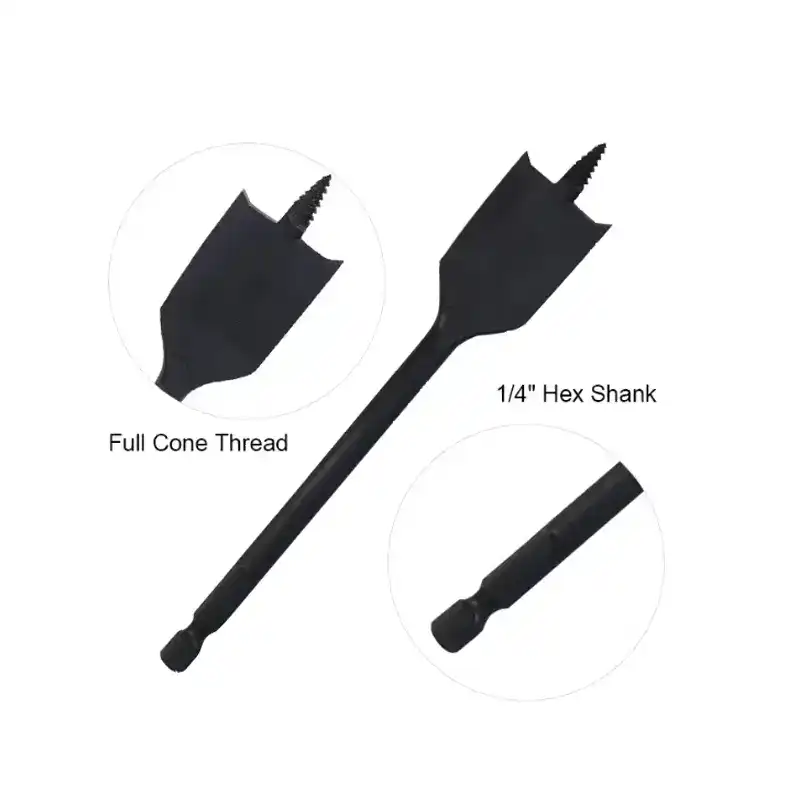
Self-Feeding Spade Bits
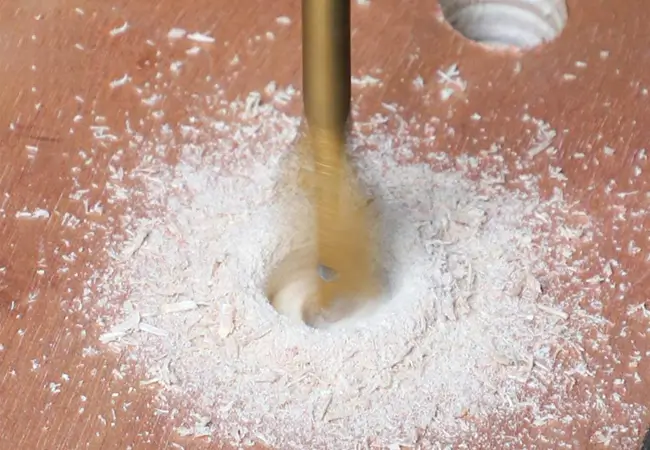
The spade bits are self-feeding with a screw tip that point the bit through the wood, so less force is required by the operator when drilling. This configuration permits an even more rapid drilling and is particularly useful when drilling deep holes or when working on hardwood. They are generally made of high-carbon steel or alloyed steel since these materials possess the necessary characteristics. The self-feed in the spade drill bit is designed to compromise the user’s grip on the smooth cylindrical shank, which will fit into a chuck. But because they are more complex, you generally have to pay more for a self-feeding spade bit compared to conventional spades.
Extended Length Spade Bits
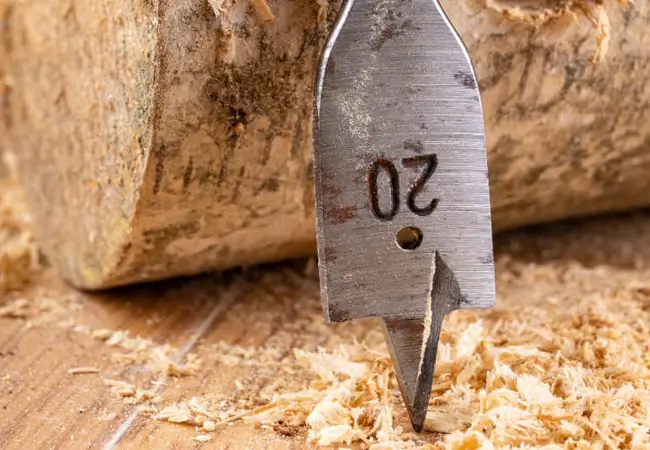
Spade bits with longer than standard length for drilling deeper holes or greater reach. These spade drill bits can come in different sizes but are generally between 12 inches and over (3+ feet) long. They are often utilized in applications where wires or pipes need to be routed through walls or flooring. In drilling with a long spade drill bit is also important that it does not bend or break, so keep a relatively stable and controlled speed. The shank of these spade bits, is often strengthened to accommodate the extra stress. Extended length spade bits will vary in price depending on how long and wide the bit is.
Cracking the Code on Spade Bits: The Pros and Cons
The Upside: Speed and Cost-Effectiveness
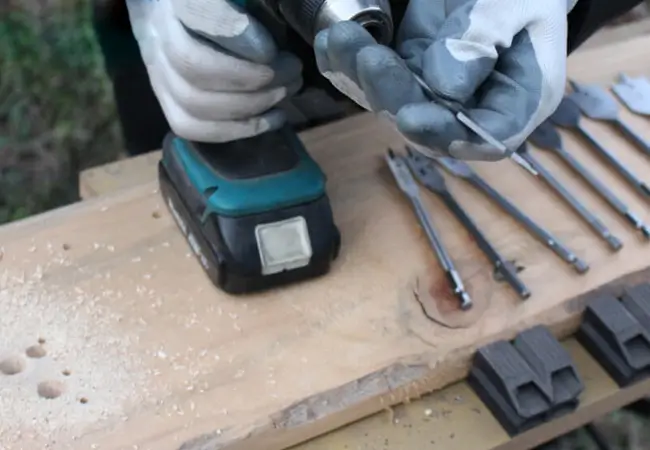
This is the real selling point of a spade drill bit, it’s going to offer you fast drilling times at an affordable price. In times of timely woodwork hole-boring, having a spade bit is generally cheaper than alternative drill types. This is especially great for larger woodworking projects or when making a bunch of holes; the accuracy is less important. A high carbon steel spade bit set occupies the middle ground—it’s durable but not too expensive, which can appeal if you’re buying in bulk. The simplicity of the spade drill design means that it does not cost much to manufacture, which makes for an economic drilling solution.
The Drawback: Jagged Holes and Splintering
But as quick and cheap as it is, there are disadvantages to using a drill with a spade bit. The major disadvantages are that the holes made are generally rough with massive splintering at least on the exit side of a workpiece. This is due to the action of the spade drill bit directly cutting through the wood rather than slicing with an edge. The resulting splitting can be unsightly when a sleek, finished appearance is desired.
Other Than the Spade: A Look at Different Types of Wood Drill Bits
Although applicable in most cases, the spade drill bit has been surpassed by other designs of drill bits, especially where larger holes are concerned. For cleaner, more precise holes, use wood drill bits or Forstner bit. These produce less splintering and provide more control over where the hole is placed and its size. If boring extra-large holes with a good finish is what you are after, consider hole saws or brocas. Choosing a drill bit, then, is an important decision and can be based on the project at hand in terms of material properties that need to remain intact in the hole, as well as on your machine.
Characteristics of Good Spade Bit Sets
Depth and Diameter Considerations
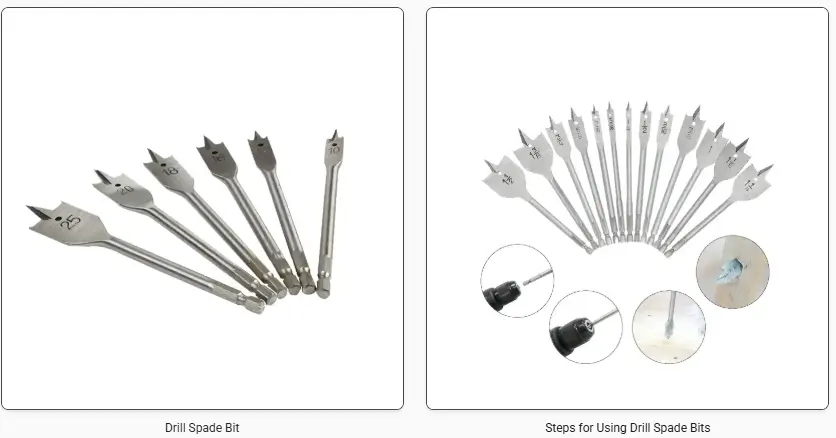
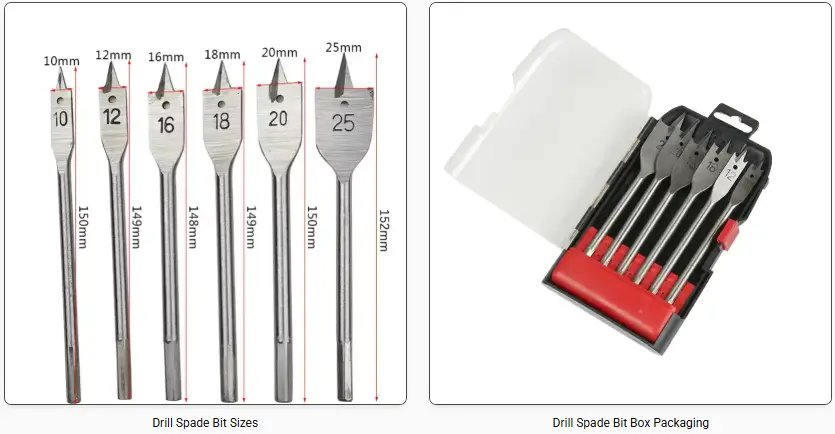
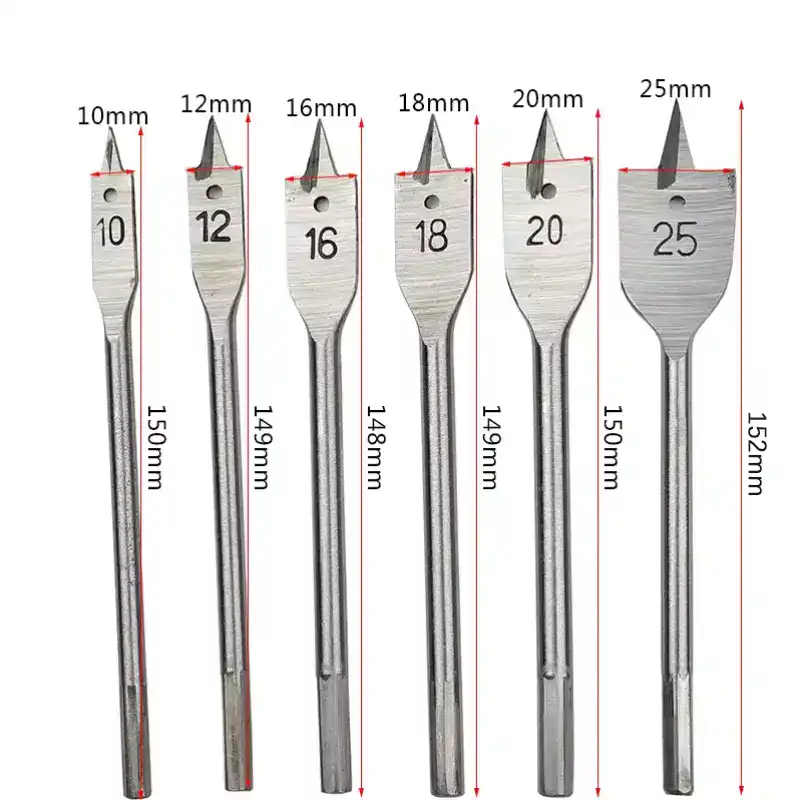
When comparing such factors in a good spade bit set, depth and diameter are all essential. A good quality drill bit set comes in a variety of sizes to suit any project. Think about the deepest depth at which the spade drill bit can reach, and is suited for deep hole applications. Ensure the spade bit tool has a diameter clearly marked on each drill to make selecting promptly and precisely. The drill bit should perform the cut uniformly to all depth.
Cutting Efficiency and Speed
Cutting speed and efficiency are essential in a quality spade drill bit. The design of the spade bit, including the sharpness and angle of its tip and cutting edges, plays the most significant role in how fast and clean it can drill through wood or any other material. Find spade drill bit sets crafted from aço de alto carbono to retain a sharp cutting edge. With a good spade drill bit, less friction equals faster drilling and longer life. A good spade bit is designed to cut a hole at high speed when you run it with a high-powered drill.
Durability and Material Quality
Two important features of a spade bit, and any set of spade bits for that matter, are quality materials and durability. High carbon steel spade drill bit provides strength and wear resistance for longer life. The strong shank of the spade drill bit makes it solid, and keeps the drill from damage while working. The cutting head has to be capable of taking the heat and maintaining a sharp edge while drilling at high speeds. By investing in a spade drill bit set that is built to last, you’ll drastically reduce the need for replacements and be confident with its performance over time.
Drilling Techniques with Spade Bits
Would a Drill Press Be of Some Help?
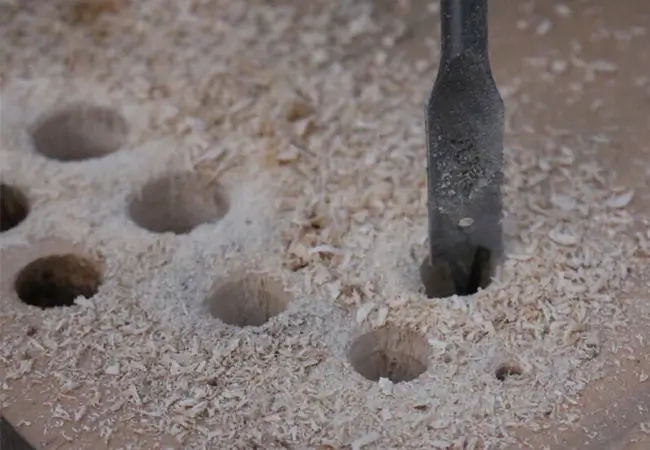
A spade drill bit is so much easier to operate with a drill press. Clamping the wood or material on the drill press table acts as a buttress. Choose the correct speed for the material being drilled and slowly lower the Spade Bit into the workpiece. There are many benefits to using a drill press, such as:
- Consistent depth control.
- Clean, accurate holes.
This feature is especially handy when drilling many mirrored holes or working on fragile projects where accuracy cannot be compromised. If you use a drill with a spade bit, make sure the chuck of your table-top drill press is tight so that the drill won’t slip.
Best Practices for Fast Drilling
For a quick spade drill bit, it is important to keep the tip centered on your spot that you marked. For those who want to supercharge your drilling, keep these key factors in mind:
- Keep a constant pressure while drilling and a moderate drill speed, withdrawing the bit to clear chips and cool down every now and then.
- For a hole with an extra-large diameter, drill a pilot hole to guide the spade drill and help prevent splintering.
The hex shank provides a positive exercising grip in the drill chuck, to prevent slippage under high-torque drilling loads. If this is the case, following best practices will optimize productivity and prevent damage to the workpiece or spade drill.
Making Your Spade Bits Last Longer
In order to keep your spade drill bits in tip-top shape, you must maintain and care for them regularly. Remove the chips or buildup of all spade bits after each use. Regularly sharpen the cutting blades to ensure optimum performance. Keep your spade drill bit set organized in a dry place to avoid rust and deterioration. Do not use too much force when drilling, or you may bend and break the spade bit.
When drilling to greater depths, remove the bit occasionally to clear chips and prevent overheating. With these basic steps, you can extend the performance of your spade drill bit set and use it for years to come. You can purchase various things to clean your drill bit.