Large holes often require large drill bits, but not every drill machine can accept large shank diameters.
For importers, wholesalers, and procurement managers, this creates a common challenge. End users want to drill larger holes without purchasing expensive industrial equipment or specialized chucks. When drill bits are incompatible with standard machines, customer will refund the drills. Understanding reduced shank drill bits helps you offer practical solutions that meet market demand.
A reduced shank drill bit is designed with a cutting diameter larger than its shank diameter1. This allows large drill bits to fit into standard drill chucks while maintaining the ability to drill larger holes. Because of their versatility and compatibility, reduced shank drill bits are widely used in metalworking, fabrication, maintenance, and industrial manufacturing.
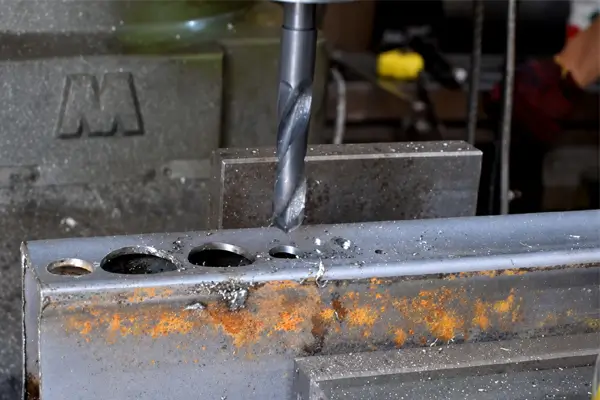
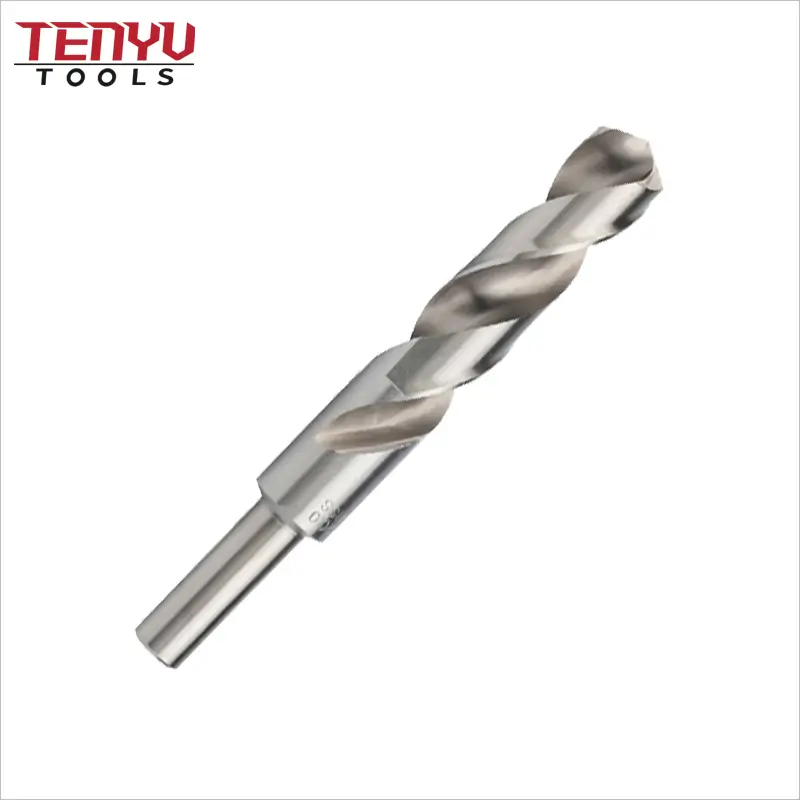
Reduced shank drill bit designed for large holes drilling while fitting standard drill chucks.
What does Reduced Shank Mean?
The term "reduced shank" refers to a drill bit whose shank diameter is smaller than its cutting diameter. This design allows larger drill sizes to be used in standard drilling equipment without requiring oversized chucks2.
For professional users, the main benefit is convenience. Instead of investing in larger machines, operators can use existing drills to handle larger hole sizes efficiently.
How Does a Reduced Shank Allow Large Drill Bits to Fit Standard Chucks?
Standard portable drills and drill presses typically accept chuck capacities such as 10mm, 13mm, or 1/2 inch. However, many drilling applications require hole diameters much larger than these chuck capacities.
A reduced shank design solves this problem by keeping the shank diameter within the chuck’s holding range while increasing the cutting diameter.
This design allows users to drill larger holes without upgrading their drilling equipment. For distributors, this versatility makes reduced shank drill bits attractive to both professional and industrial buyers3.
What Are the Most Common Reduced Shank Sizes Used in Industrial Drilling?
Reduced shank drill bits are available in many sizes, but several configurations are particularly popular in industrial markets.
In North America, 1/2-inch reduced shank drill bits, often called Silver & Deming drill bits4, are among the most widely used options because they fit standard industrial drill chucks.
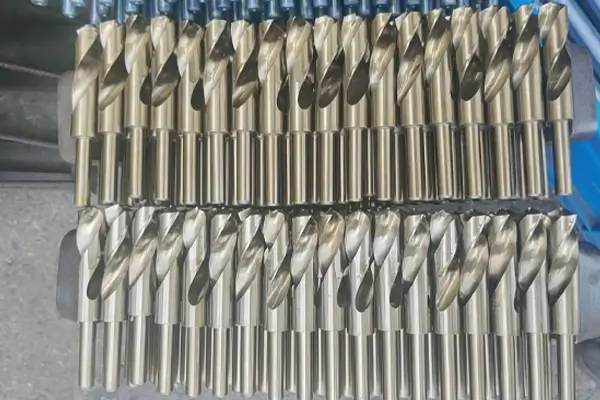
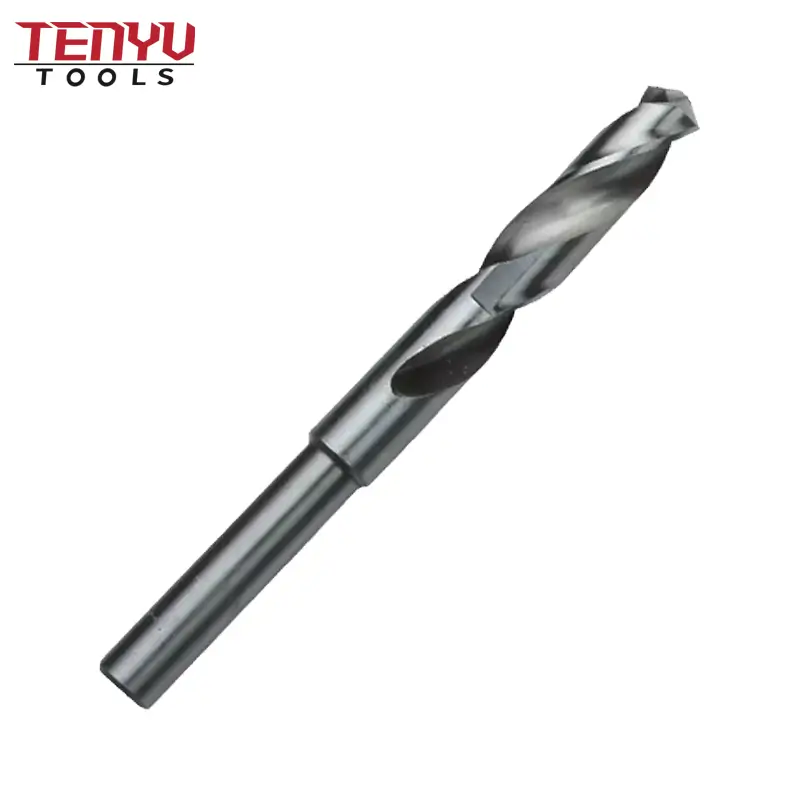
Silver and Deming reduced shank drill bits commonly used for industrial metal drilling applications.
Why Do Importers Prefer Reduced Shank Drill Bits for Versatile Product Lines?
Importers often look for products that appeal to multiple customer groups without creating excessive inventory requirements. Reduced shank drill bits meet this need because they can be used with many different drill machines.
Key advantages include:
- Wider machine compatibility
- Reduced inventory complexity
- Broader customer base
- Lower equipment investment for end users
- Strong demand in industrial markets
Instead of carrying separate product lines for different chuck capacities, distributors can offer reduced shank drill bits that fit a wider range of equipment. This simplifies purchasing decisions and improves stock turnover.
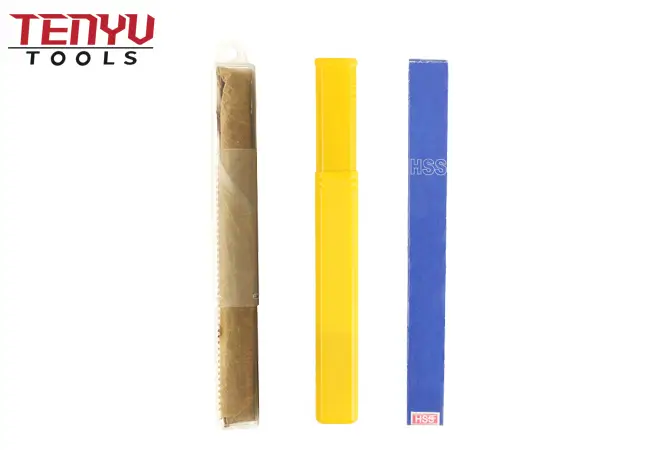
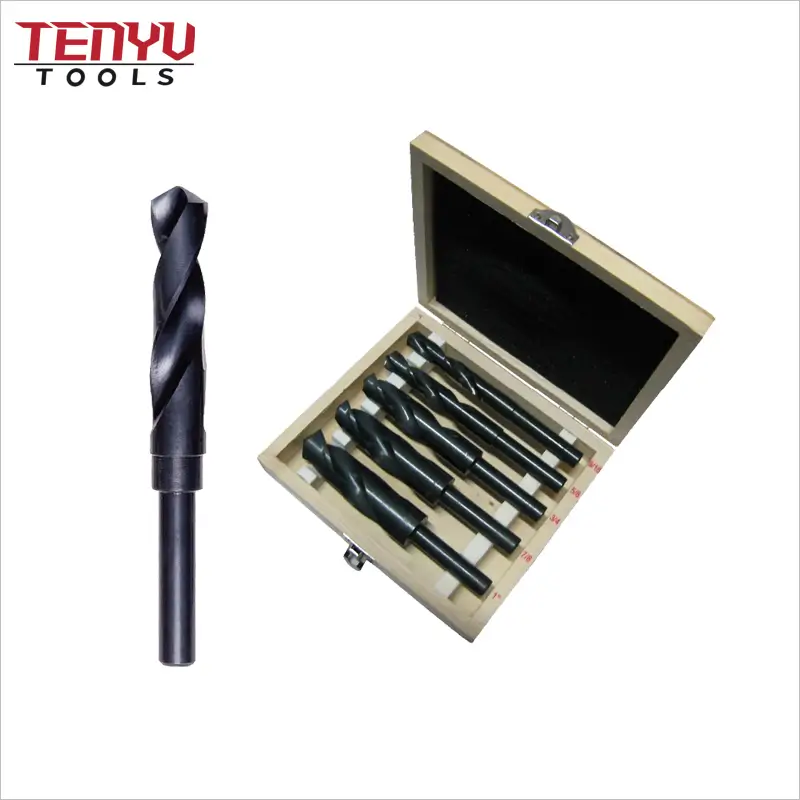
OEM reduced shank drill bit packaging designed for industrial distributors and tool brands.
What is a Reduced Shank Drill Bit Used For?
Reduced shank drill bits are primarily used when the required hole size exceeds the chuck capacity of the drill machine. They provide a practical solution for drilling large holes in metal, plastic, and other industrial materials5 without requiring specialized equipment.
Their flexibility makes them popular across manufacturing, maintenance, fabrication, and construction industries.
Which Materials and Industries Commonly Use Reduced Shank Drill Bits?
Reduced shank drill bits are suitable for a wide range of materials because they are available in different HSS and cobalt grades.
Common materials include:
- Carbon steel
- Paslanmaz çelik
- Dökme demir
- Alüminyum
- Bakır
- Pirinç
- Plastik
Industries that frequently use reduced shank drill bits include:
- Metal fabrication
- Industrial maintenance
- Construction
- Automotive repair
- Manufacturing plants
- Steel structure production
Because one drill bit can fit standard machines while producing larger holes, these products remain highly practical for workshops that need flexibility.
What Features Should Procurement Managers Evaluate Before Bulk Purchasing Reduced Shank Drills?
Not all reduced shank drill bits offer the same performance. Material quality, heat treatment, and manufacturing accuracy6 all influence tool life and drilling efficiency7.
Before placing bulk orders, buyers should evaluate:
- Material grade (HSS, M2, M35, M42)
- Hardness consistency
- Point angle accuracy
- Concentricity
- Yüzey
- Shank tolerance
These quality indicators help reduce customer complaints and improve repeat orders.
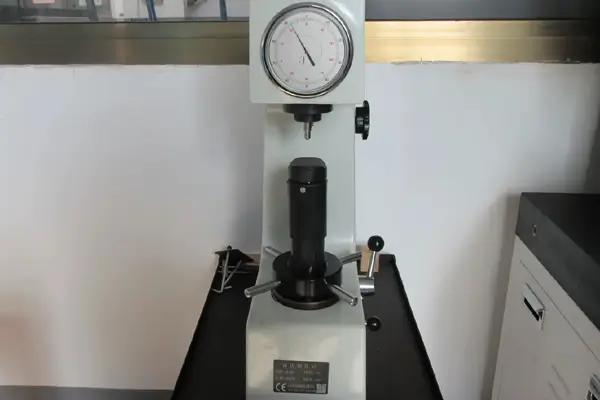
Quality inspection process for reduced shank drill bits before wholesale shipment.
What is the Difference Between Blacksmith and Reduced Shank?
In many markets, the terms blacksmith drill bit Ve reduced shank drill bit are often used to describe a similar product structure. The drill bit has a larger cutting diameter and a smaller shank, usually around 13mm or 1/2 inch, so it can drill large holes while still fitting standard hand drill or drill press chucks.
For importers and wholesalers, the key point is not only the name, but also the actual specification. Some suppliers may use “blacksmith drill bit” to describe a heavy-duty reduced shank drill bit for metal drilling, while others may list the same product under Silver & Deming drill bits. To avoid confusion during bulk purchasing, buyers should always confirm the cutting diameter, shank diameter, flute length, material grade, and point angle before placing orders.
What are Blacksmith Drill Bits?
Blacksmith drill bits are large-diameter drill bits designed for drilling bigger holes in metal and heavy-duty materials without requiring industrial-size chucks. They usually feature a wider cutting head and a reduced shank, commonly 13mm or 1/2 inch8, which allows them to fit standard drill presses and heavy-duty hand drills.
This design is especially useful when users need larger hole sizes but do not want to upgrade to more expensive drilling equipment. In industrial and workshop markets, blacksmith drill bits are widely used for steel plate, structural steel, fabrication work, machinery repair, and general maintenance drilling.
Common features include:
- Large cutting diameter for bigger hole drilling
- Reduced 13mm or 1/2 inch shank for standard chucks
- Stronger body design for heavy-duty applications
- HSS, M2, M35, or M42 material options
- 118° or 135° point angle depending on the application
For procurement managers, blacksmith drill bits are attractive because they solve a practical compatibility problem. End users can drill larger holes with existing machines, which makes the product easier to sell in hardware, maintenance, and metalworking markets.
Which Drill Bit Type Is Better for Heavy-Duty Applications?
For heavy-duty applications, blacksmith drill bits and reduced shank drill bits are often part of the same product category9, especially when the bit uses a large cutting diameter with a smaller 13mm or 1/2 inch shank. The real performance difference usually comes from material grade, heat treatment, flute design, point geometry, and shank accuracy rather than the product name alone.
If the application involves general large-hole drilling in mild steel, carbon steel, aluminum, or fabrication materials, HSS reduced shank blacksmith drill bits are usually a practical and cost-effective choice. If the application involves stainless steel or harder alloys, M35 cobalt or M42 cobalt reduced shank drill bits are usually better because they provide stronger heat resistance and longer service life.
| Başvuru | Recommended Drill Bit Type | Buying Focus |
|---|---|---|
| Large holes in mild steel | HSS reduced shank blacksmith drill bit | Cost and compatibility |
| Stainless steel drilling | M35 or M42 cobalt reduced shank drill bit | Heat resistance |
| Workshop maintenance | 1/2 inch reduced shank drill bit | çok yönlülük |
| Drill press applications | Silver & Deming drill bit | Stable clamping |
| Heavy-duty metal fabrication | Cobalt reduced shank drill bit | Tool life and cutting stability |
For importers, the safest approach is to describe the product clearly in catalogs and packaging. Terms such as “Blacksmith Drill Bit,” “Reduced Shank Drill Bit,” and “Silver & Deming Drill Bit” can be used together when they match the same structure, but the actual size and shank information must be clearly marked. This helps buyers understand compatibility quickly and reduces complaints caused by incorrect machine matching.
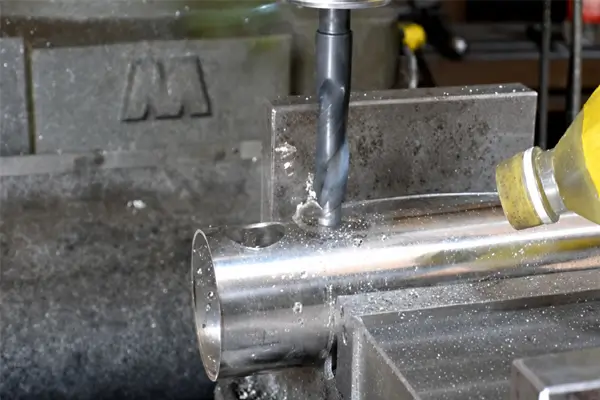
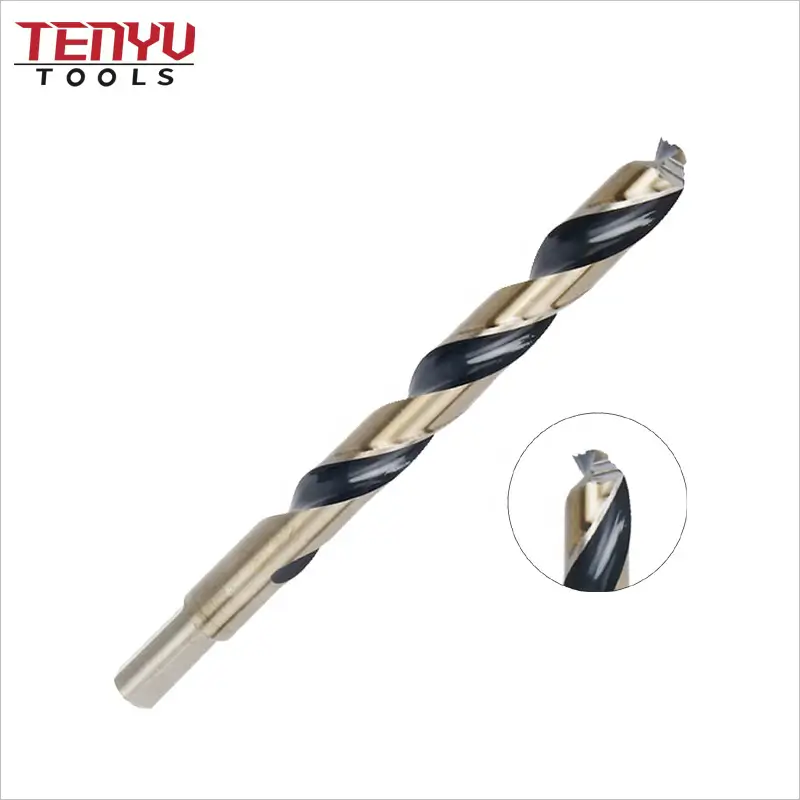
Heavy-duty blacksmith reduced shank drill bit for large-hole drilling in stainless steel, fabrication, and workshop applications.
What is the Advantage of Reduced Shank Drills over Straight Shank Drills?
The biggest advantage of reduced shank drill bits is flexibility. They allow users to drill larger holes without requiring larger machines10, which makes them highly practical for industrial workshops and maintenance departments.
Straight shank drill bits remain effective for standard drilling applications, but reduced shank designs provide additional versatility when hole diameters increase.
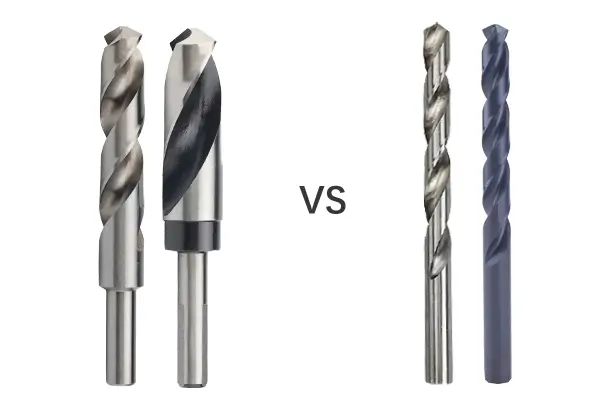
Comparison between reduced shank and straight shank drill bits
How Do Reduced Shank Drill Bits Increase Drilling Flexibility in Workshops?
Workshops often operate a variety of drill machines with different chuck capacities. Reduced shank drill bits allow operators to use larger cutting diameters while continuing to use standard equipment.
This flexibility helps:
- Reduce equipment costs
- Expand drilling capabilities
- Simplify tool selection
- Improve workshop efficiency
- Reduce machine upgrade requirements
For maintenance departments and fabrication shops, this can significantly increase productivity without additional investment.
Why Are Reduced Shank Drill Bits a Popular Choice Among Importers and Tool Brands?
Importers and private-label tool brands prefer products that solve multiple customer problems with a single solution. Reduced shank drill bits meet this requirement by offering compatibility, versatility, and broad industrial appeal.
The reasons for their popularity include:
- Strong demand across industries
- Easy compatibility with standard drills
- Lower inventory complexity
- High repeat purchase potential
- OEM and private-label opportunities
When combined with reliable material quality and stable manufacturing standards, reduced shank drill bits become a highly profitable product category for industrial tool distributors.
Çözüm
Reduced shank drill bits provide a practical solution for drilling large holes while maintaining compatibility with standard drill chucks. Their ability to combine large cutting diameters with smaller shank sizes makes them one of the most versatile drilling tools used in industrial maintenance, fabrication, manufacturing, and construction markets.
For wholesalers and procurement managers, selecting high-quality reduced shank drill bits with accurate shank tolerances, stable hardness, and reliable material grades helps reduce complaints and improve repeat sales. Their broad machine compatibility and strong industrial demand also make them an attractive product category for distributors and private-label tool brands.
FAQ
What is a reduced shank drill bit?
A reduced shank drill bit has a cutting diameter larger than its shank diameter, allowing it to fit standard drill chucks to drill bit holes.
What are reduced shank drill bits used for?
They are commonly used for drilling large holes in metal, plastic, and industrial materials, same as the normal hss drill bits.
What is a Silver & Deming drill bit?
A Silver & Deming drill bit is a reduced shank drill bit that typically uses a 1/2-inch shank for larger drilling diameters.
What is the difference between a blacksmith drill bit and a reduced shank drill bit?
Blacksmith drill bits are normally same as the reduced shank drill bits, just different names.
Why do industrial users prefer reduced shank drill bits?
They allow larger hole drilling without requiring expensive machine upgrade and expensive morse taper shank drill bit, making them highly practical and cost-effective.
Request Your Free Sample
-
"15/16 Cobalt S&D 1/2 Reduced Shank Drill Bit: Precision and …", https://webapps.rutgers.edu/scheduling/Content/pannellum.htm?config=/%5C/pic1.sbs/a/qgmyxxgmg. A machining or tool-design reference can support that reduced-shank drills are defined by a shank diameter smaller than the drill’s cutting diameter. Evidence role: definition; source type: education. Supports: A reduced shank drill bit is designed with a cutting diameter larger than its shank diameter. ↩
-
A technical tooling source explaining chuck capacity and reduced-shank drill geometry can support that reduced shanks permit larger cutting diameters to fit chucks with smaller maximum capacities. ↩
-
"Drill bit shank – Wikipedia", https://en.wikipedia.org/wiki/Drill_bit_shank. A manufacturing or industrial tooling reference describing reduced-shank drills as useful for fitting larger cutting diameters into standard drill chucks would provide contextual support for their appeal in professional and industrial purchasing contexts. ↩
-
A technical reference defining Silver & Deming drills as large-diameter twist drills commonly made with a reduced 1/2-inch shank would support the terminology used here. ↩
-
"Drill bit – Wikipedia", https://en.wikipedia.org/wiki/Drill_bit. General drilling and machining references identify twist drills and related drill-bit forms as tools used to make holes in materials including metals and plastics; this provides contextual support for the material range of reduced-shank drill applications. ↩
-
Machining and tool-engineering literature identifies cutting-tool substrate properties, heat treatment or hardness, and dimensional/geometric accuracy as factors that affect drill performance and wear behavior. ↩
-
Research on drilling operations commonly evaluates drill materials, geometry, and process quality by measuring tool wear or tool life together with drilling performance outcomes such as cutting forces, torque, feed rate, or productivity. ↩
-
A machining or tooling reference can document that reduced-shank drill bits are commonly made with 1/2-inch or approximately 13 mm shanks for use in standard drill chucks. ↩
-
Engineering and tooling references describe reduced-shank drills as large-diameter twist drills made with a smaller shank so they can fit standard drill chucks, which provides contextual support for grouping blacksmith-style drills with reduced-shank drills when the defining feature is a large cutting diameter and smaller shank. ↩
-
A machining reference defining reduced-shank (or Silver and Deming) drill bits can support that their shank diameter is smaller than the cutting diameter, allowing larger-diameter holes to be made in drill chucks or machines with smaller shank capacity. ↩