Breaking glass while drilling can be frustrating and costly. Don’t let improper techniques ruin your projects – learn how to drill perfect holes every time.
To use a diamond drill bit on glass, start with low speed and light pressure. Always keep the drill perpendicular to the surface. Use water as a lubricant and coolant to prevent cracking and extend bit life.

Drilling glass requires patience1 and the right techniques2. Let’s explore the key factors that determine your success with diamond drill bits3.
Should I Use Water with a Diamond Drill Bit?
Ever wondered why professionals always keep water nearby when drilling glass? The answer might surprise you.
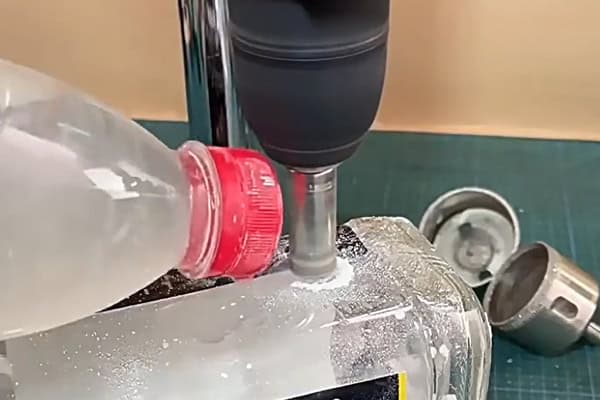
Yes, you should always use water with diamond drill bits. Water cools the glass and bit, prevents cracking, and reduces dangerous silica dust. The water also helps remove debris for cleaner cuts.
Understanding the Role of Water in Glass Drilling
Water serves three critical functions when drilling glass:
- Soğutma – Prevents overheating that can crack glass
- Lubrication – Reduces friction for smoother drilling
- Debris Removal – Flushes away glass particles
For best results, use continuous water flow4. You can submerge the work area or have an assistant spray water constantly5. Some professionals use specialized drill rigs6 with built-in water reservoirs.
At our factory, we’ve found that water-cooled bits last significantly longer than those used dry. The combination of water and proper drilling speed is essential for successful glass drilling.
How Long will a Diamond Drill Bit Last?
Picture this: you’re halfway through a project when your bit suddenly stops cutting effectively. How can you prevent this?
A quality diamond drill bit lasts for 50-100 holes in glass when used properly. Factors affecting lifespan include pressure, speed, and cooling method. Regular cleaning extends bit life significantly.
Maximizing Your Diamond Drill Bit’s Lifespan
Three main factors determine how long your diamond bit will last:
-
Drilling Technique:
- Use moderate, consistent pressure
- Maintain proper speed (3,000-5,000 RPM for small bits)
- Keep the bit perpendicular to the surface
-
Cooling Method:
- Always use water
- Maintain continuous cooling
- Avoid overheating at all costs
-
Maintenance:
- Clean after each use
- Store properly to avoid damage
- Inspect for wear regularly
We track performance data on all our diamond bits. With proper technique and care, our premium bits can drill through 3mm glass up to 120 times before needing replacement.
What are the Disadvantages of Diamond Drill Bits?
While diamond bits excel at cutting glass, they’re not perfect for every situation. Knowing their limitations helps you choose the right tool.
Diamond drill bits have three main disadvantages: higher cost than standard bits, slower cutting speed, and they require water cooling. They’re also not suitable for metals or wood.
Understanding Diamond Bit Limitations
Diamond bits are specialized tools with specific applications:
-
Best For:
- Glass and crystal
- Precise, clean holes
- Delicate materials
-
Not Recommended For:
- Metal drilling
- Ağaç işleri
- High-speed production
Key limitations to consider:
- Higher initial investment
- Require patience (slower cutting)
- Need constant water supply
- Can’t be used on all materials
Are Diamond Drill Bits Real Diamonds?
That sparkly coating might look like jewelry, but diamond bits7 use industrial-grade materials8. The truth about what makes them cut is fascinating.
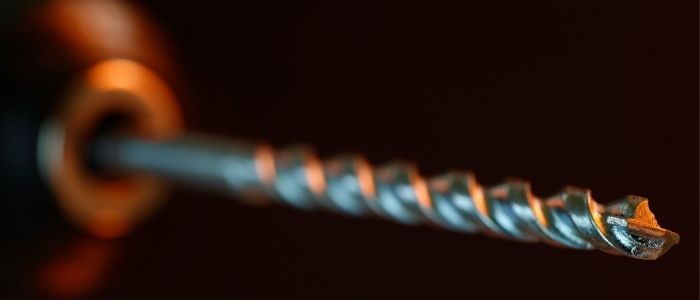
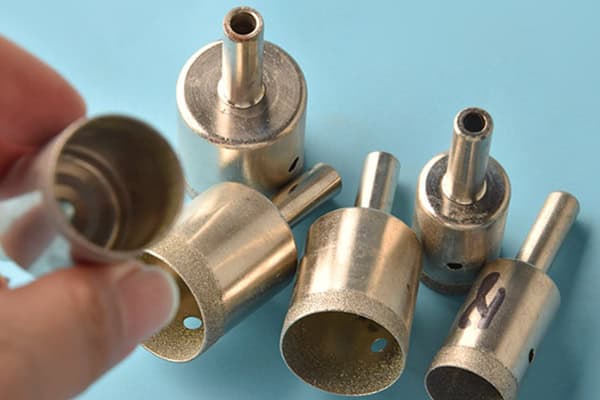
Diamond drill bits contain real industrial diamonds, but they’re not gem quality. The diamonds are crushed into powder and bonded to the bit using metal or resin. This creates an incredibly hard cutting surface.
The Science Behind Diamond Drill Bits
Modern diamond bits use either natural or synthetic diamonds:
-
Natural Diamond Bits:
- Use mined industrial diamonds
- More consistent quality
- Higher cost
-
Synthetic Diamond Bits:
- Laboratory-created diamonds
- More affordable
- Consistent performance
The diamond particles are:
- Sized precisely for optimal cutting
- Evenly distributed on the bit surface
- Bonded with special alloys for durability
We carefully select diamond grit sizes at our factory, using finer grit (100-200) for smooth finishes on glass. The diamond concentration and bonding method determine the bit’s performance and lifespan.
Çözüm
Mastering diamond drill bits for glass work requires proper technique, consistent cooling, and understanding their unique properties. With these principles, you can achieve professional results.
Looking for high-quality elmas testere bıçakları that deliver performance and durability? At TENYU TOOL, we specialize in manufacturing premium tools trusted by professionals worldwide.
-
Learning about the importance of patience in drilling can help you avoid mistakes and achieve better results. ↩
-
Exploring effective techniques for drilling glass can improve your skills and ensure a successful project. ↩
-
Understanding the techniques for using diamond drill bits can significantly enhance your drilling success and efficiency. ↩
-
Exploring this resource will provide insights into how continuous water flow enhances drilling efficiency and safety. ↩
-
Understanding the importance of constant water spray can help improve drilling techniques and outcomes. ↩
-
Learn about specialized drill rigs and how they improve drilling operations with integrated water systems. ↩
-
Discover the various applications of diamond bits in industries and how they enhance cutting efficiency. ↩
-
Learn about the significance of industrial-grade materials in manufacturing and construction. ↩