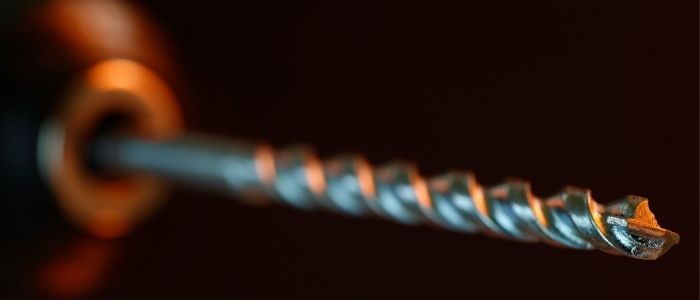
Deciding how to bring a new drill bit product1 to market is not a simple process. The path you choose—OEM2, ODM3, or JDM4—directly impacts your brand’s control, innovation capacity5, costs, and speed. Making a poor choice could mean missed opportunities, wasted resources, or even product failure in a crowded global market. But with a clear understanding of these manufacturing models, you can maximize your strengths and unlock real, sustainable value for your business.
Selecting OEM, ODM, or JDM manufacturing will shape your drill bit product’s uniqueness, speed to market, intellectual property strength, and return on investment. OEM is best for maximum customization and protection; ODM is ideal for speed and cost-efficiency; JDM enables co-innovation and high complexity. Tenyu Tool has mastered all, helping brands choose and execute the right model for every stage of growth.
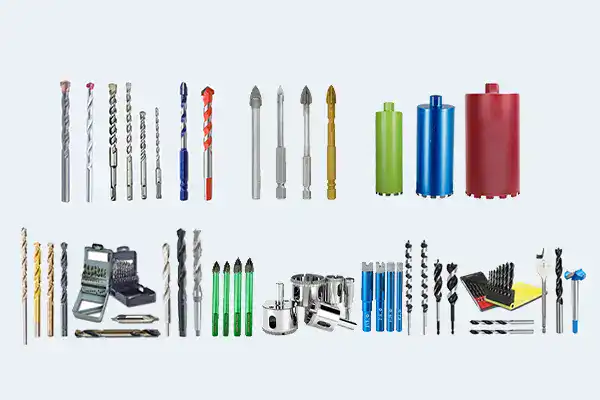
I have worked for years with global tool distributors and brands—including start-ups, private labels, and multinational procurement teams. The most successful projects always begin with the right manufacturing strategy6. Tenyu Tool, at the heart of Danyang’s Houxiang Town manufacturing cluster, offers deep OEM/ODM/JDM experience and scalable capacity—equipped to engineer drill bits that meet exacting requirements, whether for industrial, professional, or DIY channels. Below, I’ll break down these models in detail, using real-world examples and the technical nuances that matter.
Why Is Manufacturing Model Selection Vital for Drill Bit Brands?
The drill bit industry runs on precision, innovation, and reliability. Customers—from hardware chains to professional contractors—demand not only exceptional cutting performance but certifications7, competitive pricing, rapid production, and sharp delivery schedules. The wrong partnership or production flow8 can compromise tolerances, tool hardness, coating adhesion, or even delivery timelines—risking your reputation and market share9.
Your choice between OEM, ODM, and JDM shapes your products’ lifespan, IP security, supply flexibility, and even regulatory approval. A smart match provides the leverage needed to outperform in a cutthroat global industry.
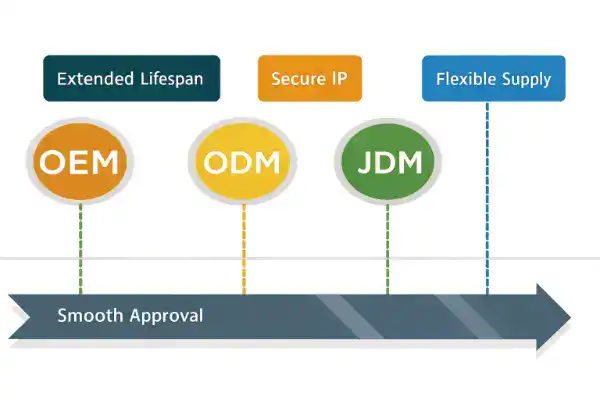
The difference is stark: brands using OEM unlock barrier-free differentiation and defend their IP in every market. Those leveraging ODM launch fast, control cost, and avoid heavy R&D spend. Businesses employing JDM co-create truly innovative solutions, often leading segments with disruptive features or materials science advances. Your target channel, technical team strength, and growth strategy must align with the model—otherwise, you risk production problems, slow launches, or insufficient product appeal.
| Key Manufacturing Dimensions | OEM (Original Equipment Manufacturing) | ODM (Original Design Manufacturing) | JDM (Joint Design Manufacturing) |
|---|---|---|---|
| IP Control | 100% yours | Factory owns | Shared or negotiable |
| Level of Customization | Full (design, geometry, coatings, packaging) | Limited (catalog designs, branding) | High (joint development, unique features) |
| Speed to Market | Moderate to long | Fastest | Moderate |
| Upfront Investment | High (tooling, R&D, certification) | Low to moderate | Medium to high (shared R&D/tooling) |
| Scalability & Volume | High | Flexible (good for small to large orders) | Flexible (depends on agreement) |
| Branding & Exclusivity | Strongest | Moderate (unless exclusive ODM deal) | Very strong |
| Innovation & Process Input | You drive | Factory drives improvements | Both partner; synergy |
| Certification Support | Custom | Standardized, some flexibility | Joint (design-for-certification) |
What Is OEM for Drill Bits, and When Does It Make Sense?
OEM (Original Equipment Manufacturing) gives you full creative and technical ownership of the drill bit. Your team (or a contracted third-party design firm) creates the specifications, CAD drawings, performance targets, and all intellectual property10. The manufacturer executes your vision, enforcing your QC standards and packaging, without ever sharing your proprietary design or process outside your agreement.
OEM is the gold standard for brands who demand full uniqueness, IP security, and absolute consistency. With OEM, you keep competitors at bay and can enforce the highest standards—ideal for specialized bits (like HSS-Co for aerospace, Diamond-Tip for tough tile, or new carbide geometries for heavy-duty masonry).

When working with Tenyu Tool’s OEM program, brands begin with a deep technical consultation: material selection (e.g., M35 cobalt alloy, carbide grade K30), tool geometry modeling (spiral angle, web thickness), and even custom slotting for chip removal or coolant flow. Prototyping combines advanced CNC, laser, and heat treatment technologies. All details—down to PVD or diamond coating thickness, hardness test points, or packaging artwork—are conducted in full confidentiality. This approach is trusted by major European, North American, and Belt & Road market leaders.
Deep Dive: OEM Steps and Responsibilities
| OEM Phase | What the Brand Does What Tenyu Tool Delivers | Risk Controlled | Technical Nuance |
|---|---|---|---|
| Requirement Definition | Supplies full specs, use cases, drawings | Materials, machinability analysis | Ensures correct alloy, surface finish |
| Prototype & Testing | Approves samples; requests change | Provides samples, test reports | Real-world drilling trials, fatigue, wear |
| Tooling & Mass Prod | Signs off on final process | Custom fixtures, QC flow, batch traceability | ISO 9001/CE compliant |
| Branding, Packing | Designs graphics, inserts, barcodes | Private label, custom packaging | Market/regional compliance |
When to Choose OEM for Drill Bits:
-
Launching patented or proprietary products (e.g., rapid chip-ejection flute, twin-core masonry drill).
-
Entering strict regulatory markets (i.e., EN13236 for Europe, ANSI for US industries).
-
Building premium lines for professional or industrial-duty contracts.
-
Planning high-volume, consistent products that build brand loyalty over years.
-
Example Story: We helped a German brand develop an M42 cobalt drill for hardened steel. They set every design parameter—geometry, surface roughness, even anti-vibration flute profile. IP remained theirs; we managed process and certification audits. Result: zero returns, fast industrial adoption.
What Is ODM for Drill Bits, and Where Does It Fit?
ODM (Original Design Manufacturing) flips the innovation engine around. Here, the manufacturer—like Tenyu Tool—develops, validates, and owns the base design (e.g., multipurpose HSS twist bit, general-use SDS masonry bit, wood auger bit). Brands select from a set of proven, ready-made products and can request limited modifications—such as different diameters, surface colors, branding, or basic feature changes. The manufacturer retains most of the IP, but you gain the speed and low cost of established technologies.
ODM is the model of choice for fast-moving consumer tool brands, seasonal private-label campaigns, and buyers targeting maximum assortment breadth with minimum R&D risk.

With Tenyu Tool’s ODM system, partners can choose bits with production records spanning millions of pieces, automotive-grade coatings, and step-proof field testing. Our catalogue includes everything from bulk contractor packs to retail-ready promotional kits, all certified to international standards. Customization options extend to shank etching, packing/branding, and packaging inserts.
Deep Dive: How ODM Accelerates Drill Bit Programs
| ODM Phase | What Brand Controls | What Tenyu Tool Handles | Key Benefits |
|---|---|---|---|
| Product Selection | Chooses from current catalogue | Portfolio of validated designs | Immediate access to best sellers |
| Basic Customization | Picks sizes, minor features | Modular production, quick setup | Short lead time to new SKUs |
| Branding & Packing | Provides logo, box art | In-house printing/labeling | Supplier adapts for retailer |
| QC & Compliance | Can request tighter control | Factory does routine testing | Fast issue resolution, full docs |
When to Choose ODM for Drill Bits:
-
You need to launch fast (e.g., enter e-commerce, add value lines at retail).
-
You have no engineering resources or patentable demands.
-
Your channel needs variety not covered by your current portfolio.
-
You want to minimize upfront investment, but preserve brand image.
-
Example Story: An EU-based chain wanted a high-volume DIY bit range for quick-market deployment. In under one month, they selected three sets, set packaging specs, and built an entry-level branded collection—featuring bits we had already stress-tested for the EU.
What Is JDM for Drill Bits, and Why Are More Brands Adopting This Approach?
JDM (Joint Design Manufacturing) marries the technical resources of Tenyu Aracı with the application, marketing, or IP assets of your company. It is an innovation partnership where the two sides co-develop everything—leveraging Tenyu’s process mastery and your market or R&D knowledge. JDM is ideal when your vision is beyond catalogue, but your own R&D is limited or you want to control risk and investment.
JDM is how the most innovative and fast-adapting brands break through today—pushing material science, user-driven design, and jointly sharing risk and reward.
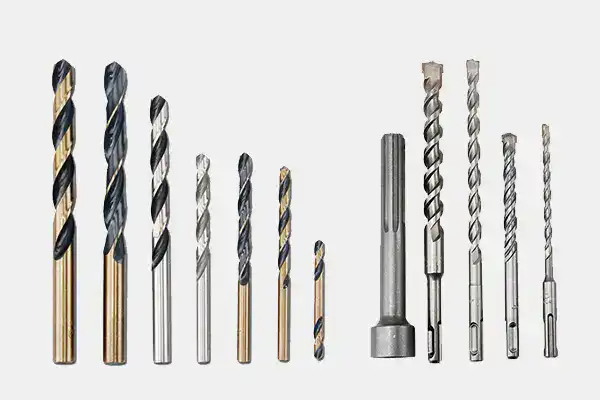
For example, Tenyu Tool works with customers on anti-jam auger bit systems for rapid wood drilling in climate-varying conditions, or dual-flute geometry for faster concrete penetration. Both supply market feedback11, technical challenges, and pilot testing; the partnership negotiates IP and commercialization rights according to value brought.
Deep Dive: The JDM Collaboration Process
| JDM Phase | Joint Tasks & Decisions | Value Created | Typical Outcome |
|---|---|---|---|
| Concept Ideation | Brand outlines need; Tenyu supplies tech feasibility | New features scoped, prioritized | Better alignment with user needs |
| R&D & Prototyping | Co-develop CADs, run pilot batches | Risk-sharing on tooling, rapid feedback | Validated new SKU/innovation |
| IP & Certification | Agree on patents, licensing, roles | Shared or exclusive commercialization | Clear legal/fiscal protection |
| Production & Go-to-Market | Jointly refine QC/packaging and launch plan | Early-market advantage, flexible scale | Disruptive or new flagship SKU |
When to Choose JDM for Drill Bits:
-
Launching into a new, complex market (e.g., energy sector, Asian expansion, or new e-platform).
-
Seeking “signature” products with features/benefits far from standard (e.g., ergonomic shanks, heat-shedding coatings, combo material sets).
-
Lack full in-house R&D but strong insights or brand leverage.
-
Wanting to split development cost and benefit from manufacturing partner’s process wisdom.
-
Example Story: A North American brand with retail expertise but little technical design wanted a multi-purpose bit—cutting wood, steel, and masonry with one geometry for toolbox kits. Our JDM team created prototypes, ran joint field tests, and iterated to a uniquely balanced, commercialized bit with co-held IP.
How Should You Decide: OEM, ODM, JDM, or Hybrid Model?
Choosing the best route for your drill bit product1 is all about matching your assets and ambitions to the model’s strengths. Below is a structured checklist, informed by dozens of Tenyu Aracı collaborations:
1. Assess Your Technical and Design Capabilities
- If you have in-house engineers and want maximum product differentiation: Consider OEM, possibly JDM for extra flexibility or speed to market.
- If you lack a technical team or must scale fast: ODM is the lowest risk.
2. Clarify Your IP and Market Control Needs
- Launching proprietary technology or patenting innovations? OEM/JDM protect you best.
- Building a broad, price-competitive line? ODM is usually sufficient.
3. Evaluate Risk Tolerance and Cash Flow
- Willing/able to invest upfront for long-term returns? OEM and JDM (for complex development) require initial outlay.
- Testing new shops, channels, or retail feedback? ODM’s pay-as-you-scale approach is safer.
4. Project Your Growth, Distribution, and Compliance Needs
- Multi-market, regulatory-heavy launch (CE, EN, ANSI): OEM or JDM with full compliance.
- Single-country/retail or e-commerce: ODM is typically fastest and cheapest.
5. Consider a Hybrid Model
- Many leading brands blend these—using ODM for volume “bread and butter” products and JDM/OEM for advanced flagship or category-defining SKUs.
Why Tenyu Tool Is Your Trusted Manufacturing Partner for Every Model
Tenyu Tool is uniquely positioned to guide and execute all three models with excellence:
- OEM: In-house R&D, advanced CNC, PVD, and laser lines; ISO 9001, EN, CE, and ANSI compliance; zero-leakage IP protocols.
- ODM: 15+ high-speed lines producing for top global brands, with an ever-expanding catalogue and deep process repeatability.
- JDM: Flexible, English-speaking engineering teams; fast prototyping; joint project management; commitment to shared success and confidentiality.
We support global clients beyond hardware. Whether you’re a seasoned category leader looking for world-class OEM, a dynamic retailer scaling up with ODM, or a manufacturer entering the joint-innovation race through JDM, our objective is always the same: partner for growth, resilience, and market leadership—bit after bit, shipment after shipment.
Request Your Free Sample



Çözüm
Choosing between OEM, ODM, and JDM for your Matkap uçları business is a critical, foundational step. Each model presents unique paths to product, brand, and market success. Understanding your capabilities, goals, market risks, and timeline will help you make the best decision. With a partner like Tenyu Tool—proven, certified, and rooted in the world’s top tool hub—you can move forward confidently, knowing your choice is grounded in expertise and real manufacturing power.
-
Find insights on launching drill bit products effectively in a competitive market. ↩ ↩
-
Explore this link to understand how OEM can provide full creative control and IP security for your drill bit products. ↩
-
Learn about ODM and how it can help you launch products quickly and cost-effectively with established designs. ↩
-
Discover how JDM fosters innovation through collaboration, allowing brands to co-develop unique products. ↩
-
Learn how to boost innovation capacity to stay competitive in the drill bit market. ↩
-
Explore various manufacturing strategies to determine the best fit for your drill bit business. ↩
-
Understand the certifications required for drill bits to ensure compliance and market acceptance. ↩
-
Learn about production flow and how it impacts efficiency and product quality. ↩
-
Discover strategies to enhance your market share in the competitive drill bit market. ↩
-
Learn about protecting your IP when working with manufacturers to ensure your designs remain secure. ↩
-
Discover effective ways to gather market feedback to inform your product development. ↩