


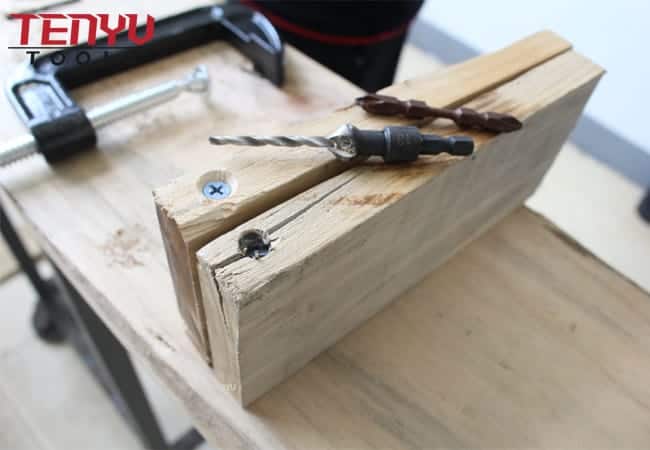
Holz-Senker-Bit
Are you looking for a wood countersink drill bit with precise depth control, practical accessories, and reliable OEM bulk supply?
- Taper point design for wood screw drilling
- Stop collars for controlled countersink depth
- Wrench included for easy adjustment
- OEM logo and packaging support
- OEM & Wholesale
- Exhibition
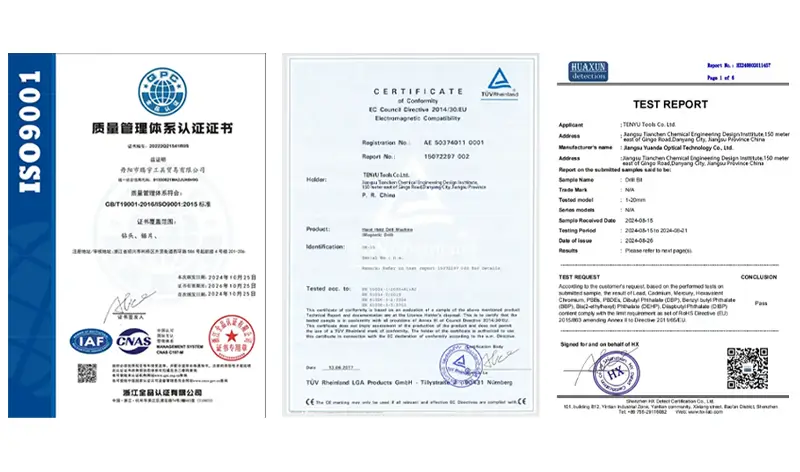
- Zertifikat
- Produktdetails
OEM & Wholesale Service
We supply wood countersink drill bits for importers, wholesalers, distributors, and private label tool brands. OEM options include logo marking, packaging customization, size configuration, and export-oriented retail packing. Samples can be arranged before bulk production.


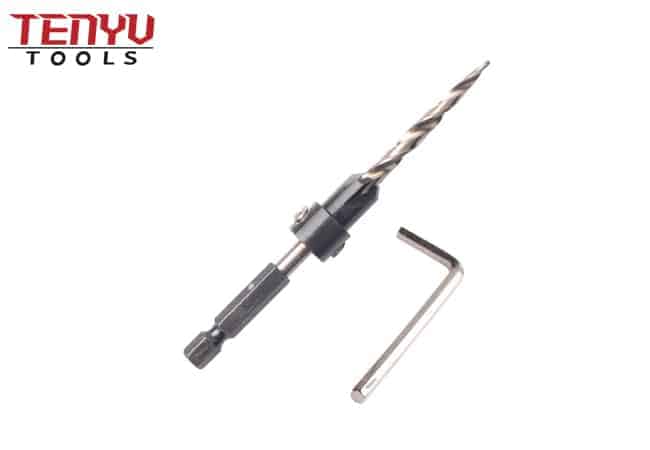
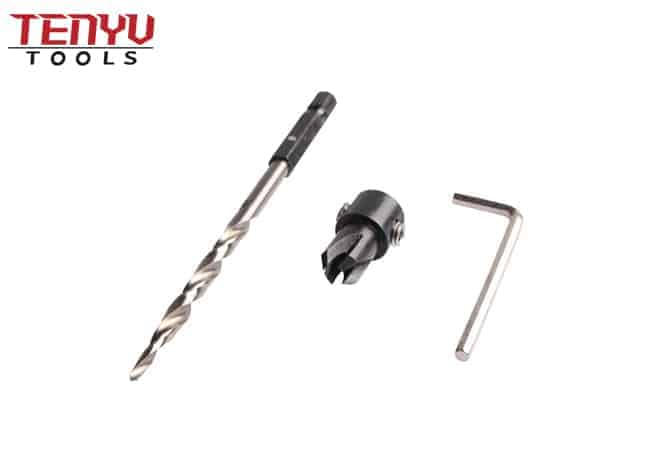
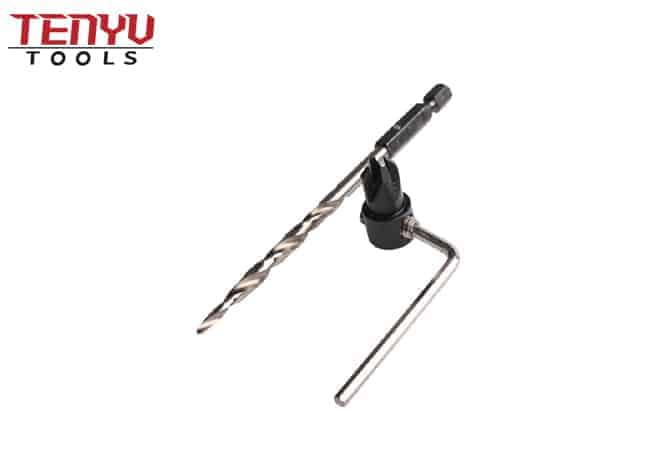
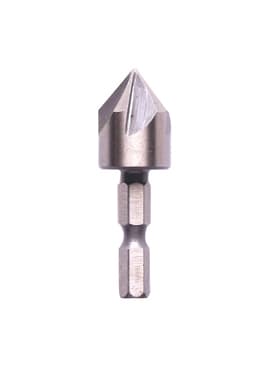
Holz-Senkerbohrer mit Sechskantschaft und Kegelspitze, mit Anschlagkragen und Schraubenschlüssel
- Kombination aus Senker und Kegelbohrer mit Sechskantschaft.
- Der Bohrer kann auf die gewünschte Bohrtiefe eingestellt werden.
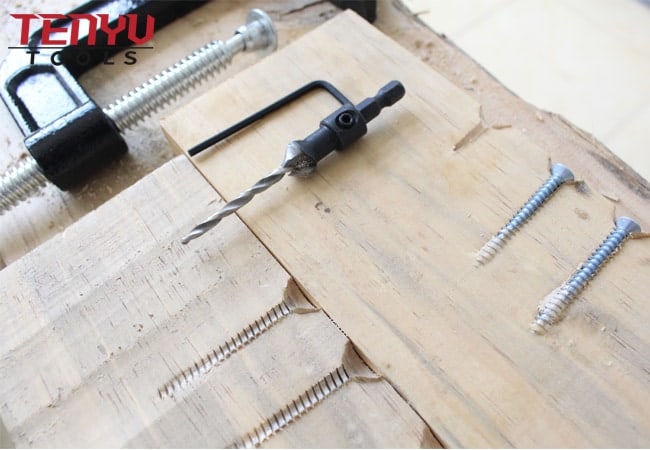
- Sie bohren gut in Hart- und Weichholz.
- Die Schneide ist gehärtet und für einen scharfen Schnitt geschliffen.
- Für sauberes, genaues Aufbohren mit minimalem Ausriss.
|
Produktbeschreibung
|
||||
|
Mehr Auswahl für Sie: Heim > Senkbohrer
|
||||
|
Produktname
|
Schnellwechsel-Kegelbohrer mit Sechskantschaft und Senker zum Bohren in Holz
|
|||
|
Material
|
HSS
|
|||
|
Schafttyp
|
Sechskantschaft
|
|||
|
Größe
|
1/8″-1/4″
|
|||
|
Verfahren
|
Vollständig geschliffen
|
|||
|
Oberflächenveredlung
|
Hell (Andere Farbe alle verfügbar)
|
|||
|
Paket
|
Ein Stück in einem PVC-Beutel
|
|||
|
Feature
|
1. Aufbau einer Kombination aus Senker und Kegelspitzenbohrer mit Sechskantschaft 2. Bohrer kann auf die gewünschte Bohrtiefe eingestellt werden
3. Sie bohren gut in Hart- und Weichholz
4. Die Schneide ist gehärtet und auf Schärfeschnitt geschliffen
5. Für sauberes, genaues Bohren mit minimalem Ausriss
|
|||
|
Produktgröße
|
||||||
|
Bohrergröße
|
Nenndurchmesser dezimal
|
Nominale Gesamtlänge
|
Nominelle Nutlänge
|
Punkt Durchm
|
Kegellänge
|
Dicke am Punkt
|
|
1/8″
|
0.1250″
|
2.778″
|
1.663″
|
0.050″
|
0.572″
|
0.013″
|
|
9/64″
|
0.1406″
|
2.917″
|
1.792″
|
0.056″
|
0.644″
|
0.014″
|
|
5/32″
|
0.1562″
|
3.172″
|
2.047″
|
0.062″
|
0.714″
|
0.016″
|
|
11/64″
|
0.1718″
|
3.302″
|
2.177″
|
0.068″
|
0.783″
|
0.017″
|
|
3/16″
|
0.1875″
|
3.556″
|
2.369″
|
0.075″
|
0.855″
|
0.019″
|
|
13/64″
|
0.2031″
|
3.686″
|
2.499″
|
0.081″
|
0.929″
|
0.020″
|
|
7/32″
|
0.2187″
|
3.816″
|
2.566″
|
0.087″
|
0.998″
|
0.022″
|
|
15/64″
|
0.2344″
|
3.945″
|
2.695″
|
0.094″
|
1.071″
|
0.024″
|
|
1/4″
|
0.2500″
|
4.075″
|
2.825″
|
0.100″
|
1.144″
|
0.025″
|
|
* Maßschneider wäre gegen die Anforderungen der Kunden verfügbar * Sie können uns Ihre Zeichnung für Sonderanfertigungen zusenden
|
||||||
Verwandte Produkte
Frequently Asked Questions
Q: What is a Countersink Drill Bit?
A: EIN Senkbohrer is a cutting tool designed to produce a tapered recess so that flat-head or countersunk screws can sit level with or below the material surface. Its angled cutting edges match the geometry of screw heads, helping achieve a neat finish and secure fastening in wood, metal, plastics, and composite materials.

Q: What is Countersinking?
A: Countersinking is the machining process of forming a conical opening at the top of a pre-drilled hole. This allows fastener heads to be embedded into the workpiece rather than protruding. The technique improves both visual appearance and functional safety by reducing snagging and ensuring better load distribution.
Q: How to Countersink Screws?
A: To properly countersink screws, begin by drilling a pilot hole that matches the screw’s core diameter. Next, use a countersink bit to create a tapered seat at the hole entrance. Apply steady pressure and moderate speed to avoid excessive material removal. Once the recess depth is suitable, drive the screw until the head sits flush with the surface.
Q: What are Countersink Drill Bits Used For?
A: Countersink drill bits are widely used to prepare materials for flush-mounted fasteners. They help improve assembly precision, surface smoothness, and overall product aesthetics. These bits are commonly applied in cabinetry, metal fabrication, furniture manufacturing, construction, and precision engineering tasks.
Q: How to Use a Countersink?
A: Start by selecting a countersink compatible with the fastener type and substrate material. Drill the pilot hole first, then position the countersink bit at the hole entrance. Operate the drill at a controlled speed and stop periodically to check the fit. The goal is to achieve a clean, centered chamfer that allows the fastener head to align evenly with the surface.
Q: What Size Countersink to Use?
A: The appropriate countersink size depends on the screw head diameter and included angle. Standard angles such as 82°, 90°, or 100° must match the fastener specification for optimal seating. As a general guideline, choose a countersink slightly larger than the screw head to ensure proper clearance while maintaining structural integrity and appearance.