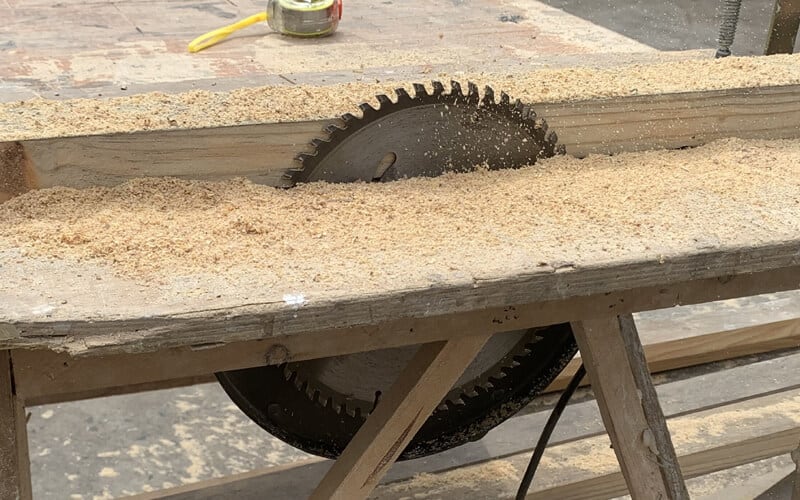
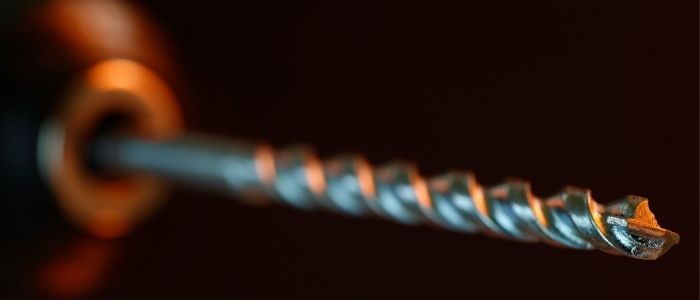
Low-quality blades create complaints, delays, and returns.
When you source concrete saw blades for wholesale or distribution, material quality matters more than appearance1. Many buyers focus only on price, but the real difference comes from the body raw material, diamond mixture formula, and production process behind the blade. If your customers use the blades on concrete, reinforced concrete, stone, brick, or tile, unstable cutting performance can quickly damage your reputation in the market.
This guide explains what concrete saw blades are made of, how diamond blades actually work, and how you can choose reliable products for bulk and repeat orders.
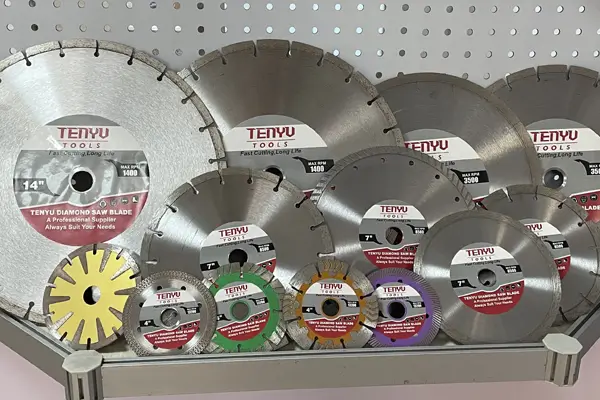
Different Kinds of Diamond Blades
What are the Best Diamond Saw Blades?
The best diamond saw blade depends on the cutting material, machine type, and application. A blade designed for concrete may perform poorly on porcelain tile2, while a tile blade may wear out quickly on reinforced concrete.
For importers and procurement managers, the goal is not simply to buy a “sharp blade.” The goal is to source blades with stable cutting performance, low complaint rates, and reliable batch consistency.
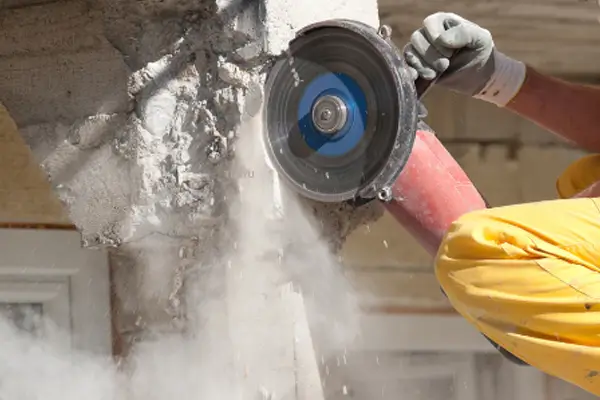
segmented diamond saw blade for concrete cutting
How Should Buyers Choose Diamond Saw Blades for Concrete, Brick, Stone, and Tile?
Different materials require different segment designs and formulas.
| Cutting Material | Recommended Blade Type | Main Feature |
|---|---|---|
| Beton | Parçalı Elmas Bıçak | Fast cutting and heat dissipation |
| Reinforced Concrete | Laser Welded Blade | Strong segment retention |
| Brick & Block | Parçalı Elmas Bıçak | Faster cutting speed |
| Granite & Stone | Turbo Bıçak | Stable cutting performance |
| Ceramic Tile | Continuous Rim Blade/Ultra thin Turbo Blade | Smooth cut with less chipping |
| Glass & Fragile Material | Cam Testere Bıçağı | Cleaner edge quality |
Concrete cutting usually requires aggressive segments with strong wear resistance. Tile and glass cutting require thinner blades with smoother rims to reduce edge damage.
As a buyer, you should always confirm:
- Dry or wet cutting application
- Machine RPM compatibility
- Segment height (7mm, 10mm, 20mm, etc)
- Blade diameter (4Inch, 4.5Inch, 5Inch, 6Inch, 7Inch, 10Inch, etc) and arbor size (16mm, 20mm, 22.23mm, 25.4mm, 30mm, etc)
- Material cutting type
What Makes a Diamond Saw Blade Durable for Bulk and Repeat Orders?
Durability depends on four main factors:
- Body material quality
- Diamond grit concentration
- Metal bond formula
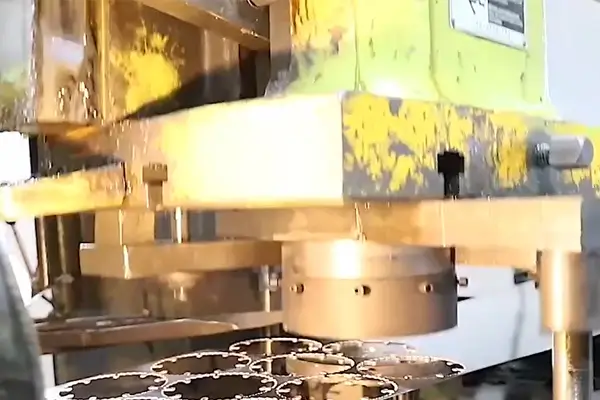
Diamond Blade Body Material Cutting
A low-quality body material may warp during cutting3. Weak diamond segments can break off under high temperature4. Poor bond formulas may either wear too quickly or poor cutting performance.
Professional wholesalers usually focus on:
- Stable cutting speed
- Long blade life
- Reduced vibration
- Lower complaint rates
For repeat business, consistency is more important than low pricing. End users remember whether the blade lasts, not whether to save a few cents.
Why Do Importers Prefer Factory-Tested Diamond Saw Blades for Stable Cutting Performance?
Factory testing reduces uncertainty.
Reliable manufacturers normally test:
- Hardness testing
- Blade balance testing
- Vibration level
- Bending strength testing
- Speed testing
- Radial Runout Tester
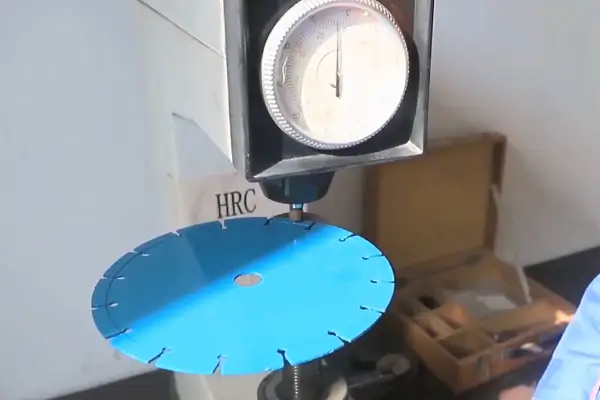
Diamond Blade Hardness Testing
Our factory also perform destructive testing on reinforced concrete and hard stone applications.
Factory-tested blades help ensure stable performance across large-volume shipments.
Do Diamond Blades have Real Diamonds in Them?
Yes, but not jewelry diamonds.
Industrial diamond blades use synthetic diamond grit manufactured for cutting applications5. These synthetic diamonds are engineered for hardness, wear resistance, and heat tolerance.
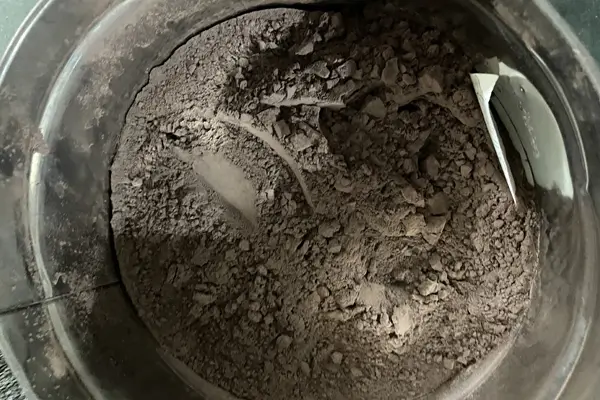
Diamond Powder Mixed
Natural diamonds are expensive and inconsistent for industrial cutting, so synthetic diamonds are the industry standard.
What Type of Synthetic Diamond Grit Is Used in Industrial Saw Blades?
Most industrial saw blades use synthetic diamond particles produced under high pressure and high temperature.
Different grit grades are used for different applications:
| Diamond Grit Type | Typical Application |
|---|---|
| Fine Grit | Tile, ceramic, glass |
| Medium Grit | General concrete cutting |
| Coarse Grit | Asphalt and abrasive material |
| High-Strength Diamond | Reinforced concrete and stone |
High-quality synthetic diamond grit improves:
- Cutting efficiency
- Blade lifespan
- Heat resistance
- Cutting stability
For professional markets, high-grade diamond grit is essential for maintaining stable performance.
How Do Diamond Grit Quality and Metal Bond Affect Cutting Life?
Diamond grit alone does not determine blade quality. The metal bond holding the diamonds is equally important.
The metal bond controls:
- Diamond exposure rate
- Heat resistance
- Wear speed
A balanced bond formula6 allows worn diamonds to release while exposing fresh cutting edges underneath7.
This is one of the biggest differences between professional-grade blades and low-cost products.
Why Should Procurement Managers Check Diamond Segment Quality Before Ordering?
Diamond segments directly affect cutting safety and lifespan.
Poor-quality segments may:
- Crack during cutting
- Detach from the steel core
- Cause unstable cutting performance
Reliable factories normally provide:
- Segment testing reports
- Production inspection photos
- Application videos
- Cutting test samples
This helps reduce purchasing risks before shipment.
Will a Diamond Blade Cut Glass Bottles?
Yes, but not every diamond blade is suitable for glass.
Glass is fragile and highly sensitive to vibration and heat. Using the wrong blade often causes cracking or severe chipping.

Glass Saw Blade for Color Painting
Which Diamond Blade Type Is Better for Smooth Glass Cutting?
Glass diamond blades are the best option for glass cutting.
Compared with normal diamond blades provide:
- Smoother cutting edges
- Less vibration
- Better heat control
- Reduced chipping risk
For glass bottle cutting, buyers should prioritize:
- Fine diamond grit
- Wet and dry cutting compatibility
This improves edge quality and cutting control.

Glass Saw Blade for Glass Bottle Cutting
How Can Buyers Reduce Chipping When Cutting Glass, Tile, and Fragile Materials?
Chipping usually comes from excessive vibration, overheating, or incorrect blade selection.
To reduce chipping:
- Use glass saw blades
- Apply wet cutting whenever possible
- Reduce cutting pressure
- Match blade RPM correctly
Low-quality blades often create unstable cuts, especially on porcelain tile and glass.
For wholesalers, supplying application-specific blades helps reduce customer complaints significantly.
What Cutting Applications Should Be Confirmed Before Bulk Diamond Blade Orders?
Before purchasing diamond blades in bulk, you should confirm the target applications clearly.
Key questions include:
- Dry or wet cutting?
- Concrete, tile, stone or other materials cutting
- Professional or DIY market?
Different markets require different product positioning.
For example:
- Construction markets prefer fast-cutting segmented blades
- Tile distributors prefer smooth continuous rim blades or ultra thin diamond blades
- Professional contractors focus on durability and speed
Clear positioning helps improve sales efficiency and inventory management.
Can Diamond Blades Cut Metal? Everything You Need to Know!
Some diamond blades can cut metal, but not all of them.
Using the wrong blade on metal is one of the most common causes of blade failure and safety accidents.
Which Diamond Blades Can Cut Metal, Rebar, and Reinforced Concrete?
Special vacuum brazed diamond blades designed for mixed materials can cut:
- Rebar
- Reinforced concrete
- Thin steel sections
Standard diamond blades are not suitable for metal cutting because the bond formula is completely different.
What Are the Risks of Using the Wrong Diamond Blade on Metal?
Incorrect blade usage may lead to:
- Segment loss
- Blade overheating
- Core warping
- Reduced cutting speed
- Safety hazards
For example, tile blades used on steel often fail quickly because they are designed for brittle materials rather than hard metals.
This is why professional users always match the blade to the material.
Çözüm
Concrete saw blades are made from more than steel and diamond particles.8 Real performance comes from the balance between the body material, synthetic diamond grit, metal bond formula, and manufacturing quality.
For importers, wholesalers, and procurement managers, choosing the right diamond saw blade means understanding the cutting application, durability requirements, and safety expectations in your market. Factory-tested blades with stable cutting performance help reduce complaints, improve repeat orders, and strengthen long-term customer trust.
FAQ
How Do you Check a Diamond Blade?
To check a diamond blade, inspect the segment condition, blade flatness, and cutting edge wear.
How Does a Diamond Blade Work?
A diamond blade works through grinding action instead of cutting. Industrial diamond particles on the segment edge gradually wear away the material while new diamonds become exposed during use.
How to Extend the Life of a Diamond Saw Blade?
To extend the life of a diamond saw blade, use the correct blade for the material, maintain proper cutting speed, and avoid excessive pressure. Dry cutting can reduce diamond exposure and improve durability.
Do you Cut Porcelain Tile Face Up or Down?
Porcelain tile is usually cut face up when using a wet saw to minimize visible chipping on the finished surface. Proper blade selection and slow feeding speed, and wet cutting method also improve cutting quality.
How Long Do Diamond Cutting Blades Last?
The lifespan of a diamond cutting blade depends on material hardness, operating conditions, and blade quality. Under normal use, a high-quality diamond blade can last significantly longer than standard abrasive blades.
How to Choose the Right Diamond Saw Blades?
Choosing the right diamond saw blade depends on the material, cutting method, and machine type. Different blade designs are different usage for tile, concrete, stone, asphalt, or metal applications.
-
Materials-engineering literature on diamond saw blades describes blade performance as dependent on segment composition, bond matrix, and substrate properties, supporting the emphasis on material quality over visual characteristics. ↩
-
Materials and tooling references describe how diamond blade performance depends on the blade bond, rim design, and the hardness or abrasiveness of the material being cut, which contextualizes why a concrete blade may be unsuitable for dense, brittle porcelain tile. ↩
-
Materials-engineering references on abrasive cutting note that heat generation and mechanical stress during cutting can deform inadequately rigid or heat-resistant bodies, supporting the link between material quality and warping risk. ↩
-
Technical literature on diamond saw blades explains that segment retention depends on the metal bond and brazing or sintering integrity, and that elevated cutting temperatures can degrade joints or bonds, providing contextual support for segment detachment under excessive heat. ↩
-
A materials or engineering reference on diamond tools can support that industrial diamond blades commonly use synthetic diamond grit as the abrasive phase for cutting hard materials. ↩
-
A technical source on diamond tool design should support that the bond matrix controls diamond retention and wear rate, with an appropriately matched bond allowing abrasive grains to be shed as they dull. ↩
-
A neutral materials or manufacturing reference should explain that diamond tools maintain cutting action as the bond wears away and exposes new diamond abrasive particles or cutting points. ↩
-
Technical references on diamond saw blades describe them as composite tools consisting of a steel core and diamond-bearing segments held by a metal matrix, supporting the claim that blade construction involves more than steel and loose diamond particles. ↩