
Schweißmagnete
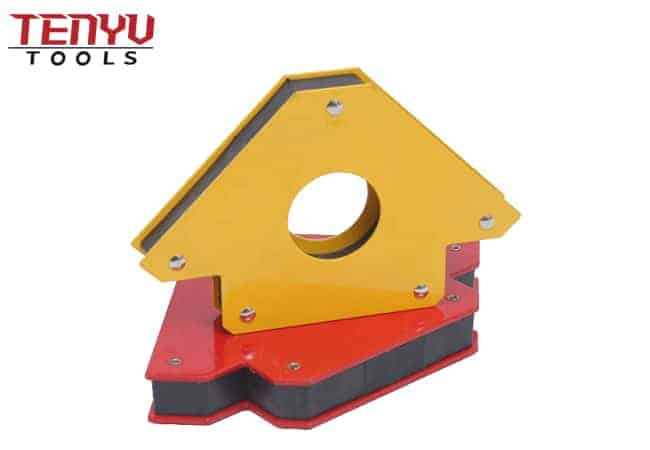
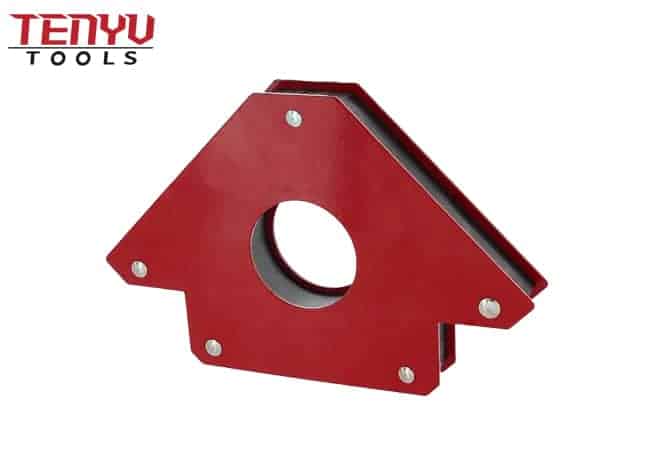
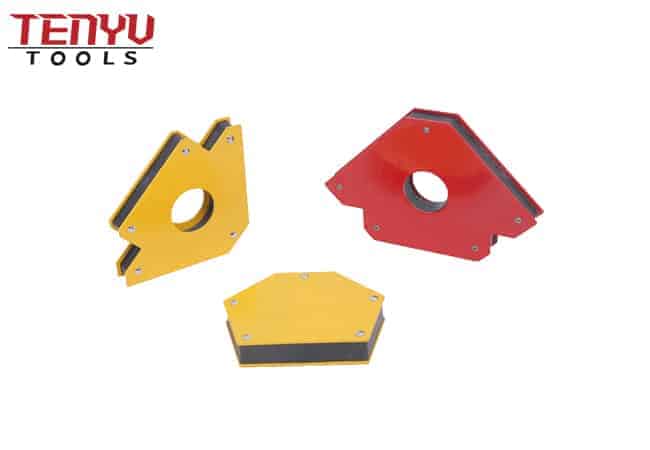
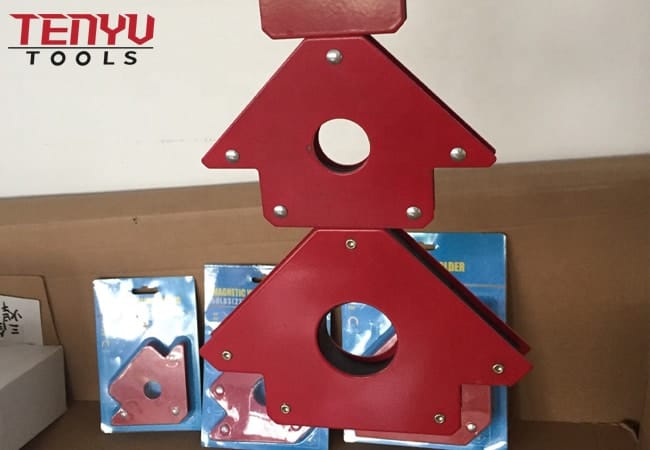
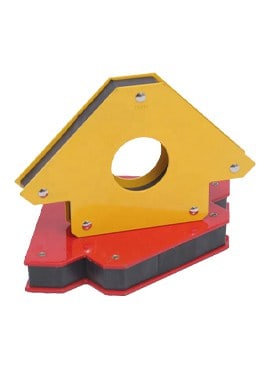
Beste dreieckige Pfeil-Schweißmagnete, die Schweißhalter halten Heißer Verkäufer bei Amazon
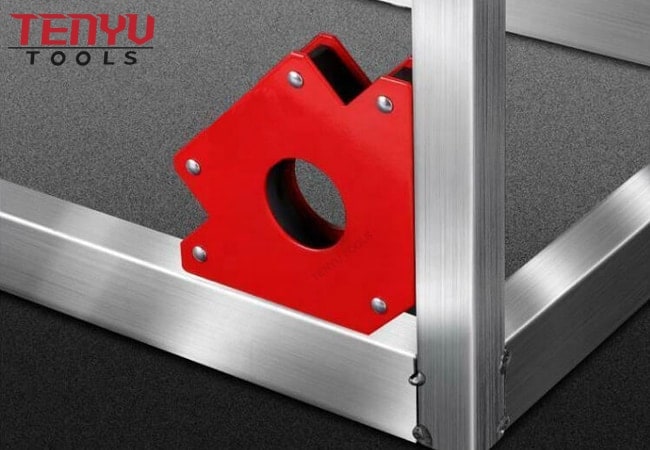
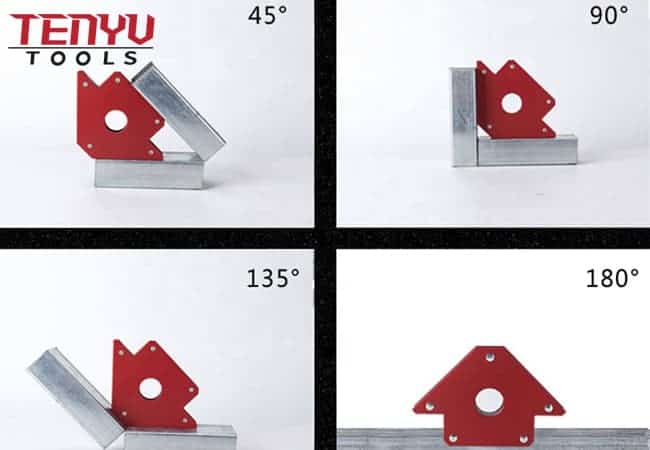
- Hält Material bei 45, 90, 135 und 180 Grad für alle Arten des Schweißens.
- Starke Magnetkraft, starke Adsorption.
- Befreien Sie Ihre Hände sicherer und schneller für die komplette Arbeit.
- Aus hochwertigem Edelstahl mit Pulverbeschichtung, langlebig und verlängert die Lebensdauer.
- Tragen Sie im Arbeitsbereich eine Schutzbrille und halten Sie sie von Kindern fern.
- Produktdetails
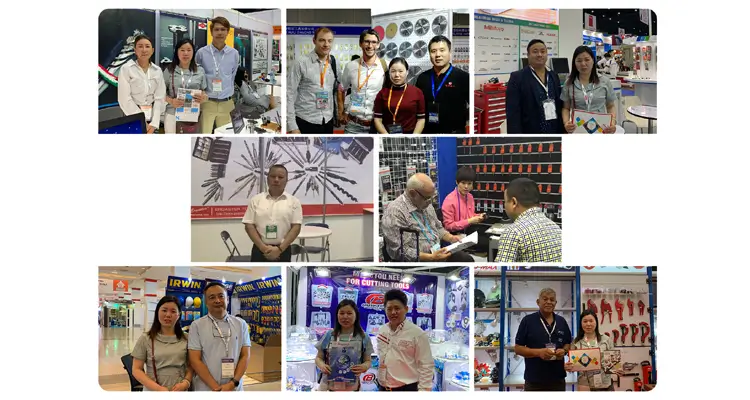
- Exhibition
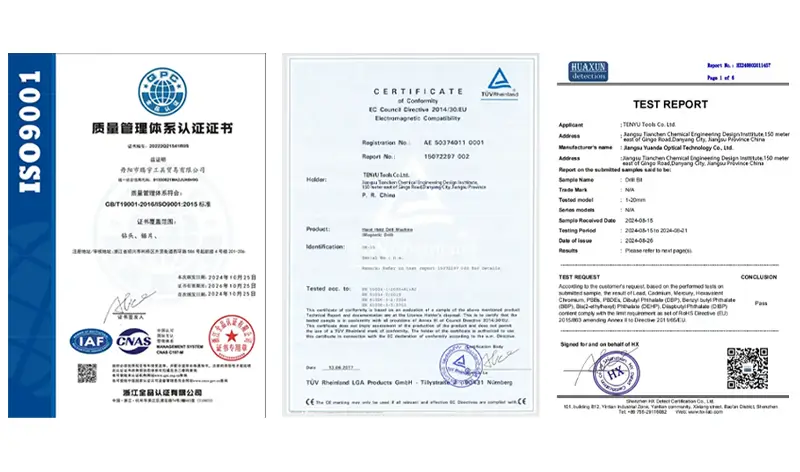
- Zertifikat
|
Produktbeschreibung
|
||||
|
Produktname
|
Bester dreieckiger Pfeil-Schweißmagnete Hot Seller Holding in Amazon
|
|||
|
Material
|
Magnet und Stahl
|
|||
|
Anwendung
|
Magnetische Schweißhalter sind praktisch zum Schweißen, Löten, Montieren, Markieren oder Installieren von Rohren usw
|
|||
|
Anwendbarer Winkel
|
45°/90°/135°/180°
|
|||
|
Paket
|
Ein Stück in PVC-Doppelblister
|
|||
|
Produktgröße
|
|||||
|
Modell
|
Länge
(cm)
|
Breite
(cm)
|
Höhe
(cm)
|
Nettogewicht der Adsorption
|
Reingewicht
|
|
Groß
|
19
|
12.2
|
2.6
|
75LBS 33Kg
|
1 kg
|
|
Mittel
|
15.5
|
10
|
1.7
|
50LBS 22Kg
|
0,55 kg
|
|
Klein
|
12
|
8.3
|
1.4
|
25LBS 12Kg
|
0,31 kg
|

Verwandte Produkte
Frequently Asked Questions
Q: How to Use Welding Magnets?
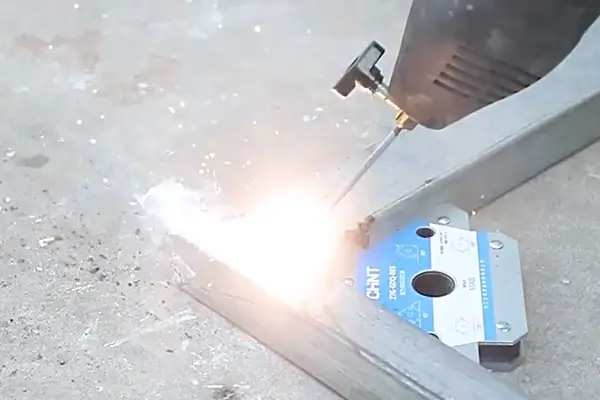
A: Welding magnets are used to hold metal workpieces in position during welding, assembly, or layout tasks. To use them, place the magnet at the joint area to secure parts at the required angle, such as 45°, 90°, or 135°. Ensure the contact surfaces are clean and free from debris to achieve proper magnetic holding force and alignment accuracy.
Q: How Strong is a Welding Magnet?
A: The strength of a welding magnet depends on its size, design, and magnetic material. Industrial welding magnets can typically hold from a few kilograms up to several dozen kilograms of steel components. Holding capacity is usually specified by the manufacturer and may vary based on surface condition, material thickness, and positioning.
Q: How to Weld Magnetized Pipe?
A: When welding magnetized pipe, it is important to first reduce or neutralize the magnetic field, as magnetism can cause arc blow and unstable welds. This can be done by demagnetizing the pipe using specialized equipment or by repositioning grounding clamps. Proper joint preparation and controlled welding parameters help ensure consistent weld quality.
Q: Can you Weld a Magnet?
A: Directly welding a permanent magnet is generally not recommended. The high heat generated during welding can damage the magnetic properties and structural integrity of the magnet. If magnets must be used in welded assemblies, they are typically installed after the welding process is completed.
Q: Can Magnets be Welded?
A: Most permanent magnets are not suitable for welding due to their sensitivity to heat and potential for demagnetization. In industrial applications, magnets are usually attached using mechanical fastening, adhesives, or integrated mounting systems rather than welding methods.
Q: How to Use a Magnetic Welding Square?
A: A magnetic welding square is used to hold metal parts at precise angles during fabrication. To use it, position the square at the joint corner and align the workpieces against its flat surfaces. Confirm the angle and stability before starting the weld. After tack welding, remove the magnetic square to avoid interference with the welding arc.