

Oscillating Saw Blade Manufacturer
- Your Trusted Partner in Premium Hardware Tool Manufacturing
- 15+ Years of Excellence in Hardware Manufacturing
- Wholesale Hardware Sets at Factory-Direct Prices
- OEM & Private Label Services | EN12413 Certified

Oscillating Saw Blade Manufacturer From China
- One-stop solution for your purchase
- 15+ years hole saw factory experience
- Your logo, our quality -OEM solutions
- Free samples start your business
Custom Packaging
- Best For: Retail chains, hardware stores, and DIY markets
- MOQ: 3,000 units per design
- Lead Time: 15–20 days for custom printing
- Retail-Ready Blister & Card Packaging
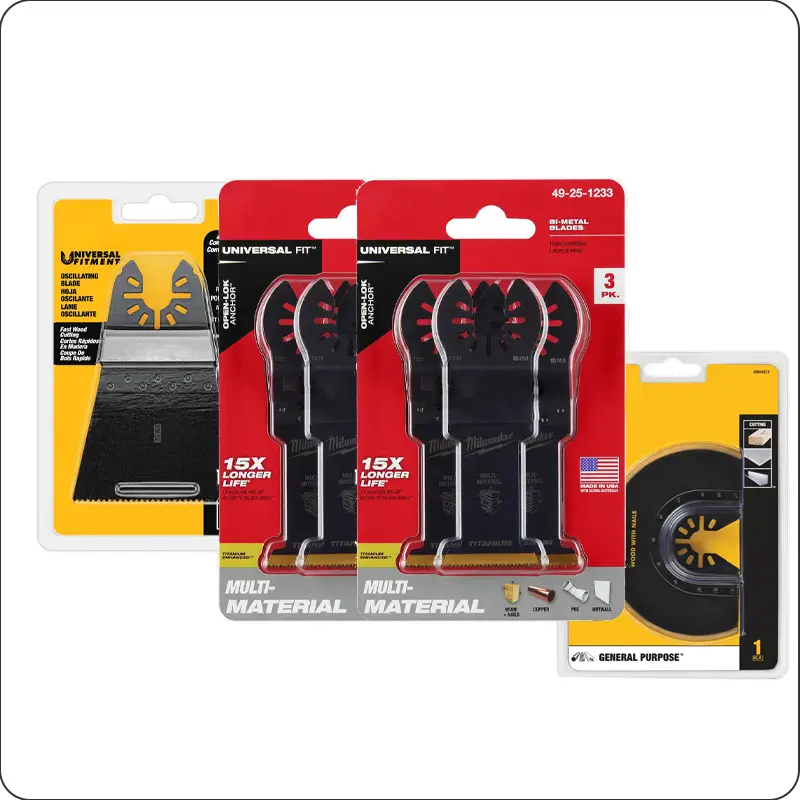
Oscillating Saw Blade Manufacturer
• Ultra-Fast Cutting Speed > High-carbon steel and Bi-Metal teeth geometry designed for 30% faster material removal compared to standard blades.
• Extended Service Life (Carbide Tech) > Featuring advanced Carbide Technology for up to 50x longer life when cutting through tough metal and abrasive materials.
• Universal Compatibility > Our patented Quick-Release interface ensures a 100% secure fit for 98% of oscillating multi-tools on the market, including Starlock (optional) and OIS systems.
Maximizing Your Machining Productivity
Stop gambling with inconsistent quality. At Tenyu Tools, we understand that for a procurement manager, a 1% defect rate means 100% trouble for your reputation. Send us your specs today, and let us show you why the world’s leading tool brands trust our oscillating saw blades.
Evaluations from European and North American wholesalers


Your Leading Oscillating Saw Blade Manufacturer & Supplier
Professional Engineering Team
Our experienced engineers are ready to help you develop oscillating saw blade that meet your specific requirements. Finalize your design, and we will handle the full manufacturing process.
One-Stop Manufacturing Service
Tenyu Tools provides a one-stop service, including design & prototyping, material selection, precision manufacturing, quality control, and assembly & packaging, all tailored for oscillating saw blade. We meet your demands and save you time and cost by offering comprehensive, high-quality services for the production of your oscillating saw blade.
Quick Response
Tenyu Tools offers exceptional customer service. Whether you have questions during or after production, our support team is available 24/7 to provide quick responses.
Fast Delivery
Tenyu Tool keep stable delivery time 7-35 days. Tenyu Tool owns 15 auto production line which will guarantee your delivery date. Even in peak season, we can catch the delivery time. There will be no delay.
Tenyu Tool Professional Production Workshop for Oscillating Saw Blade
Support online face-to-face factory visits





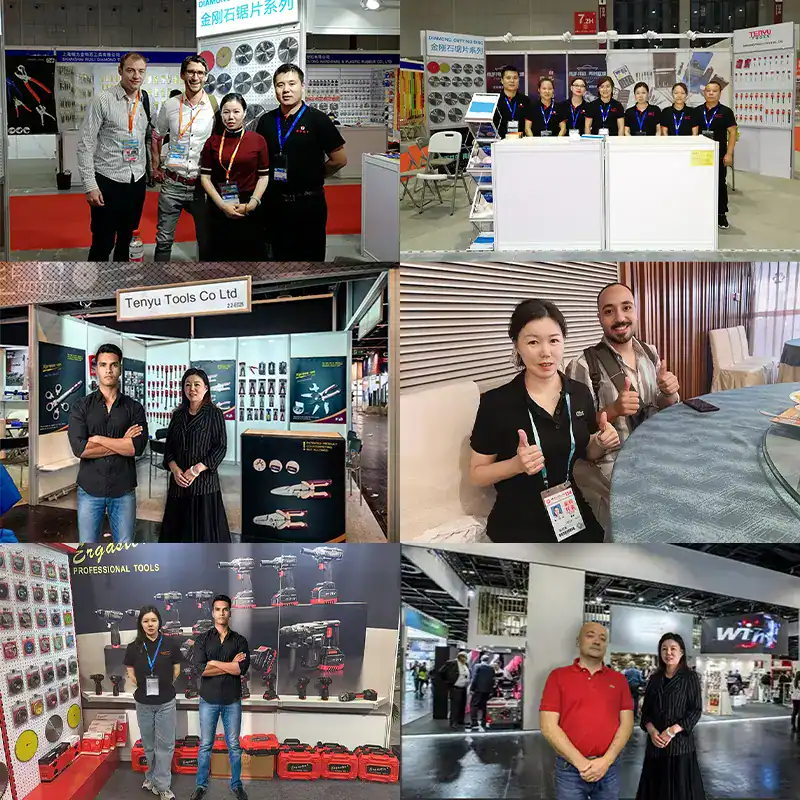
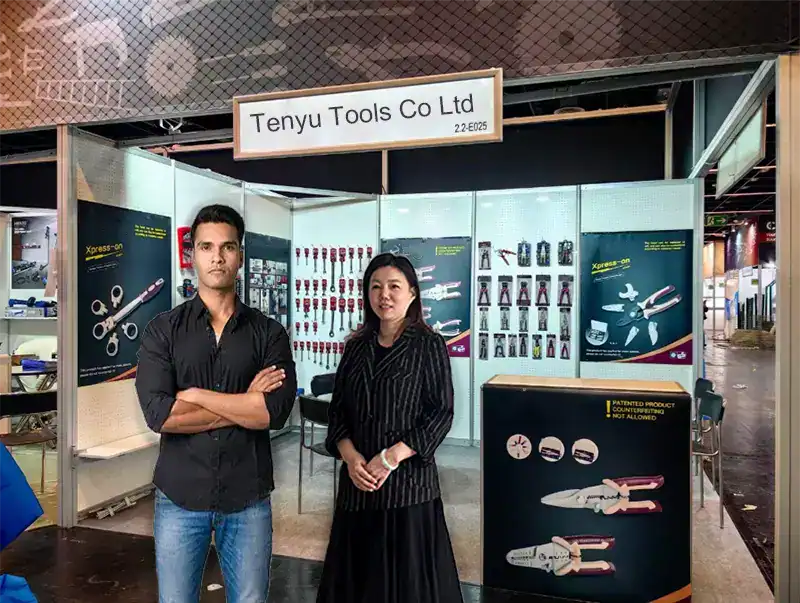
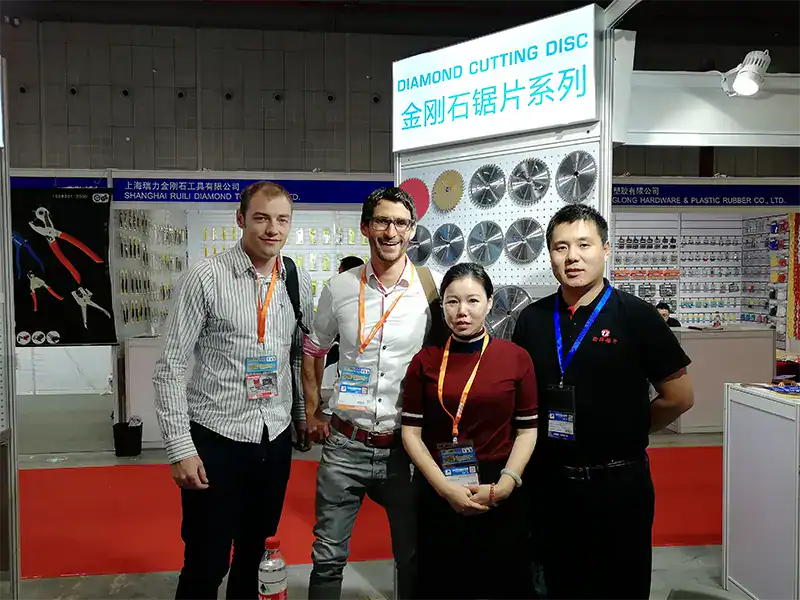
Voice of the World Exhibition
Tenyu Tool actively participates in trade shows around the world and visits our customers, we get closer to them and get more opportunities to present our oscillating saw blade



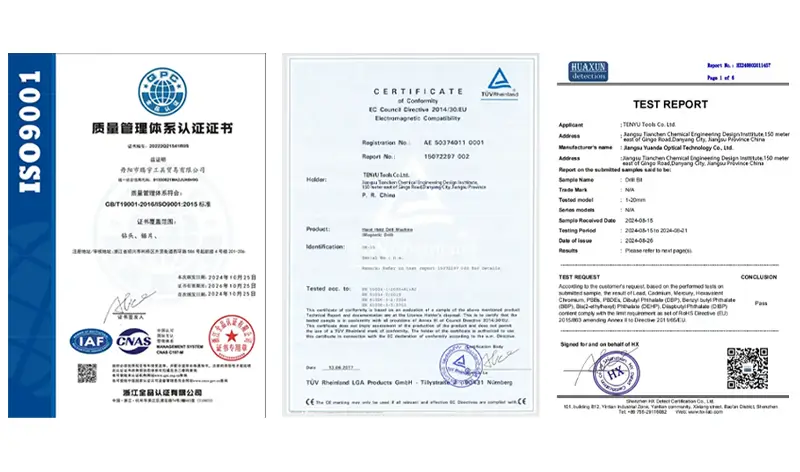
Qualification Certificate
Third-Party Verified Excellence: Engineering Confidence Into Every Oscillating Saw Blade



Trusted by World-renowned Brands
Our company is loved and trusted by more than 100 well-known brands


Oscillating Saw Blade for Metal Cutting Proper Usage of Hole Cutters


Step | Procedure | Important Notes |
1.Select the Correct Blade | Choose blade type based on material (wood, metal, drywall, tile) | Use the correct blade to avoid damage |
2.Install the Blade | Attach blade securely to the tool | Ensure it’s tightly fastened |
3.Adjust Oscillation Speed | Set speed according to material hardness | Start slow, increase as needed |
4. Position the Tool | Hold with both hands. Angle blade for the cut | Keep tool steady for clean cuts |
5. Begin Cutting | Start tool and gently apply pressure | Let the tool do the work; avoid forcing it |
6.Complete the Cut | Turn off tool after cutting. Let it cool | Don’t touch the blade until it’s cool |
7. Clean & Maintain | Clean blade and check for wear | Replace worn blades promptly |


Oscillating Saw Blade for Cutting Material-Specific Techniques


Material Type | Recommended Cutter | Key Technique | Lubrication Needs |
| Wood | Japanese-tooth blade | Fast plunge/flush cuts | Not needed |
| Drywall | Diamond blade | Quick cutouts, steady control | Not needed |
| Plastic Pipe | Bi-metal fine-tooth blade | Clamp, slow feed to avoid crack | Optional (water/oil) |
| Copper Pipe | Bi-metal blade | Rotate tool, cut evenly | light oil |
| Tile/Grout | Diamond blade | Short passes, avoid pressure | Not needed |
| Concrete/Masonry | Carbide grit blade | Slow feed, steady path | Not needed |


Oscillating Saw Blade for Proper Usage


Situation | Solution | Tool Requirement |
Cutting hardwood trim | Use steady plunge cuts | Japanese-tooth blade |
Drywall openings | Mark and cut along lines | Diamond blade |
Plastic pipe trimming | Clamp and cut slowly | Carbide or bi-metal blade + oil |
Tile or grout removal | Short passes, avoid pressure | Diamond blade |
Concrete or masonry shaping | Firm, controlled feed | Carbide grit blad |


Comparison of Oscillating Saw Blade — Cutter Types


Type | Best For | Cutting Edge Design | Advantages | Limitations | Typical Applications |
Bi-metal blade | Wood + nails, metal | Fine-tooth teeth | Durable, versatile | Slower on very hard metals | Wood,Nails |
Carbide blade | Plastic Pipes, Wood | Carbide teeth/grit | High hardness, heat resistant | Higher cost, less flexible | Cutting plastic pipes, trimming hardwood |
Stainless steel | Soft wood, plastic | Coarse teeth | Fast cuts, inexpensive | Dulls quickly on metal | Plastic, softwood |
Diamond blade | Tile, stone, glass | Grit edge | Precise, long life on hard media | Expensive, not for wood/metal | Stone, Brick, ,Marble |
Japanese-tooth blade | hardwood, wood, PVC | Very fast, clean cuts in wood | Not suitable for metal | Slow cutting speed | Floorboards, Plastic |


Comparison of Oscillating Saw Blade Cutter Types for Performance Factors


Parameter | Soft Metals | Hardwood | Plastic Pipes | Tile | Drywall |
Durability | High (carbide/bi-metal) | Medium (HCS) | High (carbide) | High (carbide grit) | Low (HCS) |
Cutting Speed | Medium | Fast | Slow-Medium | Slow–Medium | Very fast |
Precision | Medium | High | Medium | Low | High |
Best Application | Bi-metal blade | Japanese-tooth blade | Carbide Blade | Diamond blade | Stainless Steel Blade |


Comparison of Oscillating Saw BladeCutter Key Technical Specifications Comparison


Technical Feature | Bi-Metal Blade | Carbide Blade | Stainless Steel Blade |
Tooth Geometry | Fine teeth, wavy/set | Carbide grit/teeth | Grit edge, no teeth |
Material Compatibility | Metal and nails | Plastic Pipes,Soft Wood Cutting | Plastic pipes, general wood |
Optimum Cutting Speed | Medium–High | Medium | Slow–Medium |
Surface Finish Quality | Clean in mixed cuts | Rougher finish | Very clean, chip-free cut |
Vibration Levels | Medium | Low–Medium | Low–Medium |

Comparison of Oscillating Saw BladeCutter Key Technical Specifications Comparison


Specification | Diamond Blade | Japanese-tooth Blade |
Tooth Geometry | Grit edge, no teeth | Triple-ground, wide spaced teeth |
Material Compatibility | Ceramic tiles, stone, bricks | Wood (fine cut), laminated board, plastic, thin metal |
Optimum Cutting Speed | Slow–Medium | High |
Surface Finish Quality | Very clean, chip-free cut | Clean in wood, may splinter |
Vibration Levels | Low–Medium | Medium–High |


Additional Performance Factors of Oscillating Saw Blade Cutter


Application Scenario | Recommended Choice | Technical Rationale | Pro Tip |
Cutting nails/screws | Bi-metal blade | Strong teeth resist impact | Use steady pressure, avoid forcing |
Cutting Plastic Pipes | Carbide blade | Hard edge resists wear, smooth cut in dense PVC/ABS | Clamp pipe, cut slowly to avoid melting |
Cutting hardwood | Japanese-tooth blade | Sharp wide teeth, fast wood removal | Clamp workpiece to prevent vibration |
tile/grout | Diamond blade | Abrasive edge handles hard surfaces | Keep blade cool with short passes |
Cleaning paint layer
| Stainless steel blade | Corrosion-resistant edge scrapes coatings | Work at shallow angle to avoid gouging base |


Table of Contents
FAQ for Professional Buyers & Importers
How do you ensure material Oscillating Saw Blade consistency and cutting life across bulk orders?
And as a procurement manager, you know too well that 1 percent defective translates into huge problems for your image. At Tenyu Tools, we minimize this risk via our manufacturing process:
Premium Material Sourcing: One of the most important features on our bi-metal blades is the use of industrial-grade M2 (6542) High-Speed Steel we apply for their construction, along with the high-density Tungsten Carbide that we use on extreme-metal series.
Controlled Heat Treatment
Our computerized vacuum heat treating is the reason why we are able to make a blade that will maintain the out-of-the-box performance of each blade’s tooth when pack and giving it responds and where you need to press, such as strings (Bi-Metal teeth HRC 63-65) while still maintaining shank flex for less breakage.
Batch Testing: Stainless steel and hardwood go through a “destructive cutting test” for each production batch. We provide a Material Test Report (MTR) based on manufacturer test and measurements if ordered before the material arrived.
Are your Oscillating Saw blades truly compatible with the latest "Quick-Release" and "Starlock" systems?
Universal Anchor System: Our standard oscillating blades feature a reinforced universal shank that fits 95% of tools, including Dewalt, Milwaukee, Makita, and Rockwell.
Advanced Interface Solutions: We offer specialized designs for the Starlock interface (compatible with Bosch/Fein) and the Dremel MM40/MM45 systems.
Compatibility Mapping: We offer a high resolution compatibility chart for your marketing content so that your customers always choose exactly the right blade.
What is your Oscillating Saw blades OEM/Private Labeling process and minimum order quantity (MOQ)?
Low Entry Barriers: Our MOQ for laser-etched logos starts as low as 500 units per size, allowing you to test market demand without heavy inventory pressure.
Turnkey Packaging: Pick your pack: Soft packaging, bulk sets or planet-friendly cardboard box. We have in-house design team who can work with you on retail-ready packaging to fit European or North American style.
Rapid Prototyping: Have a unique blade design? Our R&D team can deliver a functional sample within 10-15 working days.
How do you manage Oscillating Saw blades lead times and supply chain stability during peak seasons?
Scalable Capacity: We have more than 15 automatic production lines, and the monthly output is up to 500,000 pieces, so we can handle your rush orders.
Guaranteed Lead Times: Being this batch quantity of bibles (for example, 20,000 copies) regular delivery time is approx. 25 to 35 days. We also offer our “Buffer Stock” program for long term contract partners, which takes lead times down to less than 7 days.
Transparent Logistics: You will be given a weekly production status with photos of your stock in the manufacturing and quality control stages so that you are always aware of your investment.
HCS vs. Bi-Metal vs. Carbide-Tipped Oscillating Saw blades— Which material offers the best ROI for my market?
For a wholesale business, selecting the right material mix is critical for inventory turnover. Here is how we define the performance tiers at Tenyu:
HCS (High Carbon Steel): The budget-friendly choice for soft materials like wood, plastic, and drywall. Best for high-volume DIY retail.
Bi-Metal (M2/M42): Our best-seller for the professional market. Featuring M2 high-speed steel teeth laser-welded to a flexible spring steel body, these blades handle wood-with-nails and non-ferrous metals with ease.
Carbide-Tipped:The “Premium” version is actually designed to be used on the toughest materials, such as stainless steel bolts and fiber cement. While the price-per-unit is high, the cost-per-cut becomes dramatically lower giving your professional users a stunning 30* longer life than standard blades.
How does Tenyu Oscillating Saw Blade ensure hardness consistency across 100,000+ units?
“Batch-to-batch consistency” is the hallmark of a top-tier manufacturer. At Tenyu, we control the heat treatment through a multi-stage Vacuum Heat Treatment System:
Automated Temperature Profiling: We rely on PLC-operated vacuum furnaces to ensure the billets reach precise quenching temps and to eliminate any brittleness or “soft spots” often found in hand-forged blades.
Hardness Gradient Control: We make the teeth HRC 63-65 for Bi-Metal, and keep the shank at a lower hardness HRC so that it will not be brittle to ensure we have maximum flexibility during high oscillation frequencies.
Real-Time QC Testing: All stock is continuously sampled and tested with online Rockwell hardness testers. We’re not just “estimating”, but we actually measure and record the data for each shipment of product we receive, guaranteeing that your customers have never handled a “dud” blade.
Are Tenyu Oscillating Saw blades compatible with Dewalt, Milwaukee, and Starlock systems?
Compatibiriver for end-user satisfaction. Tenyu’s oscillating tool blades are engineered for 95%+ universal compatibility:
Universal Quick-Fit Shank: Our standard design features a reinforced open-ended anchor that fits almost all major brands, including Dewalt (Atomic/XR), Milwaukee (M12/M18), Makita, Rockwell, and Ridgid, without the need for an adapter.
The Starlock Trend: We realize that the upper end of the market is being led towards the Starlock, Starlock Plus and Starlock Max interfaces that Bosch and Fein have already developed. Tenyu offers custom interface solutions that meet this demand, so your product is ready to compete in professional and industrial markets requiring great torque and 3D fit.
Why should I choose an Oscillating Saw Blade manufacturer in Danyang over a trading company?
As a Danyang-based manufacturer, Tenyu provides the “Factory-Direct Advantage” that trading companies cannot match:
Technical Transparency: You speak directly with the engineers, in charge of laser-welding and heat treatment.
Cost Efficiency: By cutting out the middleman, we pass on those savings directly to your bottom line.
Audit-Ready Facilities: We welcome third-party inspections from companies such as SGS and BV to verify our compliance with ISO 9001 guidelines, and the productivity of our automated production lines.
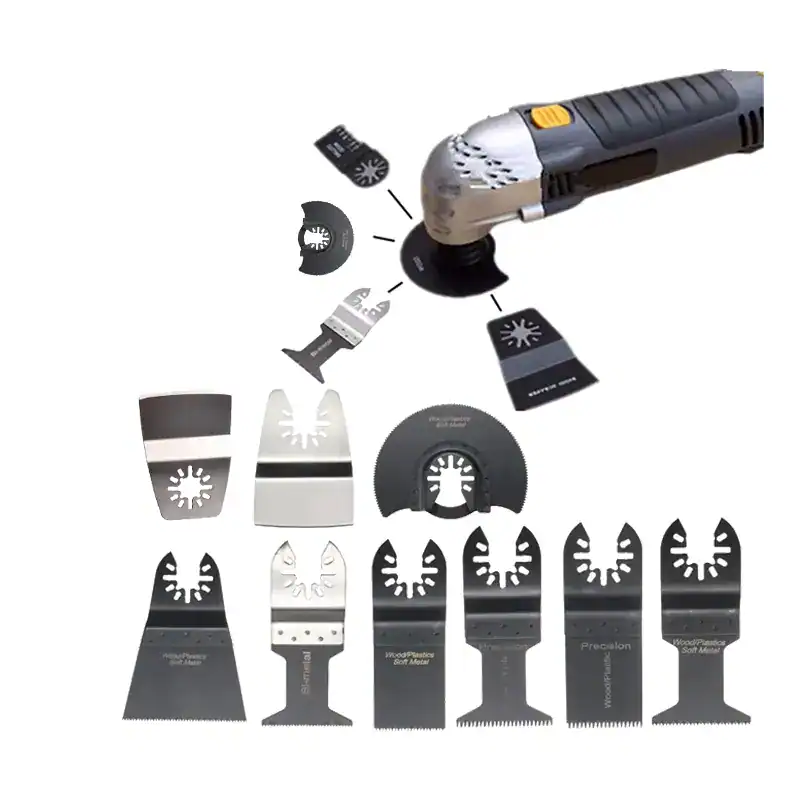
Oscillating Tool Blades: Multi-Tool & Oscillating Blade Options
Oscillating multi-tool blades[^1] represent a growing segment in power tool accessories, offering importers and wholesalers diverse product opportunities & hot sell. These blades serve multiple functions, including cutting, sanding, scraping, and grinding across various industries such as construction, automotive repair, and flooring installation.
For bulk purchasers, understanding Oscillating blade specifications[^2] and applications is essential to meet different market demands. Main product categories include titanium-coated bi-metal blades[^3], carbide grit blades[^4], HSS segment blades[^5], and specialised options for grout removal or demolition work.
Market-Oriented Product Specifications
Material Options for Various Applications
– Bi-metal titanium blades: 4x longer lifespan than standard blades, ideal for mixed material cutting
– Carbide blades: Specialized for tile, mortar, and concrete applications
– HCS (High Carbon Steel): Cost-effective solution for wood and drywall cutting
– Diamond-coated: Premium solution for grout removal and masonry work
Standard Sizes for Global Markets
– Blade widths: 10mm to 28.5mm (industry standard 19mm-28.5mm)
– Common lengths: 42mm, 65mm, with customization available
– Teeth configurations: 5-24 TPI options for different cutting speeds
Manufacturing and Supply Chain Advantages
Production Capabilities for Bulk Orders
– OEM/ODM services with custom branding for your Oscillating multi-tool blades
– Mixed blade set packaging (blister packs, PVC bags, retail displays)
– Monthly production capacity up to 100,000 units
– Quality assurance with SGS, MPA, and ISO certifications, keep your quality
Carbide Oscillating Blades
Carbide multi tools oscillating blades are designed for heavy-duty cutting applications where maximum durability is required. These blades feature tungsten carbide teeth that can drill through tough materials like hardened nails, screws, cement board, and even metal pipes. Their exceptional hardness makes them last significantly longer than standard blades, reducing replacement frequency. However, they tend to be more expensive than bi-metal alternatives. Ideal uses include demolition work, flooring removal, and Cutting the embedded fasteners during the renovation project.
Bi-Metal Oscillating Blades
These multi-functional blades can efficiently cut wood, plastic, gypsum board, as well as soft metals such as aluminum and copper. It is made by welding high-speed steel (HSS) teeth with a flexible high-carbon steel body, which can withstand wear without breaking and maintains sharpness for a longer time than ordinary blades. Many of these blades are compatible with major oscillating tool brands, thus being favored by professionals and DIY enthusiasts. These multi-functional blades can efficiently cut wood, plastic. They are reasonably priced and have good adaptability, suitable for various routine uses.tic, gypsum board, as well as soft metals such as aluminum and copper. Many of these blades are compatible with major oscillating tool brands, thus being favored by professionals and DIY enthusiasts. They are reasonably priced and have good adaptability, suitable for various routine uses.
Diamond Oscillating Blades
Diamond oscillating blades are your best bet when removing grout, mortar, and other masonry-based materials. These blades are made with industrial-grade diamond particles. The diamond coating makes them extremely hard and capable of grinding through tough materials. Their distinct advantage lies in their ability to grind through dense, abrasive grout without wearing out quickly. Diamond oscillating blades provide cleaner cuts, reduce effort, and offer extended durability, saving you time and money. They are ideal for tile repair, bathroom remodeling, and flooring work. It can help you achieve a professional-grade finish!
Stainless Steel Oscillating Blades
Stainless steel scraper oscillating blades are flat blades designed for scraping surfaces rather than cutting. They are useful for removing old coatings and residues like old floor adhesives, caulk, paint, or wallpaper. These blades come in rigid and flexible styles. Rigid blades are ideal for tough materials like tile adhesive, while flexible blades work well for gentler jobs like removing old latex paint. It is important to avoid forcing the blade and to use high-quality blades to prevent breakage. Tenyu Tools offers durable stainless steel scraper blades that are designed to withstand heavy use.
Choosing the Best Oscillating Tool Blade
Selecting the right blade ensures efficient cutting and prolongs tool life. Different tasks require specialized blades based on material type, cut precision needs, and frequency of use. Here’s what to evaluate before purchasing.
Factors to Consider When Selecting a Blade
Material Compatibility: Match the blade to the work-piece—wood, metal, masonry, or composites. Carbide blades excel in hard materials, while bi-metal blades handle mixed materials well.
Cutting Speed vs. Finish: Fine-tooth blades (24+ TPI) provide smoother cuts in metal, while coarse teeth (5–10 TPI) allow faster wood cutting with rougher edges.
Blade Thickness: Thicker blades (0.04″–0.06″) resist bending in dense materials but may limit access in tight spaces.
Attachment System: Ensure compatibility with your tool’s arbor (e.g., Starlock, OIS, universal). Proprietary systems may offer better stability but limit blade options.
Cost vs. Longevity: Budget-friendly blades suit occasional use, while premium carbide blades justify their price in professional settings with frequent use.
By weighing these factors, users can optimize performance for specific tasks, whether for delicate trim work or aggressive demolition.
Universal Oscillating Tool Blades vs. Brand-Specific Blades
When selecting oscillating tool blades, you’ll have two main options: universal fit blades and famous brand-specific designs. Universal blades feature standardized mounting systems that work with most major tool machine brands, offering convenience and easier availability. These are ideal for users who have multiple tool brands or need quick replacements. Brand-specific blades, such as those using proprietary systems like Fein’s Starlock or Bosch‘s OIS, deliver optimized performance with their matching tools through enhanced stability and vibration reduction. While these often provide superior cutting precision, they come at higher costs and limit your purchasing business.
Applications for Oscillating Tool Blades
Oscillating tools have become indispensable tools in construction and renovation thanks to their versatile blade selection. From precision carpentry to heavy-duty demolition, the right blade transforms this compact tool into a versatile powerhouse. Understanding the correct blade application ensures efficient work while avoiding unnecessary wear or safety hazards. Boost your wholesaler’s business.
Wood Cutting Applications
For woodworking business, oscillating blades with coarse teeth (10-14 TPI) deliver fast cuts in softwoods and plywood. Flush-cut blades with offset profiles are better at trimming door jambs or flooring without damaging adjacent surfaces. When working with hardwood or laminates, opt for bi-metal blades with sharp, heat-resistant teeth to minimize burning. Always match blade aggressiveness to your needs – demolition blades remove material quickly but leave rough edges, while fine-tooth blades produce cleaner finishes for visible areas. For sanding tasks, attach specialty wood sanding pads with appropriate grit levels.
Metal Cutting Applications
For metal cutting, use bi-metal blades with fine teeth (18 to 24 TPI). They work well with nails, screws, sheet metal and pipes. For hardened metals, carbide tipped blades are more suitable for saw. Apply mild pressure to prevent overheating, and cutting oil will increase the life of the blade for thick materials. Applications —- Plumbing, HVAC, Auto, When Any Cut Must Be Perfect.
Drywall and Other Materials
The oscillating tool works well on drywall, with special blades that have very aggressive teeth and no backer. Fine tooth cutting is best to minimize ear, and eye blowing debris. Look for a diamond-coated blade (one designed for removing grout is best). Be sure to match blades to the material being cut to avoid blade damage.
Popular Brands and Product Lines
There are a number of manufacturers that sell there own brand of speciality oscillating tool blades designed for a wide range of cutting and scraping applications that allow the user to chose based on the project needs and costs.
Dremel Oscillating Tool Accessories
Dremel’s Multi-Max line of blades includes cutters designed specifically to make fast, clean cuts in wood and other delicate materials. Quick Change system enables quick blade changing. Some of the most popular attachments are the MM480Z shallow plunge-cutting blade and the MM452 scraper blade, and lots of accessories also work with universal mounts.

DeWalt Oscillating Blade Kits
DeWalt’s high-quality blade collections are long-lasting and efficient, and a 13-piece carbide grit kit offers versatility in materials. That combination puts out aggression on aggressive materials. Contractors favor DeWalt’s hardened steel blades for metal cutting, and a multi-purpose plunge-cut blade for demolition.

Bosch and Diablo Blade Sets of Blades
Bosch power handsaws are designed for versatility, ease of use, and efficiency. Patented blade designs increase product life. They also both feature design innovations such as laser-cut slots for dust extraction and heat-treated teeth for longevity

Conclusion
Look at what it’s made of, how many teeth it has, how thick its blade is and how many saws it fits. Carbide blade is ideal for hard materials, while bi-metal provides a range of applications. Diamond Oscillating Blades are great for removing tile grout. Stainless Steel Scraper Oscillating Blades are great for removing old adhesives, caulk, and paint. Manufacturer blades are designed for optimum performance, and tool maintenance ensures tool life.
