



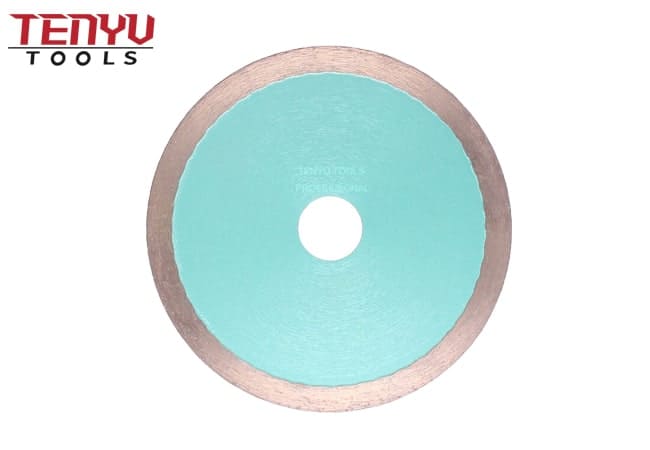
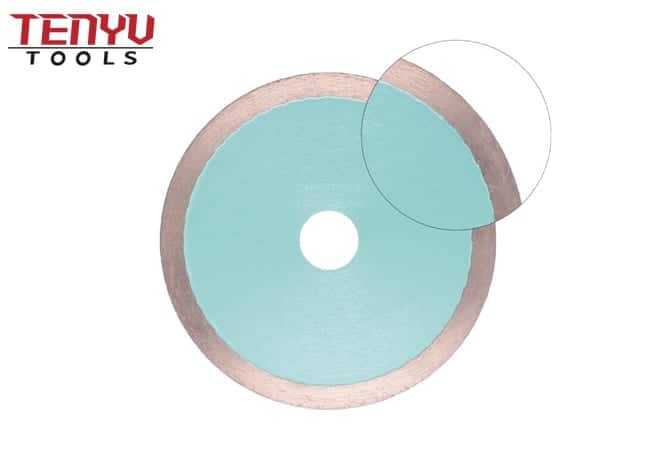
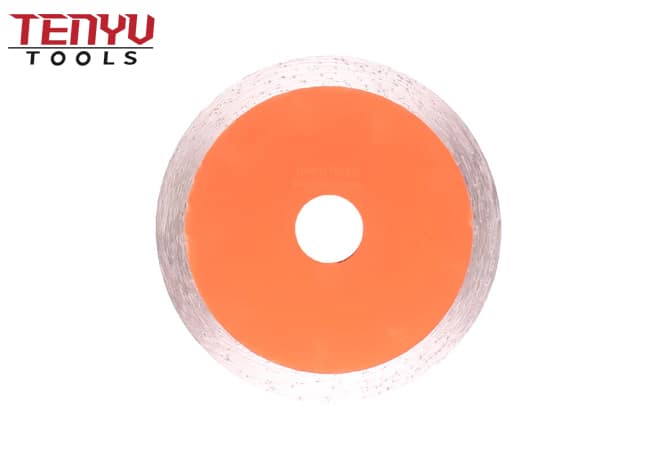
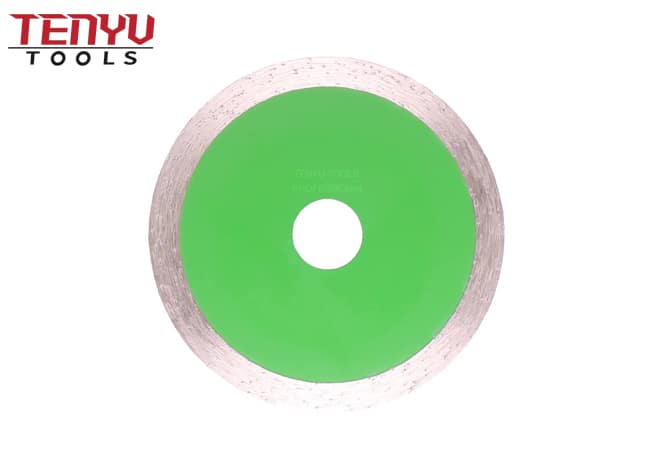
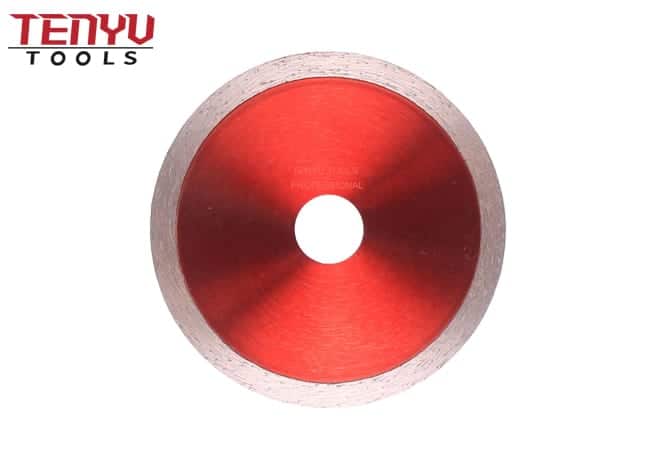
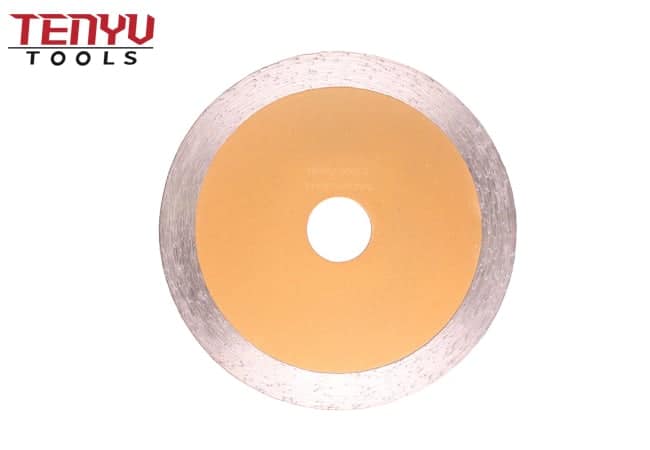
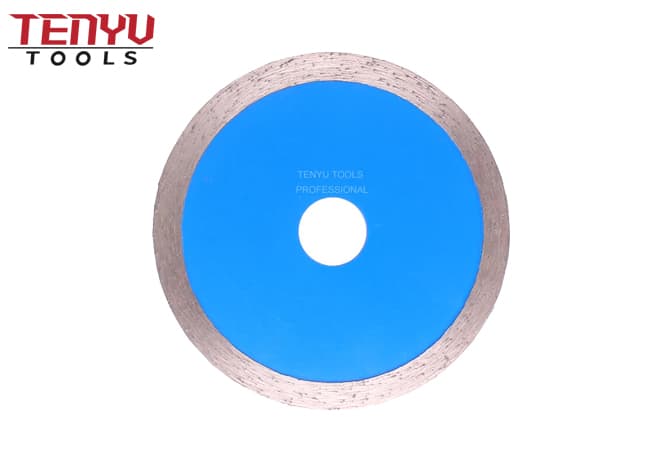
Wet Saw Blade
Still looking for a wood auger drill bit set that offers stable quality and dependable bulk supply?
- Hex shank for practical drill compatibility
- Smooth wood drilling performance
- 3-piece set for common woodworking sizes
- Double blister packing for retail display
- OEM & Wholesale
- Exhibition
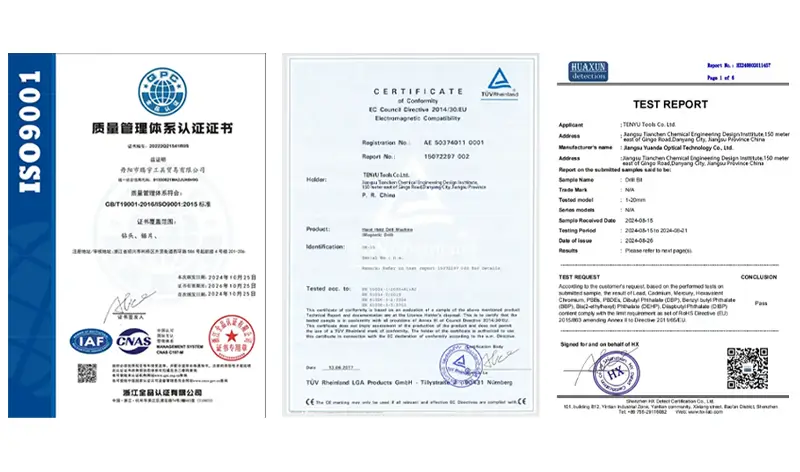
- Certificate
- Product Details
OEM & Wholesale Service
We supply woodworking auger drill bit sets for importers, wholesalers, distributors, and private label tool brands. OEM options include customized size combinations, logo marking, blister card design, barcode labels, and retail packaging. Samples can be arranged before bulk production.

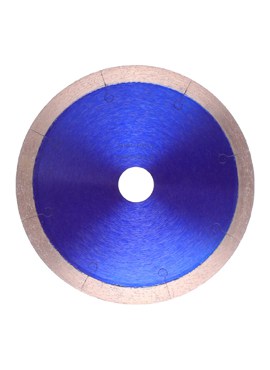
Diamond Saw Blades Dry Wet Cutting General Purpose Power Saw
- Diamond wet saw blade can use for wet saws and angle grinders to cut ceramic, porcelain tile, and marble
- When cutting with cold water, the diamond wet saw blade will play the biggest role to cut the material quickly
- Diamond wet saw blade cores are made from 65Mn
- Compared to the dry diamond saw blade, diamond wet saw blade cutting will extend the blade life
- Remember to wear goggles and mask
- The diamond saw blade bonus a protective sleeve and an inner hole
- TENYU diamond wet saw blade, your best choice
| Product Description | ||||
| More Choice For You: Home > Diamond Saw Blade | ||||
| Product Name | Diamond Saw Blades Dry Wet Cutting General Purpose Power Saw | |||
| Material | Blade Material: Diamond Grit Body Material: 65Mn Steel | |||
| Process | Hot-Press Sintered | |||
| Blade Type | Continuous Rim Blade | |||
| Application | For cutting granite, marble stone and concrete block,hard brick, paver bricks, reinforced concrete | |||
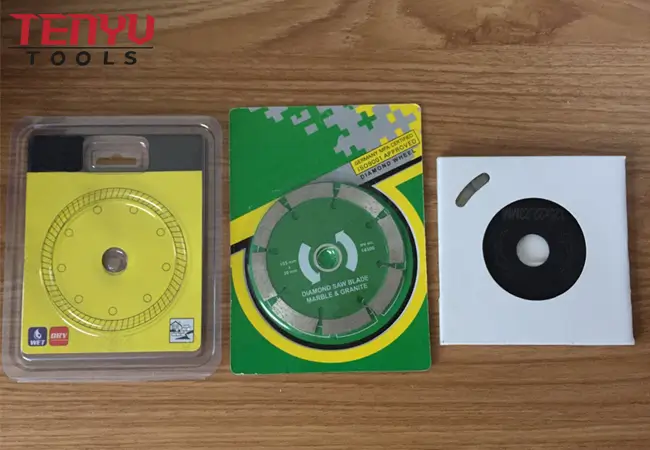
| Package | One piece in one PVC double blister, paper box or PVC Skin Card | |||
| Features | 1. Only suitable for wet cutting to prevent the cutting edge from being damaged 2. Design for ceramic tiles and porcelain 3. Cutting fast with low working noise 4. Stable performance, and smooth cutting without chipping 5. We will provide you with a competitive price with superior quality | |||
| Product Size | |||
| Diameter | Arbor Size | Segment Dimension | |
| Inch | mm | mm | mm |
| 2″ | 50 | 20/22.23 | 1.5×5 |
| 3″ | 80 | 20/22.23 | 1.6×5 |
| 4″ | 105 | 16/20/22.23 | 1.8×5/7/10 |
| 4.3″ | 110 | 16/20/22.23 | 1.9×5/7×10 |
| 4.5″ | 115 | 20/22.23 | 1.9×5/7×10 |
| 5″ | 125 | 20/22.23 | 1.9×5/7×10 |
| 6″ | 150 | 20/22.23 | 1.9×5/7×10 |
| 7″ | 180 | 22.23/25.4 | 2.2×5/7×10 |
| 8″ | 200 | 22.23/25.4 | 2.4×5/7×10 |
| 9″ | 230 | 22.23/25.4 | 2.6×5/7×10 |
| 10″ | 250 | 22.23/25.4 | 3.0×5/7×10 |
| 12″ | 300 | 20/22.23/25.4/50 | 3.2×7/10 |
| 14″ | 350 | 22.23/25.4/50 | 3.2×7.5/10 |
| 16″ | 400 | 22.23/25.4/50 | 3.4×7.5/10 |

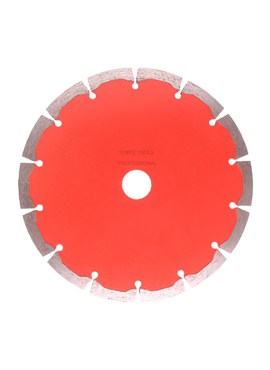
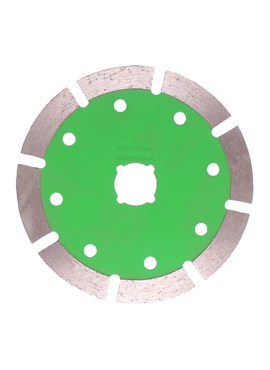
Related Products

Frequently Asked Questions
Q: What are Diamond Blades Made of?
A: Diamond blades are manufactured using a steel core combined with industrial-grade synthetic diamond particles embedded in a metal bond matrix. The diamond segments are typically attached to the core through laser welding, sintering, or brazing processes. This construction provides high cutting efficiency, durability, and resistance to heat when working with hard and abrasive materials.
Q: What will a Diamond Blade Cut?
A: Diamond blades are designed to cut a wide range of hard materials, including concrete, stone, brick, ceramic, tile, asphalt, and certain composite materials. Specialized diamond blades can also be used for cutting porcelain, granite, marble, and reinforced concrete, depending on the segment design and bonding formula.
Q: Do Diamond Blades Get Dull?
A: Yes, diamond blades can lose cutting efficiency over time. Instead of traditional dulling, the metal bond surrounding the diamond particles may become worn or glazed, reducing exposure of fresh diamonds. This can slow down cutting speed and increase heat generation. Proper usage and selecting the right blade for the material help maintain optimal performance.
Q: How to Sharpen a Diamond Saw Blade?
A: Diamond blades are not sharpened in the traditional sense. Instead, they can be “dressed” or refreshed by cutting into an abrasive material such as a dressing stone, concrete block, or soft brick. This process removes the glazed bond layer and exposes new diamond particles, restoring cutting performance.
Q: Can you Cut Tile with a Circular Saw?
A: Yes, tiles can be cut using a circular saw equipped with a suitable diamond blade. For best results, a continuous rim diamond blade is recommended, as it produces cleaner edges and minimizes chipping. Wet cutting methods are often preferred to reduce dust, improve blade life, and achieve smoother finishes.
Q: Can you Cut a Porcelain Sink?
A: Cutting a porcelain sink is possible using a high-quality diamond blade designed for porcelain or ceramic materials. Due to porcelain’s hardness and brittleness, slow cutting speed, proper support, and cooling (preferably wet cutting) are essential to prevent cracking or edge damage during the cutting process.