



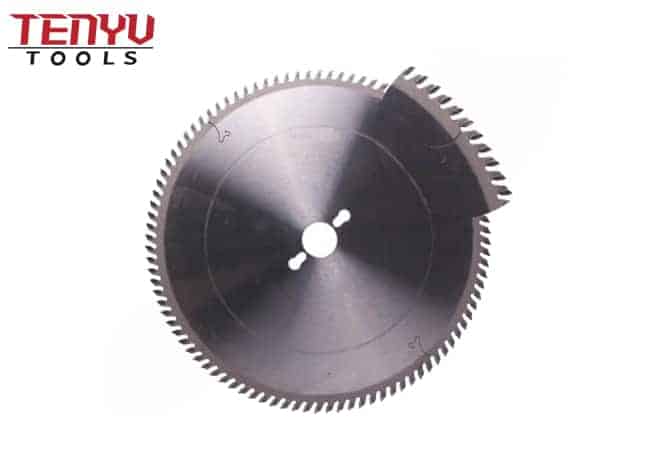
Wood Cutter Blades
Looking for wood cutter blades that are easy to sell and suitable for private label business?
- Multiple blade types for different wood cutting needs
- Tooth counts from 20T to 100T
- Sizes from 165mm to 550mm
- Suitable for hardwood, softwood, pine, mahogany, and more
- OEM tooth count and size customization support
- OEM & Wholesale
- Exhibition
- Certificate
- Material
- Product Details
OEM & Wholesale Service
We support OEM production for importers, wholesalers, distributors, and private label tool brands, with flexible options for tooth count, blade size, and market-oriented product selection. This aligns with the page’s manufacturer-oriented positioning and custom production messaging.



1. Tipped on the carbide material with a diamond called PCD (polycrystalline diamond), the circular saw blade is widely used for its long product life. The product’s life is 30 to 120 times as long as one of the ordinary TCT Circular Saw Blades. The merit of the long life cycle makes it possible to achieve high productivity and to reduce overhead costs in many workplaces like wooden floors, furniture, and other woodworking factories.
2. The PCD Circular Saw Blades are specially designed for chipboard layer cutting and also suitable for cutting plastic material in general, such as plexiglass, solid surface and PVC, etc…
2. Fully hardened steel blade body – delivers accuracy and resists bending and deflection for true cuts.
3. Thin kerf blade produces less dust than continuous rim blades.
How to Use:
■ Follow carefully the instructions given in the machine handbook.
■ Never fit a diamond dish/cup wheel which is too loose or too tight on the flange.
■ Tighten only with the tool supplied with the machine.
■ Ensure the wheel is properly gripped to prevent slippage, but do not tighten with excessive force. Never use a hammer.
■ Keep flanges and screw threads clean and free of burrs and rust.
■ Replace distorted or damaged flanges before fitting the wheel.
For your Safety:
We recommends the use of following personal protective equipment:
■ Eye protection
■ Ear protection (ear sets)
■ Hand protection (gloves)
■ Lung protection (dust mask, also called respirator)
Important Note:
Never remove the protective machine guard and make sure it is properly adjusted to deflect debris away from you.
Ensure that no other person is at risk, especially near the machine while working.
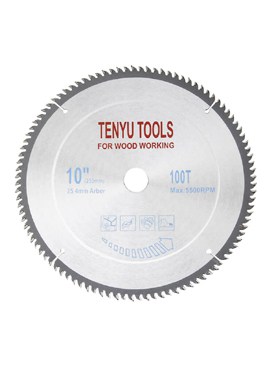
7 Inch 100 Teeth OKE Carbide Tip Circular Wood Cutter Blades
- Noise reduction design, customized for different material properties
- OKE carbide tips, heat treatment technology to make the saw blade tooth sharp and heat resistance
- The saw blade with more teeth, the smoother and chip-free cut, 100 teeth is a good choice
- Suitable for both hardwood and softwood
- Superior quality wood cutter blades in TENYU
Applications
Suitable for woodworking, panel cutting, plywood cutting, crosscutting, ripping, and general wood processing across a wide range of wood materials.
|
Production Description
|
||||
|
More Choice For You: Home > TCT Circular Saw Blade > For Wood
|
||||
|
Product Name
|
TCT Circular Cutter Grooving Saw Blade Sizes for Wood Cutting Blades Preparation 4 inch 30 teeth
|
|||
|
Material
|
Teeth Material: Tungsten Carbide Body Material: 65Mn Steel
|
|||
|
Progress
|
Automatic Welded
|
|||
|
Teeth Type
|
Trapezoid Teeth (FT Teeth, ATB Teeth, ATB Teeth with Anti-kick Back, ATBR Teeth are available)
|
|||
|
Arbor Hole Size
|
All size is available upon request,such as 5/8”, 1” 20mm, 22.23mm, 25mm, 30mm, 35mm…etc
|
|||
|
Teeth Design
|
Teeth Number ould be adjusted upon request; Hook angle could be adjusted upon request
|
|||
|
Package
|
One piece in one PVC double blister, paper box or PVC Skin Card
|
|||
|
Features
|
1. Made of tougher tungsten carbide for up to 5x longer cutting life than other saw blades.
2. Provides straight cuts and cutting smootherant Non-stick coating reduces gumming for easy cleanup and truer, cleaner cuts.
3. Keeping it cool and reducing blade warped for flawless cuts.
4. Thin kerf for fast and smooth cutting action and minimum waste.
5. Framing saw blade is great for circular saw, table saw, miter saw.
|
|||
| Product Size | |||||
| Diameter | Kerf | Plant Thickness | Arbor Hole Size | Teeth Number | |
| Inch | mm | mm | mm | mm | |
| 5″ | 125 | 2.6 | 1.6 | 20/25.4 | 24,30,36 |
| 6″ | 150 | 2.6 | 1.6 | 20/25.4 | 28,30,36,42,48 |
| 7″ | 180 | 2.6, 2.8 | 1.6, 1.8 | 20/25.4 | 32,36,42,48,54,56 |
| 8″ | 200 | 2.6, 2.8 | 1.6, 1.8 | 20/25.4 | 36,40,48,56,64 |
| 9″ | 230 | 2.8 | 1.8 | 20/25.4 | 40,48,54,60,64,66,72 |
| 10″ | 250 | 3 | 2 | 20/25.4 | 48,50,60,64,72,80 |
| 11″ | 270 | 3 | 2 | 25.4/30 | 48,50,60,64,72,80 |
| 12″ | 300 | 3.2 | 2.2 | 25.4/30 | 60,72,80,84,96 |
| 13″ | 330 | 3.2 | 2.2 | 25.4/30 | 60,72,84,96,100 |
| 14″ | 350 | 3.2 | 2.2 | 25.4/30 | 72,84,98,100,108 |
| 16″ | 400 | 3.5 | 2.5 | 25.4/30 | 80,96,112,120 |
| 18″ | 450 | 3.5 | 2.5 | 25.4/30 | 90,108,126,140 |
| 20″ | 500 | 3.5, 3.8 | 2.5, 2.8 | 25.4/30 | 100,120,140 |
| 22″ | 550 | 3.8 | 2.8 | 25.4/30 | 110,120,144 |
| 24″ | 600 | 4 | 3 | 25.4/30 | 120,144,150 |
| 26″ | 650 | 4 | 3 | 25.4/30 | 120,140,150 |
| 28″ | 700 | 4.2 | 3.2 | 25.4/30 | 120,140,150 |
| 30″ | 750 | 4.2, 4.6 | 3.2, 3.6 | 25.4/30 | 120,140,150 |

Related Products
Frequently Asked Questions
Q: Can I Use a Metal-Cutting Blade on Wood?
A: It is not recommended to use a metal-cutting blade on wood. Metal-cutting blades are designed with fewer teeth and a different tooth geometry (typically with flat-top teeth) that is optimized for cutting through hard metals. Using a metal-cutting blade on wood can result in rough, uneven cuts and excessive wear on the blade. For wood, it is best to use a blade specifically designed for wood, which has more teeth and a geometry suited for clean and efficient cutting through soft or hardwood materials.

Q: Circular Saw Blade Buying Guide?
A: When buying a circular saw blade, consider the following factors to ensure you select the right one for your needs:
Material: Make sure the blade is compatible with the material you intend to cut, such as wood, metal, or masonry.
Tooth Count: Blades with fewer teeth (24-40 teeth) are suitable for faster, rough cuts, while blades with more teeth (60-80) provide smoother, cleaner cuts.
Blade Size: Choose a blade that matches the size of your circular saw. Blade sizes commonly range from 4 1/2″ to 7 1/4″ in diameter.
Material of the Blade: For durability, carbide-tipped blades are ideal for tougher materials. High-speed steel (HSS) blades are great for precision cuts in wood.
Blade Coating: Some blades come with special coatings that help reduce friction, prevent rust, and improve cutting performance, which can extend the life of the blade.
Cut Type: Consider the type of cut you need (crosscut, rip cut, or fine finish), and choose a blade accordingly, e.g., ATB (Alternating Top Bevel) for clean crosscuts or FT (Flat Top) for ripping.
Q: Are Circular Saw Blades Universal?
A: Circular saw blades are not universal. They vary in size, design, tooth geometry, and material based on the specific tasks they are meant to handle. While some circular saw blades are designed to fit multiple saw models, not all blades will work with all saws. It is crucial to check the blade size, arbor hole diameter, and compatibility with your saw before purchasing. Additionally, the type of material being cut (wood, metal, concrete, etc.) will also determine the blade’s specifications, such as tooth count and blade material.
Q: Best Circular Saw Blade for Plywood?
A: The best circular saw blade for cutting plywood is one with a high tooth count, typically between 60 to 80 teeth. This ensures smooth, clean cuts with minimal splintering along the edges. A carbide-tipped blade is ideal for durability and sharpness. An alternating top bevel (ATB) tooth geometry is often used for plywood because it provides a finer finish by cutting cleanly through the layers without causing fraying. Additionally, a thin kerf blade will reduce strain on your saw and provide faster, more efficient cuts.
Q: Are All Circular Saw Blades the Same?
A: No, not all circular saw blades are the same. Circular saw blades come in different sizes, tooth counts, designs, and materials, each suited for specific types of cutting tasks. The blade material can vary from high-speed steel (HSS) to carbide-tipped, each providing different levels of durability and cutting precision. The tooth geometry (e.g., ATB, flat-top, or hook teeth) affects the type of cut the blade will make (crosscut, rip, or fine finish). Additionally, some blades are designed for wood, while others are designed for cutting metal, plastic, or masonry. Always choose a blade based on the material you are cutting and the type of cut required.
Q: Circular Saw Blade Teeth Guide
A: The teeth on a circular saw blade determine the quality and speed of the cut. Here’s a guide to common types of teeth configurations:
Alternate Top Bevel (ATB): These blades have teeth with an alternating angle, providing smooth, clean cuts. ATB blades are ideal for cutting wood, plywood, and veneer.
Flat Top (FT): FT blades have teeth that are straight across, making them ideal for rip cuts through wood, especially when speed is a priority.
High Alternate Top Bevel (Hi-ATB): These blades are designed for fine finish cuts on wood, plywood, and MDF, with even more aggressive angles for smoother cuts.
Triple Chip Grind (TCG): TCG blades are typically used for cutting hard materials like metal and plastics. These blades have teeth that alternate between a flat tooth and a chamfered tooth, which helps reduce wear.
Hook Teeth: Hook teeth are designed for aggressive cutting in softwood. They are great for fast rip cuts but can cause rougher finishes.